



Football is full of giants. Nations that dominate headlines, lift trophies, and define eras.But there’s another kind of influence in the game: quieter, almost invisible. The kind you don’t notice at first, but once you do, it’s everywhere.
That’s where Suriname comes in.
A small South American nation, rarely part of the World Cup conversation. No global hype, no consistent spotlight. And yet, somehow, always present when football reaches its highest level.
Because its impact doesn’t show up on scoreboards it shows up in style, in identity, in the way the game is played. It lives through players, through moments, through flashes of brilliance that feel different. You won’t see its flag lifting trophies, but you’ll see its influence in the players who do. And once you start connecting those dots, you realize this isn’t coincidence, it’s legacy.
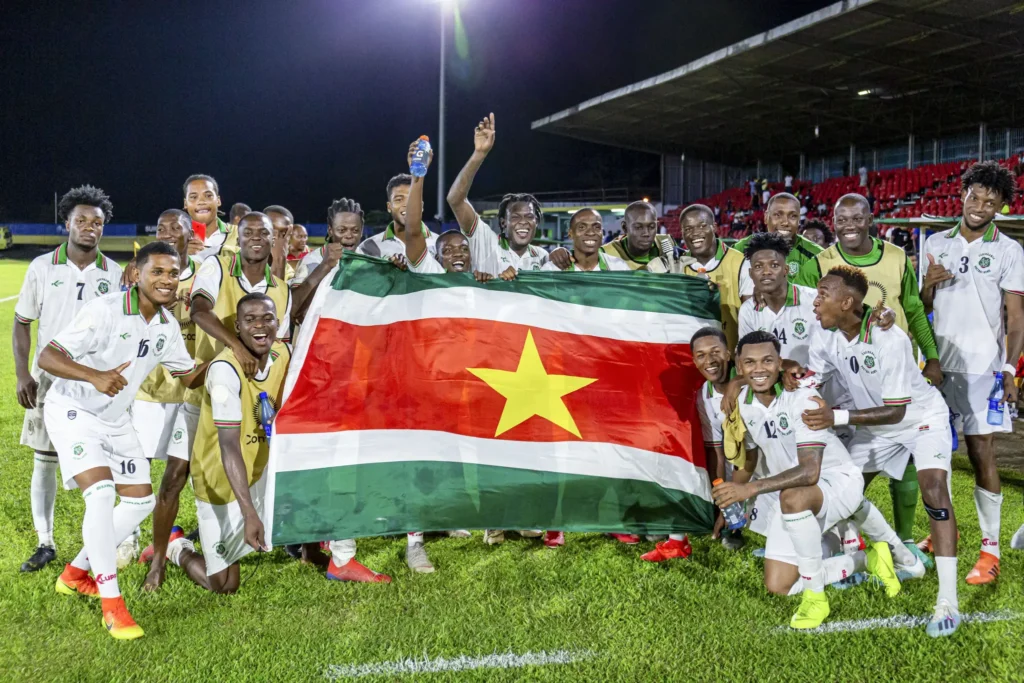
Where Style Is Born, Not Taught
There’s something different about players with Surinamese roots. It’s not just talent it’s how they move, how they think, how they play. A natural rhythm. A sense of freedom. The ability to improvise in moments where others panic.
This isn’t something you coach. It’s something that develops organically on streets, in tight spaces, in environments where creativity isn’t optional, it’s survival.
That’s why their style feels so distinct. Effortless, yet unpredictable. And that unpredictability becomes their biggest strength turning tight situations into moments of brilliance. It allows them to see passes others don’t, attempt moves others won’t, and control games in ways that feel almost instinctive.
There’s a fluidity to their play, where structure exists, but never restricts expression. It’s football played with personality, not just purpose. And that’s what makes it unforgettable.
A Journey Beyond Borders
Suriname’s biggest impact didn’t happen at home, it happened abroad. Due to historical and cultural ties, many Surinamese players or families moved to the Netherlands. But instead of blending in, they reshaped the football identity there.
They brought flair into structure. Expression into systems. And suddenly, Dutch football wasn’t just efficient it became beautiful. Their influence added rhythm to rigidity, creativity to control.
It transformed how teams approached attacking play less mechanical, more expressive. Academies began producing players who weren’t just disciplined, but daring. The game became more than tactics, it became art in motion. And that shift changed how the world viewed Dutch football forever.
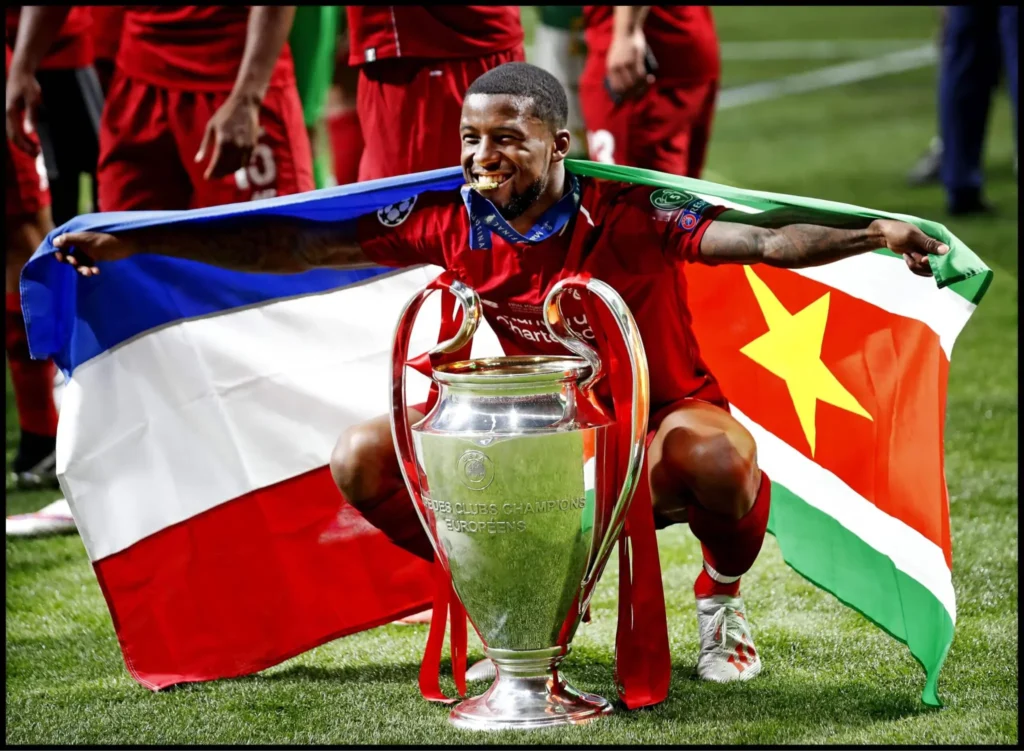
The Names You Know… The Roots You Don’t
Some of football’s most iconic figures carry this heritage. Players like Ruud Gullit, Frank Rijkaard, and Clarence Seedorf didn’t just succeed, they defined eras. They won the biggest trophies, controlled the biggest games, and influenced how football was played at the highest level.
But behind their success lies a shared cultural root that rarely gets discussed. They weren’t just elite players, they were symbols of a deeper footballing identity. Leaders on the pitch, but also pioneers of a style that valued intelligence and flair equally. Their success wasn’t accidental it was built on a foundation that blended discipline with creativity. And through them, that identity reached the global stage. In many ways, they became ambassadors of a football culture the world had yet to fully recognize.
Their impact on Dutch football, in particular, is impossible to ignore. Gullit and Rijkaard were central to the Netherlands’ triumph at UEFA Euro 1988, a moment that remains the nation’s greatest international achievement. Gullit’s leadership and presence, combined with Rijkaard’s composure and intelligence, defined a golden era that elevated Dutch football to global respect.
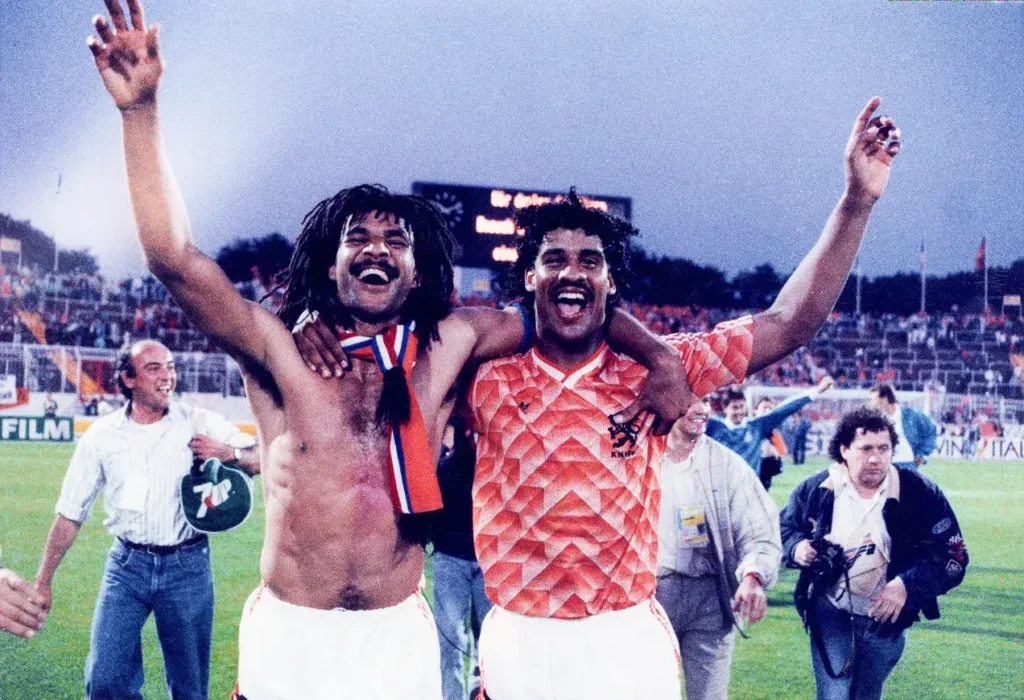
At club level, their dominance only grew stronger. Gullit and Rijkaard were key figures in the legendary AC Milan side of the late 1980s and early 1990s, winning multiple European Cups and setting new standards for tactical and technical excellence. Seedorf, representing the next generation, carried that legacy forward becoming the only player to win the UEFA Champions League with three different clubs, a testament to his adaptability and footballing intelligence.
Together, they didn’t just collect trophies they reshaped expectations. They proved that Dutch football could combine structure with style, discipline with freedom. Their influence inspired future generations, both in the Netherlands and beyond, to embrace a more expressive approach to the game.
Their legacy isn’t just in medals or records, it’s in the identity they helped build. A Netherlands team known not just for competing, but for playing football the right way: with confidence, creativity, and courage.
Influence Without Ownership
Suriname has helped shape football’s identity but doesn’t “own” that success.
No World Cup wins. No dominant national team era. No global recognition on paper.
Yet its fingerprints are everywhere on playing styles, on philosophies, on generations of players who grew up inspired by those who came before them.It exists in moments rather than medals. In influence rather than headlines. In the way football feels, not just how it’s recorded. It’s a silent contribution, but often overlooked and that’s what makes it so unique. Because influence like this doesn’t fade; it evolves. It passes from one generation to the next, reshaping itself while keeping its essence intact.
Coaches may change systems, tactics may evolve, but the core idea of expressive, fearless football continues to survive. It shows up in the confidence of young players who dare to try something different, in the creativity that breaks rigid structures, and in the individuality that modern football now celebrates. In a way, Suriname’s impact exists outside traditional measures of success; it’s not confined to trophies or timelines, but embedded in the culture of the game itself.
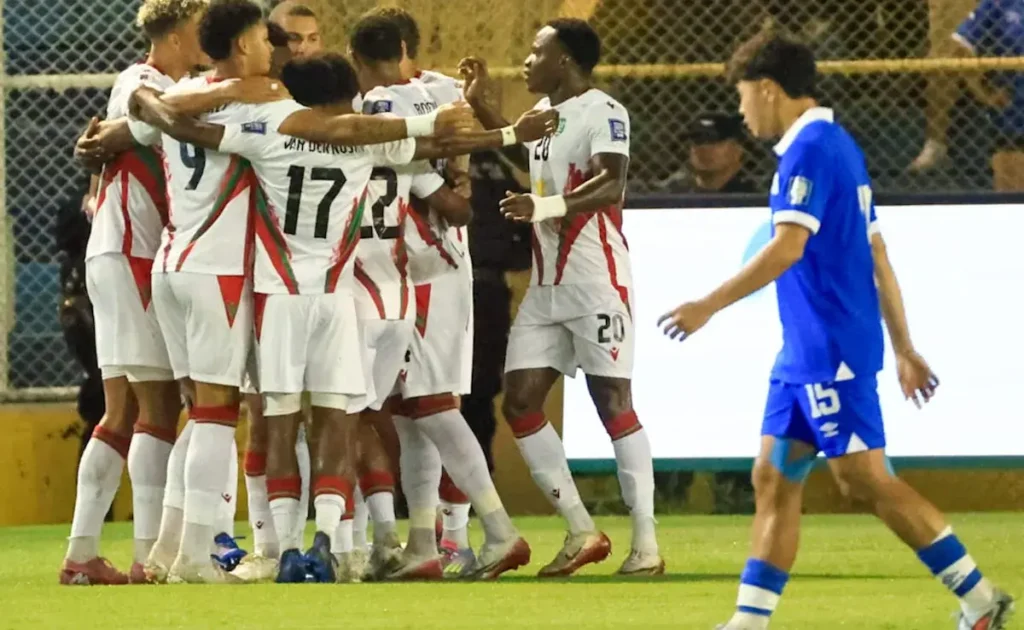
The Modern Game Still Carries It
Even today, you can see echoes of that influence. In players who play without fear. In teams that value creativity over rigidity. In moments where instinct beats structure.
The modern game celebrates flair more than ever and that DNA traces back to places like Suriname. Street football culture is now global but its roots remain local. The emphasis on individuality is stronger than ever, with players encouraged to express, to take risks, and to bring personality into their game. This shift reflects a deeper change in how football is understood not just as a sport of results, but as a form of expression. You see it in quick turns in tight spaces, in unexpected passes, in moments that feel improvised rather than rehearsed. And in many ways, the game has come full circle back to the very essence that players from Surinamese backgrounds embodied decades ago. What was once seen as unconventional is now seen as genius. What was once rare is now essential. And that evolution continues to shape how football will be played in the future.
Can Suriname Go To The Upcoming World Cup?
Now, that legacy feels closer than ever to coming full circle. For Suriname, the path to the World Cup isn’t just theoretical anymore it’s tangible. Through the current qualifying structure in the CONCACAF region, they find themselves just two wins away from taking a massive step toward qualification. Two games. Two moments that could redefine everything.
It’s a scenario filled with pressure, but also possibility. Win those matches, and Suriname moves within touching distance of the biggest stage in football. Lose them, and the wait continues. That’s the fine margin that defines international football but for a nation like Suriname, it carries even more weight.
Because this wouldn’t just be about results it would be about recognition. A chance for a country that has influenced the game for decades to finally stand under its own flag at a World Cup. A chance to turn history into presence.
And if they do get there, it won’t feel like an underdog story, it will feel like something long overdue.
Conclusion: A Legacy Beyond Trophies
Not every football story is about lifting trophies. Some are about shaping the game itself.
Suriname may never be called a football giant but its influence tells a different story. One that lives through generations, through styles, through moments of brilliance. A legacy not written in silverware, but in identity in the way players express themselves on the pitch, and in the freedom that defines modern football. Because true legacy isn’t always about what you win, it’s about what you leave behind.
And what Suriname has left behind is something far more lasting than trophies: a philosophy, a style, a way of playing that continues to inspire. It’s seen every time a player chooses creativity over caution, every time flair breaks structure, and every time football feels less like a system and more like art. That’s the kind of impact that doesn’t just shape eras it transcends them. And that’s why Suriname’s legacy isn’t just part of football history… it’s part of football itself.