



FC Barcelona is one of the most iconic and globally recognized football clubs in the world, with a history stretching back over 125 years. Unlike many modern teams built on big-money takeovers or celebrity signings, Barça emerged organically in 1899 and quickly became far more than just a sports club; it evolved into a powerful symbol of Catalan identity and pride. But have you ever taken a close look at its crest? That simple yet deeply layered shield carries centuries of history and regional symbolism. Keep reading as we dive into the story behind FC Barcelona’s crest.
The Story Behind FC Barcelona’s Crest
What is FC Barcelona?
Founded in 1899 by Swiss businessman Joan (Hans) Gamper along with a group of local and foreign enthusiasts, FC Barcelona is a professional football club based in Barcelona, Catalonia. It plays in La Liga and has long been a cornerstone of the city’s sporting and cultural life. The club is famously owned by its members (socis) rather than a single owner or foreign investors, a model that reinforces its “Més que un club” (“More than a club”) motto.
The Meaning of FC Barcelona’s Crest
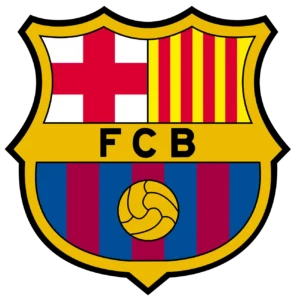
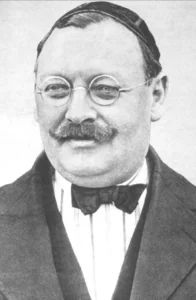
The current version of the crest dates back to 1910, when the club held a design competition among its members. A former player, Santiago Femenia, submitted the winning design. While the badge has seen minor aesthetic tweaks over the decades for smoother lines or updated colors the core elements have remained remarkably consistent.
The shield is divided into sections that blend the club’s footballing identity with deep Catalan roots.
The Top Section: Catalan Pride
The upper half of the crest features two powerful symbols of Catalonia:
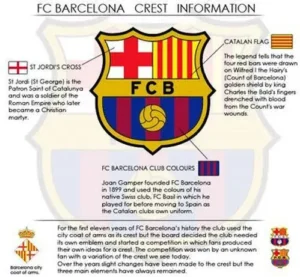
- On the left is the St. George’s Cross (Creu de Sant Jordi in Catalan) a red cross on a white background. Sant Jordi is the patron saint of Catalonia, and this cross also appears in the official coat of arms of the city of Barcelona. It represents courage, chivalry, and the region’s historical and cultural heritage.
- On the right are the four red stripes on a yellow/gold background, known as the Senyera, the traditional flag of Catalonia. Legend has it that these stripes originated when Wilfred the Hairy (Guifré el Pelós), Count of Barcelona, was wounded in battle; King Charles the Bald dipped his fingers in the count’s blood and dragged them across a golden shield, creating the four bars. Whether myth or history, the Senyera has become an enduring emblem of Catalan identity.
These elements were present even in the club’s very early days, when it initially used the full coat of arms of the city of Barcelona as its badge. The Bottom Section: Blaugrana and the Beautiful Game
The lower half displays the club’s famous blaugrana colors, vertical red (garnet) and blue stripes. These were reportedly inspired by the kit of FC Basel, the Swiss club where founder Joan Gamper had played. The stripes represent the club’s sporting identity and the passion of its players and fans on the pitch. At the center of this section sits a football, emphasizing that despite all the symbolism, Barça is first and foremost about the game particularly the elegant, possession-based style that has defined the club for generations. The Central Band and Name
A gold or yellow band runs horizontally across the middle, traditionally bearing the letters FCB (Futbol Club Barcelona). Over the years, political pressures led to temporary changes: during the Franco dictatorship, the club was forced to use “CFB” (Club de Fútbol Barcelona) to cast it in more “Spanish” terms and downplay its Catalan character. The original FCB returned in 1974 as Spain moved toward democracy.
Colors and Overall Design
The dominant colors red, blue, yellow, and white tie everything together. The overall shield shape gives it a classic, heraldic feel that has aged gracefully, making it one of the most recognizable logos in world football.
Throughout its history, especially under Francisco Franco’s long dictatorship (1939–1975), when the Catalan language and symbols were heavily suppressed, the FC Barcelona crest became a quiet but powerful act of defiance. Fans could gather at Camp Nou and see the Senyera and St. George’s Cross on the players’ chests, symbols of a culture that refused to be erased. Matches against Real Madrid often carried deeper political undertones, turning the pitch into one of the few places where Catalan identity could be expressed openly. Even today, the crest continues to embody the idea that FC Barcelona stands for something larger than trophies or individual stars. It links the club to the city, the region, and a set of values centered on democracy, community ownership, and cultural pride.
Conclusion
FC Barcelona’s crest might look straightforward at first glance, but every line, color, and symbol tells a rich story. It represents legends, regional heritage, the joy of football, and a century-plus of dominance. While the club has evolved on the pitch, producing legends like Cruyff, Maradona, Messi, and many more, the crest remains a visual anchor to its soul. In a world where many football logos feel corporate and interchangeable, Barça’s badge stands apart.