

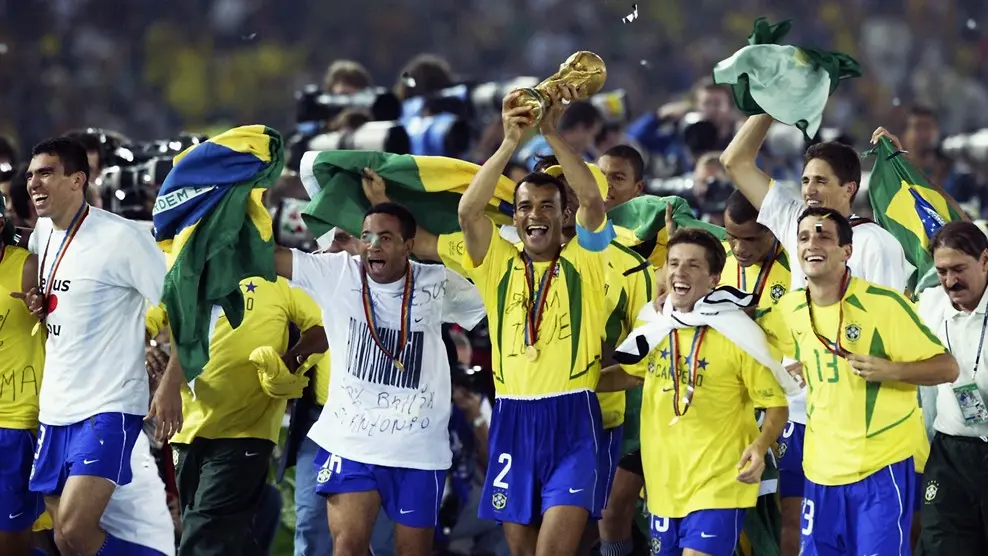

After more than two decades of disappointment following their first golden era in the late 1950s and 1970, the Brazil national football team entered a new phase of success in the 1990s. This period, often regarded as Brazil’s second golden era, was not just about returning to winning ways, but about redefining their identity once again. From the triumph at the 1994 FIFA World Cup to continued success in the early 2000s, Brazil once again established itself as the dominant force in world football, proving that true greatness lies in the ability to adapt and grow.
1994 – “The Turning Point”
The real shift in Brazil’s identity came at the 1994 FIFA World Cup, when the Brazil national football team began to move closer to what was traditionally seen as the “European style” of football. For years, European teams had focused on structure over expression, prioritizing compact defending, positional discipline, and controlling space rather than relying on individual brilliance. Brazil, a team long associated with freedom and flair, embraced elements of this approach for the first time in a serious way. Instead of playing open, attacking football throughout, they became more patient. The team stayed organized, maintained shape, and waited for the right moments rather than forcing creativity.
At the center of this system was Romário, whose efficiency in front of goal perfectly suited this style. Alongside him, Bebeto provided movement and intelligence, but the real difference was how the team functioned as a unit. Every player understood their role, and the emphasis was on minimizing mistakes rather than taking unnecessary risks. The final itself reflected this transformation. It was not a display of attacking brilliance, but a game defined by control, caution, and fine margins. When Brazil eventually won, it became clear that this was a different kind of victory. They had not abandoned their identity, but they had adapted it. In many ways, 1994 was the moment Brazil learned that beauty alone was not enough in modern football. By integrating elements of the European style into their game, they found a new path to success, one that would shape the rest of their second golden era.
1998 – “The Return of Flair” :
If 1994 was about control, the 1998 FIFA World Cup marked Brazil’s gradual return to expression. The Brazil national football team no longer relied solely on the structured, European-influenced approach, they began to reintroduce the attacking freedom that had defined their identity in earlier years.
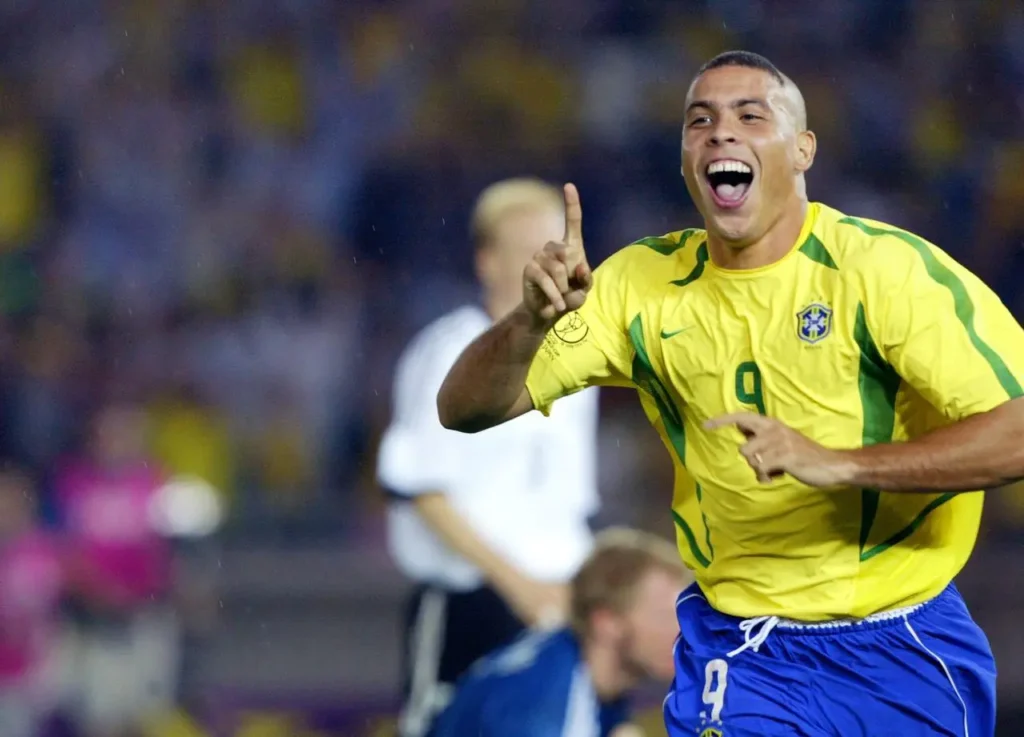
At the center of this shift was Ronaldo. His style was explosive and direct, built on pace, power, and clinical finishing. Unlike traditional Brazilian playmakers, Ronaldo did not rely on intricate build-up alone; he could change a game in a single moment. His presence gave Brazil a new dimension, where structure and spontaneity could coexist.
This version of Brazil felt more balanced than 1994. They still maintained organization, but there was a visible willingness to attack with speed and confidence. The team no longer waited passively, they could control games when needed, but also break forward with purpose. Their journey to the final reflected this dual identity. Brazil played with greater freedom, yet remained tactically aware.
However, the final exposed that the balance was not yet perfect. Against a well-drilled French side, Brazil struggled to impose themselves, and the match slipped away before they could fully respond. Despite the defeat, 1998 was not a failure, it was a transition. It showed that Brazil had begun to reconnect with its attacking roots while still holding onto the lessons learned from 1994. More importantly, it set the stage for what was to come: a team that would finally combine both worlds seamlessly.
2002 – “The Perfect Balance”
By the time of the 2002 FIFA World Cup, the Brazil national football team had finally found what it had been searching for since 1994, a true balance between structure and expression. This was not a team choosing between European discipline and Brazilian flair; it was a team that blended both into a complete and adaptable system.
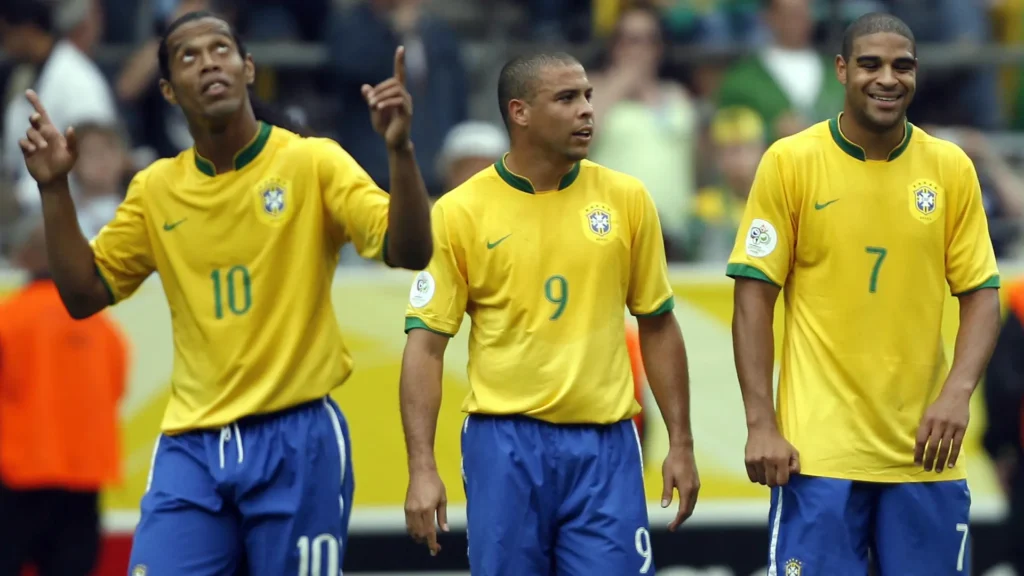
At the heart of this side was the attacking trio of Ronaldo, Ronaldinho, and Rivaldo. Each brought something different. Ronaldo provided directness and finishing, Rivaldo added intelligence and control in tight spaces, while Ronaldinho brought unpredictability and creativity. Together, they made Brazil dangerous in every phase of the game. What set this team apart was not just individual quality, but how well everything fit together. The defense remained organized, the midfield controlled the tempo, and the attack had the freedom to express itself without exposing the team. Brazil could slow the game down when needed, or accelerate instantly when opportunities appeared.
Ronaldo’s story in particular symbolized the team’s journey. After the disappointment of 1998, he returned stronger, sharper, and more decisive, leading Brazil with goals in crucial moments. His performances reflected the maturity of the entire team.
Unlike previous tournaments, there was a sense of completeness about this side. They did not rely on one style or one phase of play. Instead, they adapted to opponents, controlled matches intelligently, and attacked with precision.
In many ways, 2002 was the final evolution of Brazil’s second golden era, a moment where everything came together. It proved that Brazil had not lost its identity; it had simply learned how to refine it.
Dominance Beyond the World Cup:
While World Cup success defined this era, the strength of the Brazil national football team between 1994 and 2005 extended far beyond a single competition. Their consistency across tournaments showed that this was not just a team built for isolated success, but one capable of maintaining dominance over time.
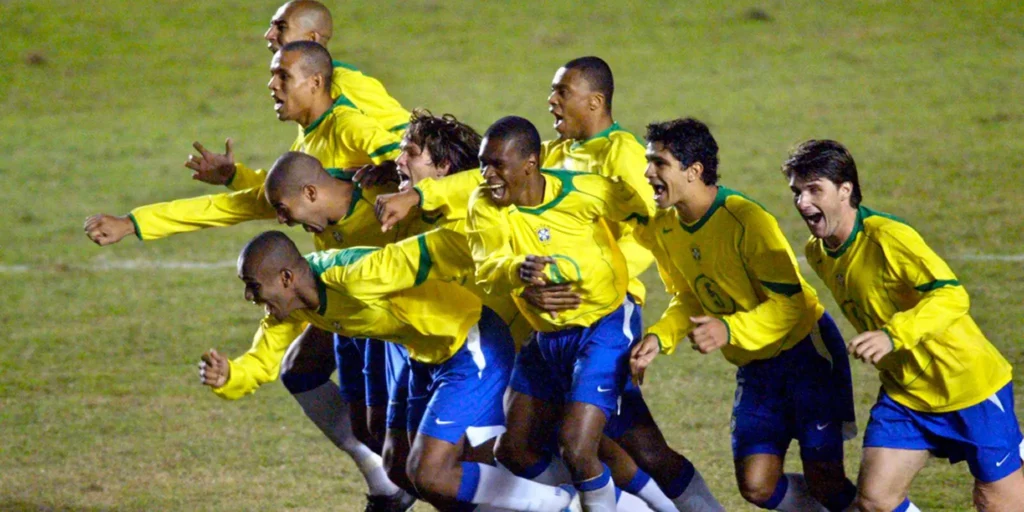
In South America, Brazil firmly established its authority by winning the 1997 Copa América, the 1999 Copa América, and later the 2004 Copa América. Each of these victories came with different squads and styles, highlighting the depth and adaptability within the team. On the global stage, Brazil continued to assert itself through success in the 1997 FIFA Confederations Cup and the 2005 FIFA Confederations Cup. These tournaments further demonstrated their ability to compete against top international sides, often combining control with attacking brilliance. What makes these achievements stand out is the continuity behind them. Even as key players changed and new stars emerged, Brazil’s overall level remained consistently high. The team could adjust its style depending on the situation, sometimes efficient and controlled, other times expressive and dominant. In this way, Brazil’s second golden era was not defined by a single peak, but by sustained excellence across multiple competitions. It showed that their return to the top was not temporary, but built on a foundation strong enough to last.
Conclusion :
The period between 1994 and 2005 stands as one of the most complete phases in the history of the Brazil national football team. It was an era not just of success, but of understanding, where Brazil learned how to adapt its identity to the demands of modern football without losing its essentials. From the controlled, European-influenced approach of 1994 to the expressive yet balanced brilliance of 2002, Brazil evolved into a team capable of winning in different ways.
Even beyond the World Cup, their consistent Brazil’s golden era (1994–2002) redefined football—blending discipline and flair with stars like Ronaldo, Ronaldinho, and Rivaldo. success in continental and international competitions reflected a level of dominance that extended across years, not just moments. Brazil proved that true footballing excellence lies not only in style or talent, but in the ability to evolve, sustain success, and remain at the top in an ever-changing game.