


For years, Japan was seen as tidy guests at the World Cup, organised, polite with the ball, but destined to go home once the real heavyweights arrived. Today, they are something else entirely: a technically sophisticated, relentlessly drilled side that has beaten Germany and Spain at the same tournament. Now walks into World Cups with the swagger of a team expecting to trouble Europe’s elite, not merely share the stage with them.
With qualification for 2026 already secured dominantly and a string of eye‑catching results against European opposition, this World Cup feels less like another test run and more like a litmus test of whether Japan’s 30‑year football project is ready to deliver a historic breakthrough.
From Underdogs to Giant‑Killers
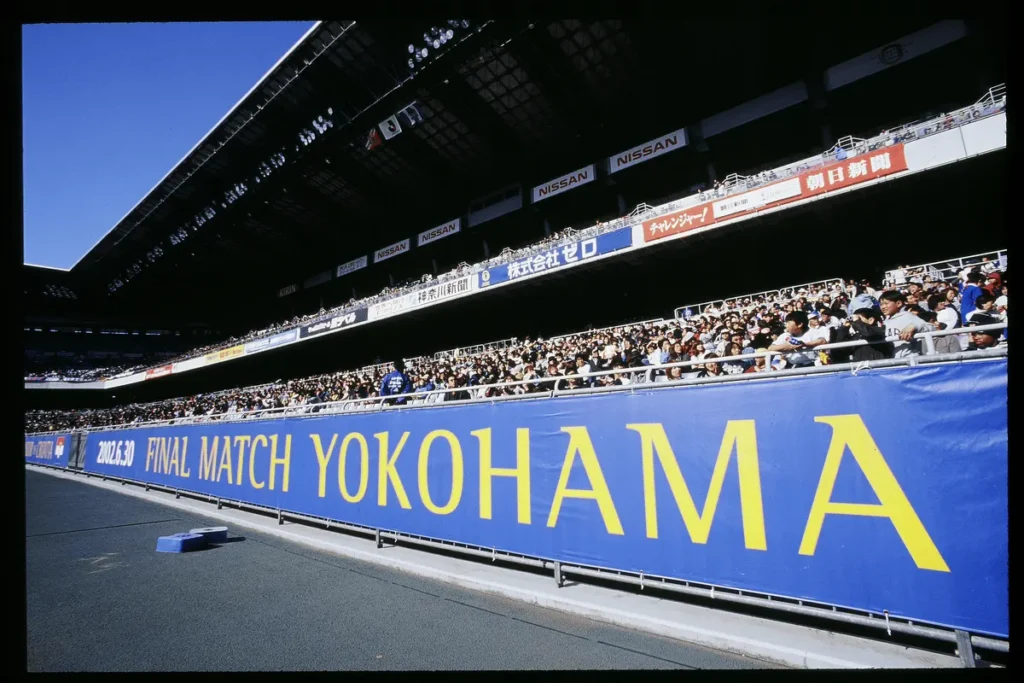
Japan’s World Cup story is remarkably compressed. They did not qualify for the finals until 1998, when they lost all three group games in France and finished 31st. That debut, three narrow defeats, including a first-ever World Cup goal from Masashi Nakayama in a 2–1 loss to Jamaica, hinted at potential but underlined the gap between Japan and the established powers.
The turning point came with co‑hosting in 2002, when a fully professionalised J‑League and an improving national set‑up pushed the Samurai Blue into the last 16 for the first time. Since then, Japan has qualified for every edition and developed a clear pattern: group‑stage exits in 2006, 2014, and that painful 2018 collapse to Belgium, but knockout runs in 2010, 2018, and 2022, four Round‑of‑16 appearances in their seven tournaments. The Belgium loss in 2018, when a fearless Japan went 2–0 up before conceding a 94th‑minute winner, felt like a footballing coming‑of‑age: no longer grateful participants, but a side capable of taking a top‑five nation to the brink.
Qatar 2022 removed any lingering doubt. Japan did not just reach the last 16 again; they did it by beating Germany and Spain, two former world champions with vastly deeper resources.
Against Germany, Hajime Moriyasu’s team absorbed long spells of pressure in a compact 4‑2‑3‑1, then flipped the match with a tactical switch to a back five and an aggressive high press that disrupted Germany’s build‑up and opened space to attack in behind. Spain were undone by similar ruthlessness: Japan ceded possession but compressed the centre, sprang forward in lightning transitions and needed only a handful of attacks to turn 0–1 into 2–1 and top a group many expected them to finish bottom of.
The problem, of course, is the awkward gap. Ending the traditional 2025 season in December and not starting the 2026–27 season until August 2026 would leave nearly 8 months without a flagship domestic league. The 100 Year Vision League is the solution: a transitional competition that keeps players sharp, clubs visible, and fans engaged, while also stress-testing some experimental ideas before the new era truly begins.
Fast, fluid, fearless Gamestyle
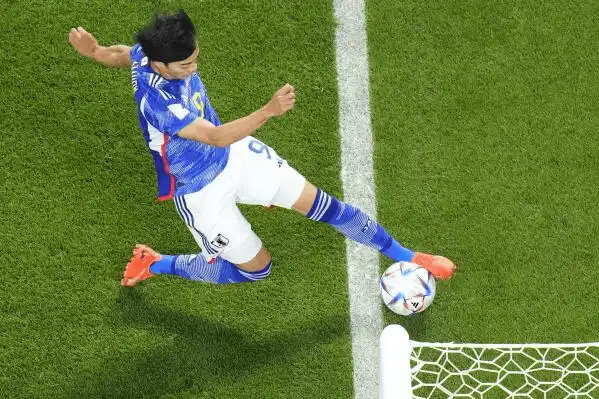
The modern Japanese side is built on speed between the lines rather than sheer physicality. Out of possession, they press in coordinated waves, with forwards and wingers locking onto opposition centre‑backs and pivots, and a compact midfield line ready to pounce on loose passes. In possession, they can look like a La Liga team in blue: short, sharp combinations in midfield, then a sudden acceleration through the half‑spaces as wide players drive at isolated defenders.
In the middle, Wataru Endo offers the balance Japan once lacked. As captain of the national team and a defensive midfielder at Liverpool, he brings both leadership and a deep understanding of how to control the tempo against high‑pressing opponents. Coaches at Anfield describe him as a “safety valve” who closes spaces, recycles possession, and calms chaotic games, qualities that have carried into a Japan side that increasingly looks comfortable managing long, tense spells at World Cups rather than being swept away by them.
Perhaps most significantly, Moriyasu has embraced tactical flexibility. Japan can toggle between a 4‑2‑3‑1 and a back five, press high or fall into a medium block, and switch from patient circulation to direct balls into channel‑running forwards depending on the opponent. This is not a system defined by one star, but a coherent collective where most of the XI are used to high tactical demands at club level, a marked shift from the largely domestic squads of the late 1990s
Friendlies are an initial warning
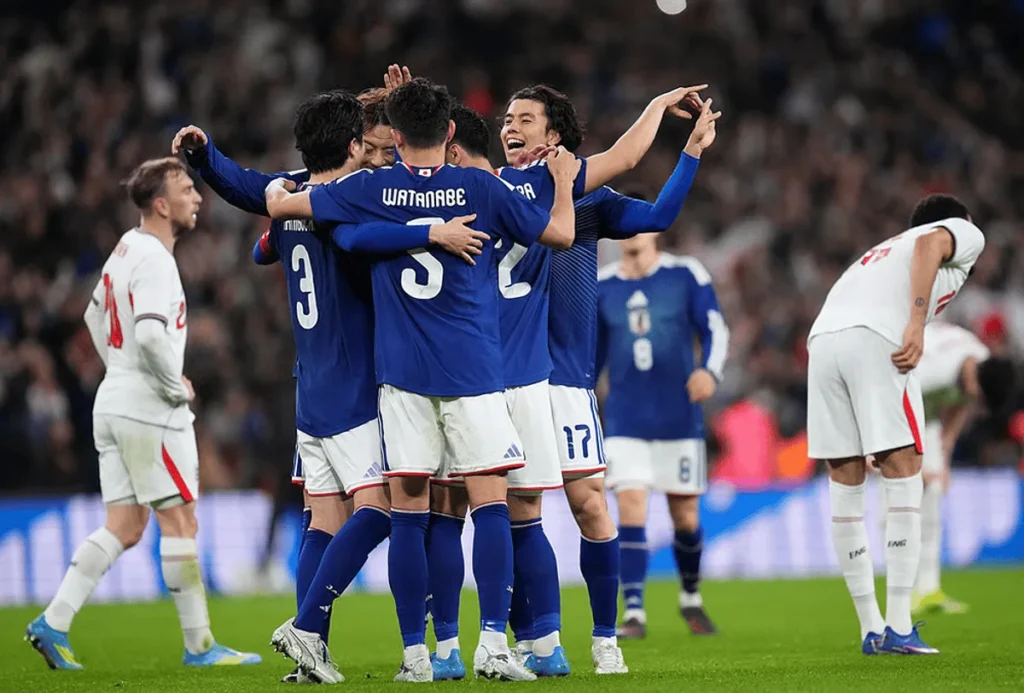
If World Cups are where legacies are written, friendlies are where the clues appear. Over the past 18 months, Japan’s schedule has read like an audition for a European Championship: Brazil, Ghana, and Bolivia at home, then away trips to Scotland and England in March 2026. The results have been striking: wins over Brazil and Ghana in 2025, a controlled 3–0 against Bolivia, then back‑to‑back 1–0 victories in Glasgow and London to close the March window.
The Scotland match was a classic Japanese performance in miniature. Scotland, buoyed by a first World Cup qualification in 28 years, started aggressively, but Zion Suzuki’s early save from Scott McTominay steadied Japan before they gradually asserted control of the ball and tempo. Junya Ito’s late winner at Hampden came after an hour of patient probing and selective pressing, an example of Japan’s growing comfort in away European atmospheres that once might have intimidated them.
Three days later, a narrow win over England added another layer of credibility. Even without the full ferocity of a tournament, beating a deep European squad on their own soil is a powerful data point for a team that used to rely heavily on home advantage or neutral venues for big results.
These friendlies revealed familiar patterns: compact defending, quick counter‑attacks led by European‑based wide players, and a midfield able to survive repeated pressing waves without panicking. They also suggested that Japan’s peak level is no longer a one‑off reserved for World Cup shocks; it is becoming their baseline. The open question for 2026 is whether that baseline holds under knockout‑stage pressure.
The Secret Sauce: The Grassroots Revolution
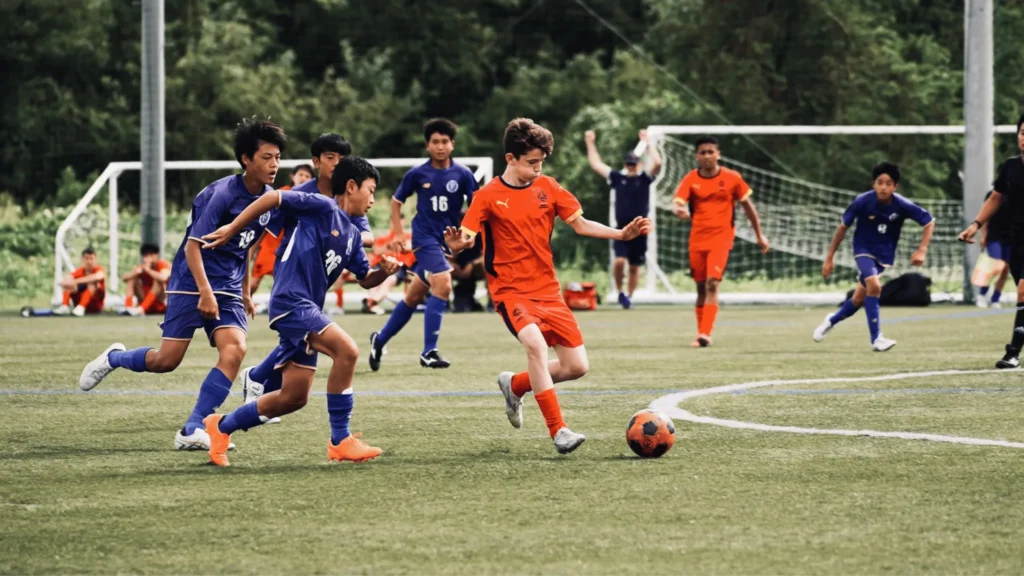
All of this brings us to the uncomfortable, exhilarating question: What is a realistic ceiling for Japan at the upcoming World Cup? On form and underlying structure, a quarterfinal run is no longer a romantic fantasy; it is a plausible, if demanding, target. Japan breezed through Asian qualifying for 2026, winning 12 of 14 matches, drawing the other two, and conceding only twice, numbers that confirm their status as the continent’s most reliable power outside perhaps an on‑song South Korea.
Their strengths are obvious. They have a clear identity built around organisation, pressing and rapid transitions, but enough tactical flexibility to adapt game plans to particular opponents. They can now call on a core of players hardened by the Premier League, La Liga, and the Champions League, including match‑winners out wide and a captain in Endo who has proved he can anchor a midfield in one of Europe’s most intense environments. Their preparation schedule, packed with strong friendlies, means they are unlikely to be tactically surprised by any style they encounter.
How far can this generation go?
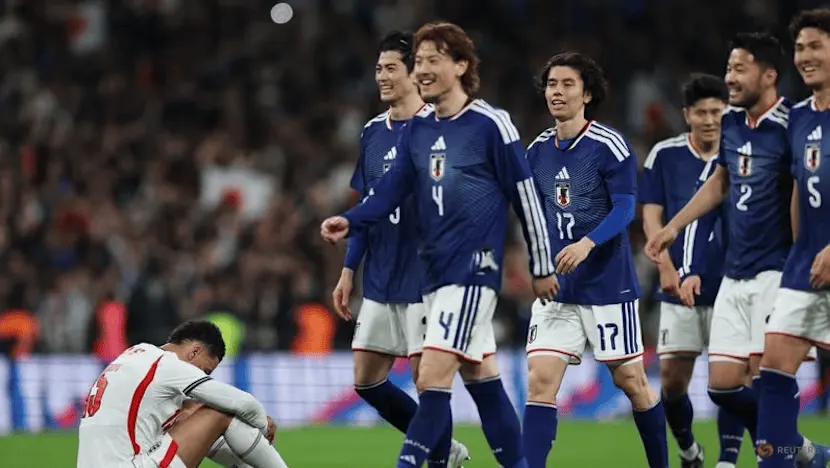
Japan’s rise is not an accident of one “golden generation” but the product of a systematic re‑imagining of how a football country should be built. When the J‑League launched in 1993, its explicit goal was to raise domestic standards and help the national team qualify for a World Cup, a dream realised in 1998. In the three decades since, the league has expanded from 10 clubs to around 60 across three divisions, embedded deeply in their communities and explicitly tasked with building youth pathways.
Crucially, those pathways are not limited to traditional club academies. High school and university football remain powerful parallel routes, with the All Japan High School Soccer Tournament drawing nationwide attention and producing many professionals. Analysts note that university football in Japan is not a consolation prize but a high‑level environment where late‑developing players can mature physically and tactically, often entering the pro game between 20 and 22 as more rounded adults rather than burnt‑out prodigies. The diversity of routes, including J‑League academies, “street” clubs, elite schools, and universities, broadens the talent pool and allows players to develop at different speeds.
At the federation level, the Japan Football Association has long worked to a clear, almost corporate‑style roadmap. The 2005 “JFA Declaration” set the audacious goal of winning the World Cup by 2050, supported by a philosophy known as “Japan’s Way” that stresses four pillars: strengthening national teams, youth development, coach education and grassroots.
Conclusion
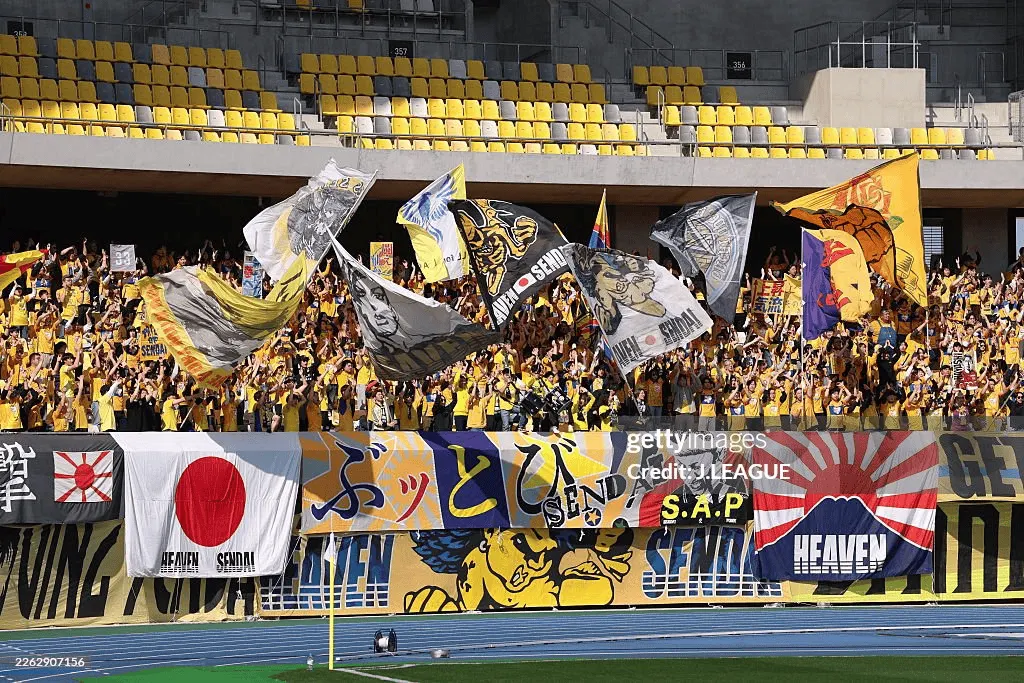
Whatever happens this summer, Japan has already proved something important: that a football nation can be built deliberately, through patient investment in schools, coaches, local clubs, and a shared philosophy, rather than flashes of individual brilliance alone.
The Samurai Blue now walk into World Cups as the living embodiment of that idea, a team that started as an afterthought in 1998 and, through three decades of planning, might just be approaching its moment of greatest possibility. The question in 2026 is not whether Japan belongs at this level; it is whether this generation is ready to convert respect into their deepest World Cup run yet.