

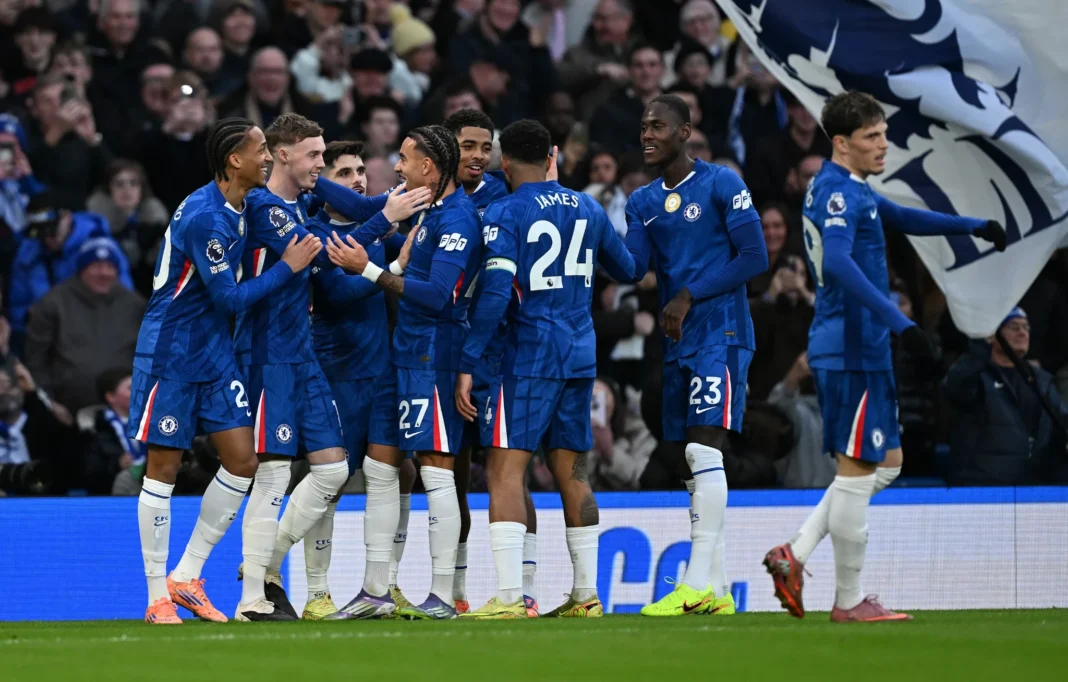

On a cold night at Stamford Bridge in April 2026, the final whistle brought more than just another disappointing result. Boos echoed around the stadium, thousands of supporters remained in their seats long after the match had ended, and chants aimed at the owners grew louder with every passing minute. Some fans held banners demanding change, others sang the names of former players and managers, while a growing number simply stood in silence, staring at a club they no longer recognized.
For many supporters, the pain was deeper than another defeat. It was the feeling of watching the club they grew up loving slowly lose its identity. The connection between Chelsea and its fans, once built on pride, passion, and a relentless winning mentality, now feels broken. This was not supposed to happen.
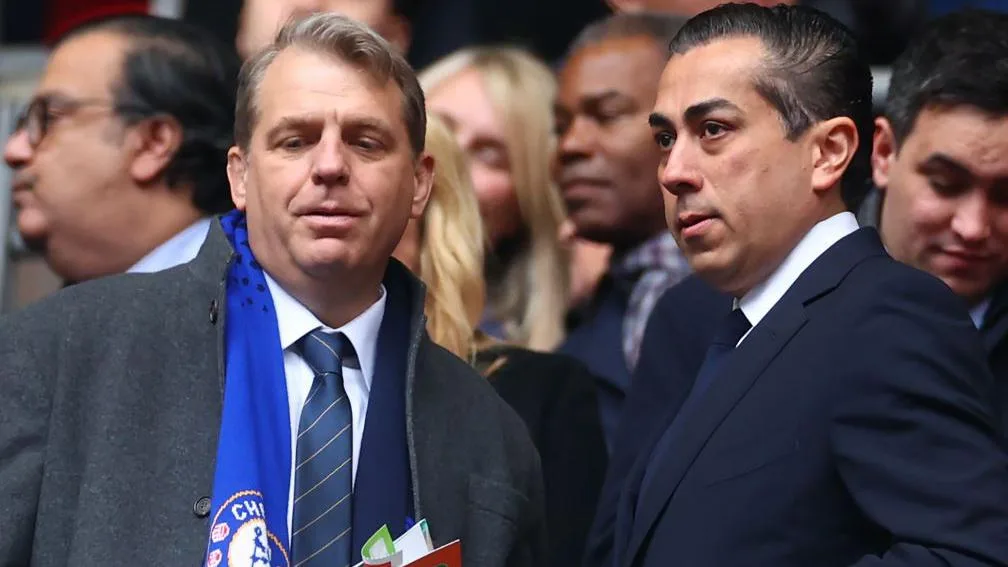
Only a few years earlier, Chelsea’s new ownership had promised a bold new era built on youth, data, and long-term planning. They spoke about creating a modern football dynasty, one that would dominate both on and off the pitch for years to come. The strategy looked ambitious, exciting, and revolutionary.
Instead, it has left Chelsea trapped in a cycle of managerial sackings, bloated squads, financial losses, and frustrated supporters. Stamford Bridge, once one of the most feared stadiums in Europe, has become a symbol of confusion and instability. Every week now feels like another chapter in a story of decline. Another poor result. Another protest. Another reminder of how far Chelsea has drifted from the ruthless, united club it once was.
What was designed to be the future of football now risks becoming one of the clearest warnings about what happens when a club loses its identity.
The Managerial Merry-Go-Round
The decision to part ways with Enzo Maresca on January 1, 2026, served as a grim confirmation that Chelsea’s supposed “long-term vision” may never have truly existed. Whether his exit was the result of a direct sacking or a complete breakdown in relations, the outcome was the same: another manager gone before he had been given the time to build anything meaningful.
Maresca had arrived with a clear tactical identity and a reputation for structured, possession-based football. Yet after less than seven months in charge, he became the latest casualty of a boardroom that has repeatedly shown impatience whenever results dip.
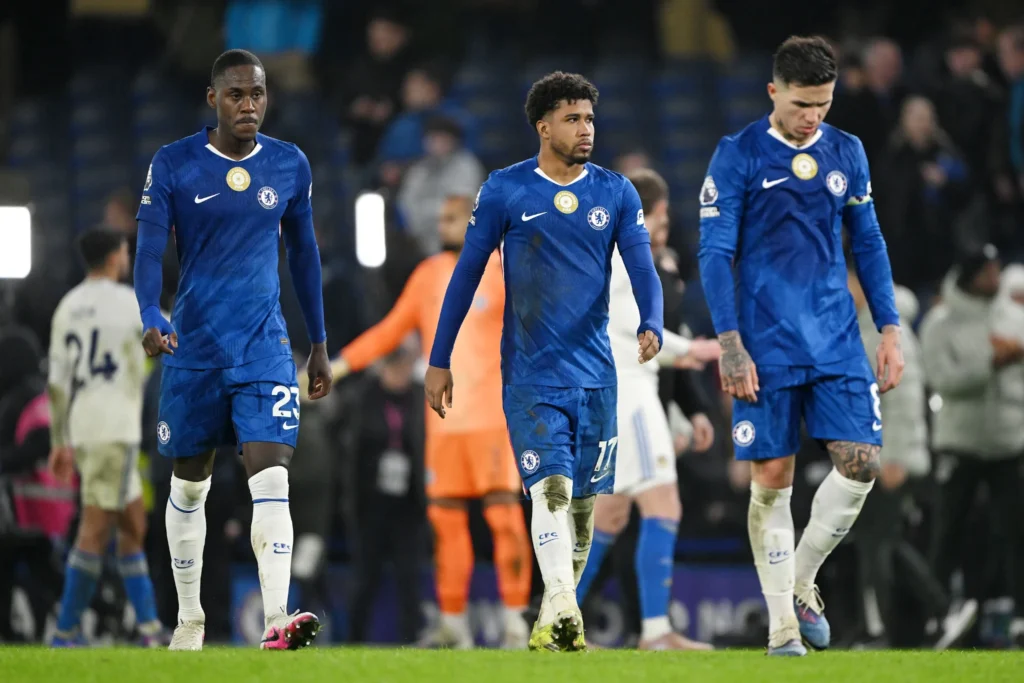
The fallout was immediate. Supporters viewed Maresca as a scapegoat for much deeper problems within the club and even chanted his name during subsequent matches in protest. His replacement, Liam Rosenior, has struggled to steady the ship. Chelsea have endured a disastrous run of form, including four consecutive league defeats without scoring, leaving the club outside the Champions League places and increasing speculation about another managerial change.
Diego Simeone is now being linked as a possible future option, a sign that Chelsea may be searching for a figure with enough authority and personality to impose order on the chaos.
A Crisis of Confidence
The constant churn of tactics, managers, and expectations has decimated morale within the dressing room. Chelsea’s once-feared squad has become a collection of talented individuals lacking a clear collective identity.
High-profile signings have stagnated, their confidence eroded by inconsistency, limited playing time, and an increasingly toxic atmosphere. For the first time in the modern era, Chelsea no longer feels like a destination club. Instead, it feels like a waiting room.
Reports suggest that even key figures such as Enzo Fernández and Marc Cucurella have questioned the club’s direction internally. Multiple first-team players are believed to be exploring possible exits to Spain, Italy, or Germany in search of more stable, better-run environments where they can realistically compete for major honours.
That is perhaps the most alarming aspect of Chelsea’s decline. The club still possesses elite talent. Palmer remains one of the brightest attacking players in Europe, Fernández is a World Cup winner, and Moisés Caicedo is still regarded as one of the league’s top midfielders. The issue is not a lack of ability. It is a lack of structure around that ability. Its the lack of experience within the squad resulting that even a minor momentum shift results in a proper capitulation of the Chelsea players during a game.
Financial Wastage and the Sponsorless Shirt
Perhaps the clearest symbol of Chelsea’s dysfunction can be found on the front of the shirt. Since the departure of Three in 2023, the club has struggled to secure a permanent, high-value front-of-shirt sponsor. Temporary arrangements with brands such as Infinite Athlete and IFS have only reinforced the sense of instability around the club.
For a member of the traditional “Big Six,” the inability to attract a long-term global commercial partner is a significant embarrassment. It suggests that Chelsea’s brand, once associated with serial success and global prestige, is no longer viewed with the same confidence by sponsors.
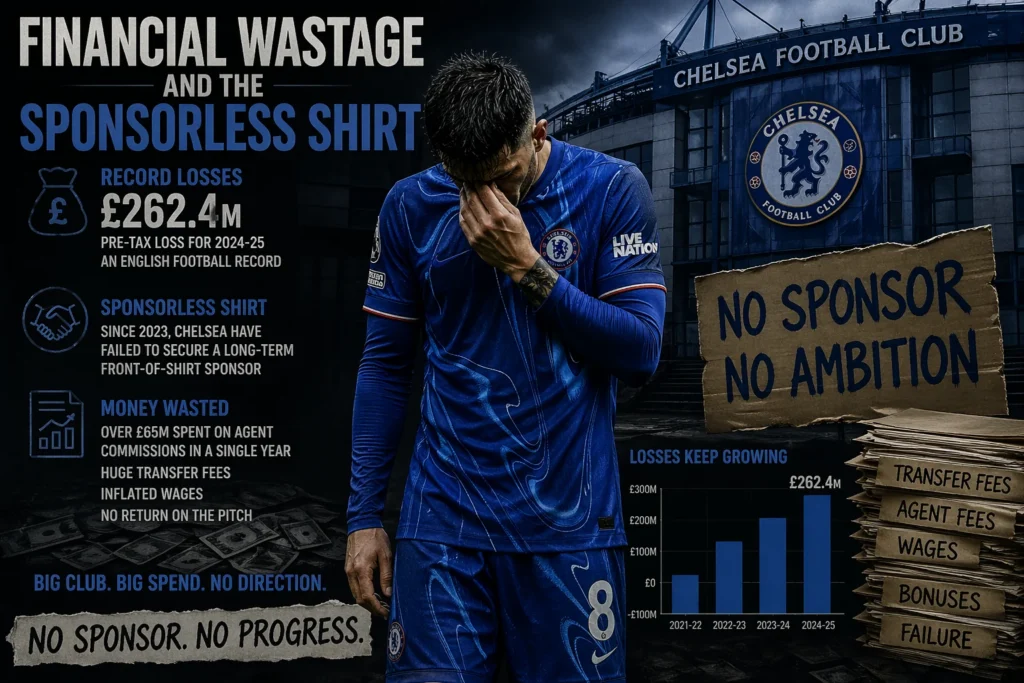
Financially, the situation is equally concerning. Chelsea posted a staggering £262.4 million pre-tax loss for the 2024-25 season, setting a new English football record. While the club has managed to avoid Profit and Sustainability sanctions through asset sales and creative accounting, the scale of the losses reflects years of reckless spending.
Huge transfer fees, inflated wages, and more than £65 million spent on agent commissions in a single year have left Chelsea bloated financially but still far from competitive at the highest level.
Fans vs Ownership (BlueCo)
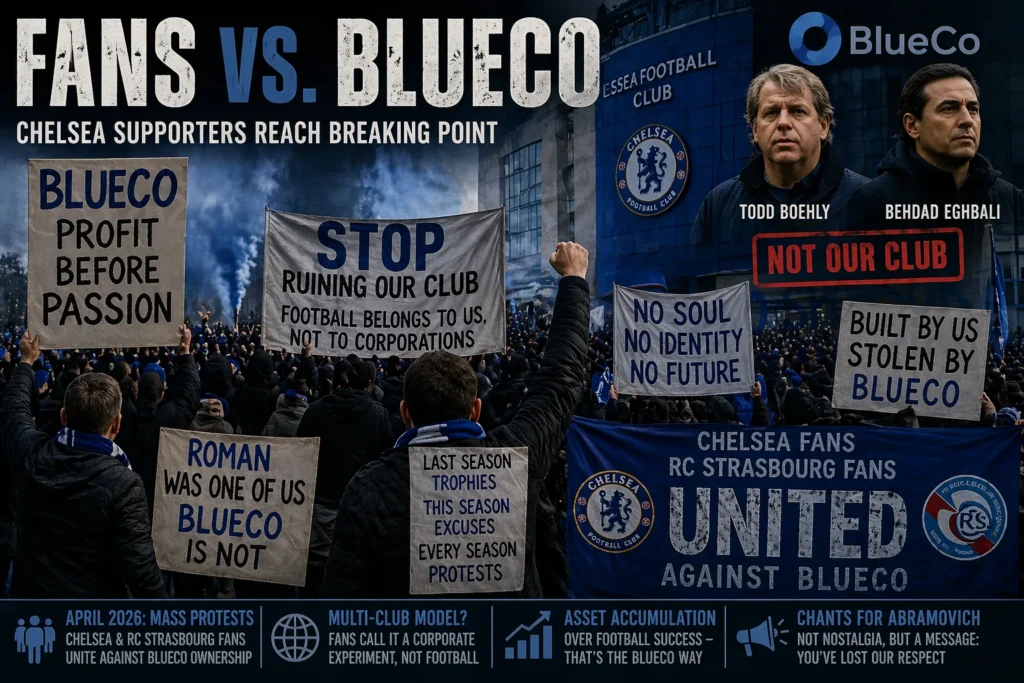
The divide between Chelsea supporters and the BlueCo ownership has only grown wider with each passing month. What began as frustration over poor results has now evolved into something much deeper: a complete lack of trust. Many fans believe the ownership group has treated Chelsea more like an investment portfolio than a football club. Decisions around transfers, ticket prices, sponsorships, and even the multi-club model have created the impression that financial growth matters more than on-pitch success.
The protests involving RC Strasbourg supporters made that frustration even more visible. For both fanbases, the fear is the same: that their clubs are being used as part of a larger business strategy rather than being run with their own individual identity and traditions in mind. There is also growing anger over the lack of communication from the ownership. Todd Boehly and Behdad Eghbali rarely speak directly to supporters, leaving fans to piece together the club’s direction through transfer leaks, rumours, and reports from journalists.
As the losses continue and results decline, many Chelsea supporters now feel disconnected from the club in a way they never have before. Stamford Bridge no longer feels united. Instead, it feels divided between owners focused on the future and supporters still fighting to protect the soul of the club. For many, the chants for Roman Abramovich are not about wanting the past back exactly as it was. They are about longing for a time when Chelsea felt ruthless, ambitious, feared, and above all, like a football club that knew exactly what it wanted to be.
Youth Without Leadership
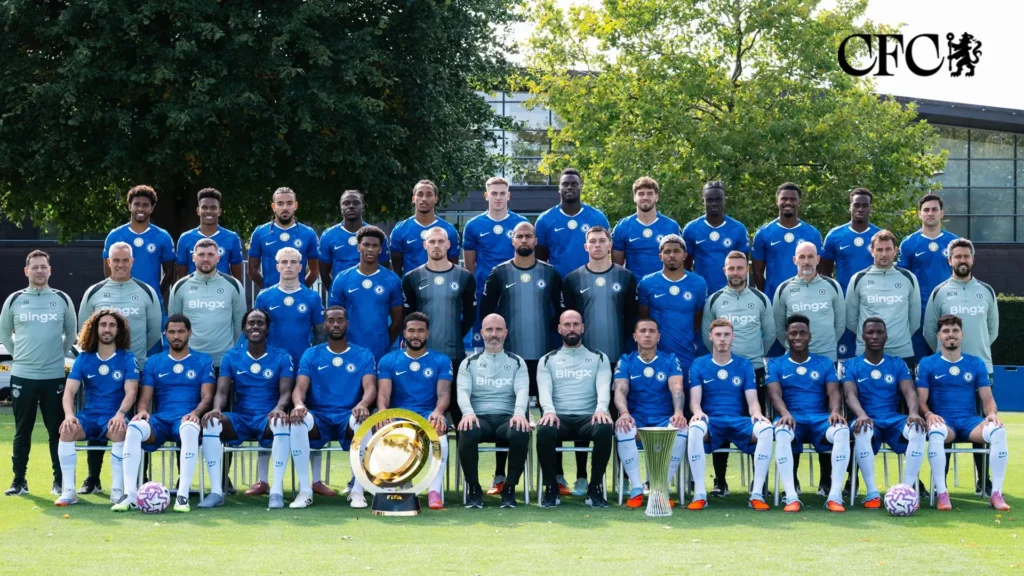
At the centre of the BlueCo strategy was the idea of building a squad around the world’s best young players. On paper, it sounded modern, exciting, and sustainable. In reality, it has created a dressing room full of talent but dangerously short on experience, authority, and leadership.
Chelsea now have one of the youngest average squad ages in the Premier League, sitting at roughly 23.6 years old. Experienced figures such as Thiago Silva, César Azpilicueta, Jorginho, and Mateo Kovačić have all left in recent years, yet the club has failed to properly replace them with battle-tested leaders.
The result has been a leadership vacuum. In difficult moments, there is often no senior player capable of slowing the game down, calming younger teammates, or dragging the team through adversity. When Chelsea concede first or lose momentum, heads drop too quickly and the team often looks emotionally fragile.
Recent collapses against top opposition have only reinforced this point. Players such as Levi Colwill, Moisés Caicedo, Enzo Fernández, and Cole Palmer are being asked to shoulder enormous responsibility before they have fully matured themselves. Instead of being protected by experienced leaders, they are being expected to become those leaders overnight.
That environment is unfair on young players. Development is rarely linear, especially in a club under constant pressure. One poor performance quickly becomes a crisis, and without senior professionals around them, Chelsea’s younger stars are learning in one of the most unforgiving environments in European football.
There is also a growing feeling that Chelsea’s squad lacks personality. Many of the club’s young signings are technically talented, but there are few vocal characters who can organize the dressing room, demand higher standards, or rally the team when things begin to go wrong.
For years, Chelsea’s most successful sides were built on balance. Players like John Terry, Frank Lampard, Didier Drogba, Petr Čech, and Thiago Silva provided leadership and composure, while younger players developed around them. That structure no longer exists.
Quantity Over Quality
Chelsea’s transfer strategy has often resembled a frantic stockpiling exercise rather than a carefully planned rebuild. Since the takeover, the club has repeatedly chosen quantity over precision. At various points, the first-team squad has contained close to 40 players, forcing managers to split training groups simply to conduct basic sessions. The board’s recruitment model has often felt like a “lottery ticket” strategy. Rather than spending £100 million on one established, world-class player, Chelsea have frequently spent the same amount on three or four young prospects in the hope that one or two eventually become elite.
While that approach might make sense from a business perspective, it has created a bloated squad with too many unfinished players and not enough reliable starters. Chelsea have spent huge amounts of money, yet obvious weaknesses remain unresolved.
The club still lacks a ruthless striker capable of scoring 25 goals a season. It still lacks a commanding goalkeeper who can organize the defence and make big saves in decisive moments. Even after hundreds of millions spent, Chelsea continue to look incomplete. The oversized squad has also created practical problems. Too many players are competing for the same positions, making it difficult for managers to build chemistry or establish a settled starting XI. Constant rotation has left players frustrated, confused, and unsure of their roles.
There is also little room for patience when so many players are fighting for minutes. A young player can go from starting regularly to disappearing from the squad within a matter of weeks. That instability damages confidence and makes long-term development even harder.
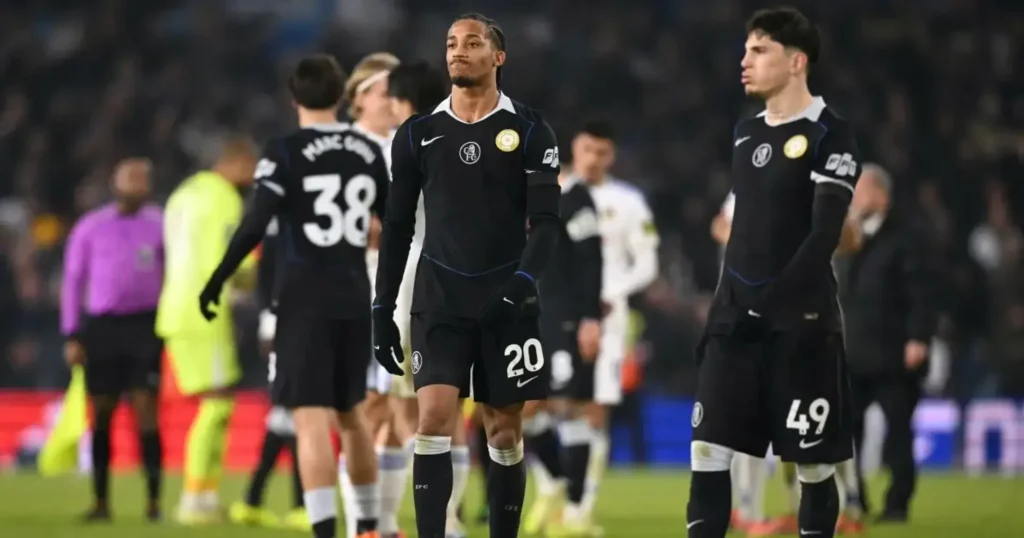
Long-term contracts have only made the situation worse. Many players are tied down to seven or eight-year deals designed to spread out amortization costs. What once looked financially clever now resembles a trap. Chelsea are now stuck with underperforming players on huge contracts that other clubs are unwilling to match. Moving players on has become increasingly difficult, leaving the squad overcrowded and financially inflexible.
Ultimately, Chelsea’s problem is not that they bought young players. It is that they bought too many, too quickly, without building the experienced spine needed to support them. Potential alone does not win trophies. Successful teams need balance, leadership, and clarity, three things Chelsea currently lack.
How Can Chelsea Learn from their Mistakes and Rectify
Chelsea can only begin to repair this situation by moving away from short-term panic and finally committing to a clear football structure. The club needs fewer players, not more, and should focus on trimming the squad down to a manageable size with a stronger balance between youth and experience.
Recruitment must become more targeted. Instead of signing multiple young prospects every window, Chelsea should prioritize proven leaders in key positions such as centre-back, striker, and goalkeeper. The squad desperately needs experienced players who can organize the team and guide younger stars through difficult moments. The club also needs stability in the dugout. Constantly changing managers has only created confusion, so Chelsea must give their next coach time and authority to build a proper identity.
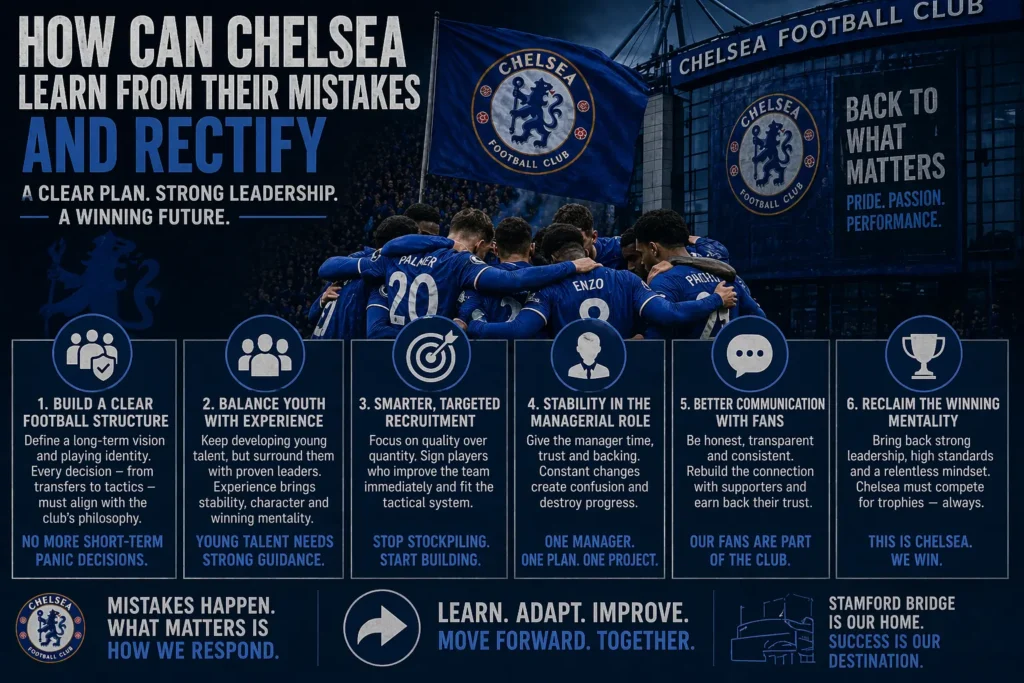
Communication with supporters is equally important. Fans want honesty, transparency, and proof that the club values football success more than business experiments. Rebuilding trust off the pitch is just as important as improving results on it.
Most importantly, Chelsea need to rediscover what made them successful in the first place: strong leadership, clear standards, and a winning mentality. Without that foundation, no amount of money or potential will be enough to bring the club back to the top.
Not a Total Failure, But Still a Failed Vision
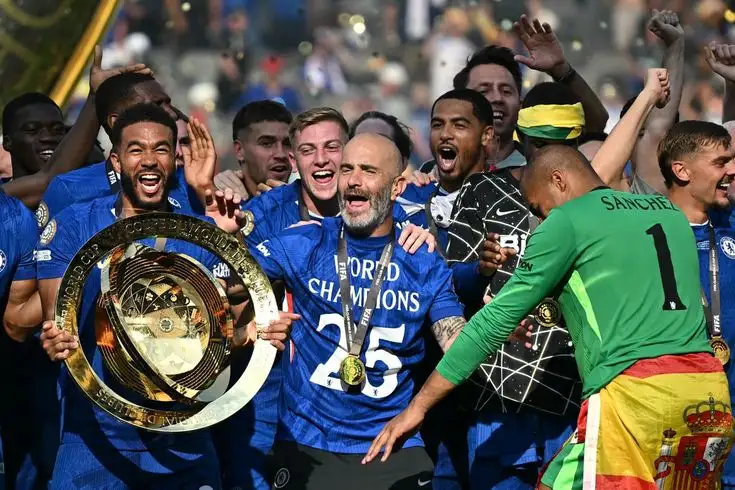
Under Maresca, the club did manage to win the Club World Cup and the Conference League. There is still enormous talent in the squad, and Chelsea remain capable of building something competitive in the future.
However, those isolated successes do not change the broader picture. The original BlueCo blueprint promised a dynasty built on smart recruitment, long-term planning, and sustainable success. Instead, it has delivered instability, financial excess, a bloated squad, and a fanbase that feels disconnected from its own club.

There are now rumours that Chelsea may finally be shifting strategy by targeting more mature, emotionally resilient players in the summer transfer window. If true, it would represent an admission that the youth-only model has failed.
For many Chelsea supporters, though, it may already be too late. The damage to the club’s culture, reputation, and identity could take years to repair. Chelsea did not become a cautionary tale because they lacked money or talent. They became one because they confused potential with progress, volume with quality, and youth with balance.
The BlueCo blueprint promised the future. Instead, it delivered an overcrowded dressing room, a fractured fanbase, and a club that no longer knows what it wants to be.