

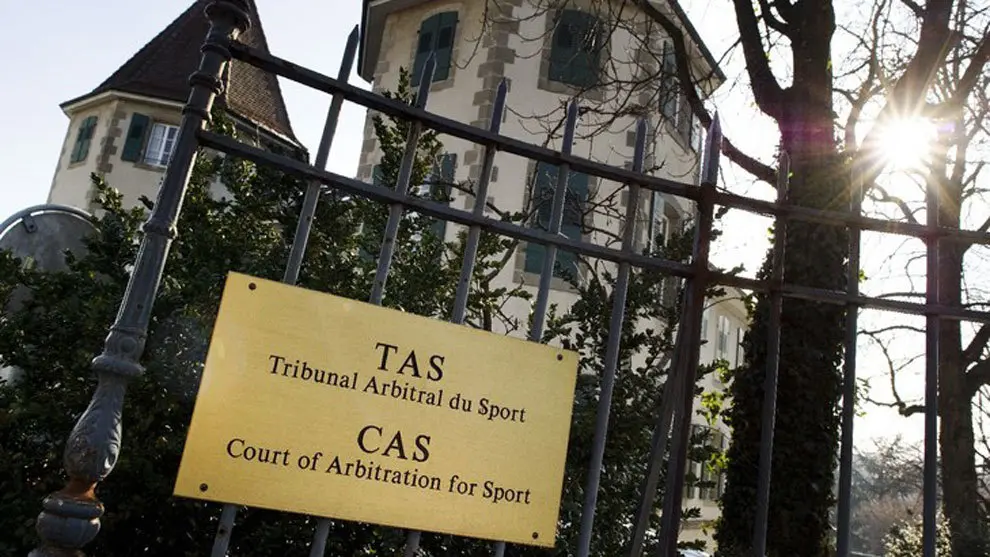

In modern football, not every battle is decided on the pitch. Some of the biggest victories and defeats happen in boardrooms, court filings, and arbitration hearings. At the centre of those disputes sits one powerful institution, The Court of Arbitration for Sport. Better known as CAS. But what exactly is CAS, and why does football listen to it?
What Is CAS?
CAS is the highest independent legal authority in global sport. It was created to resolve sports related disputes quickly, consistently, and outside traditional national courts. Today, it acts as the final legal checkpoint for almost every major football conflict.
When domestic leagues, national associations, FIFA, UEFA, or confederations exhaust their internal processes, CAS is where cases usually end up. In simple terms, CAS is football’s Supreme Court.
Where Is CAS Based?
CAS is headquartered in Lausanne, Switzerland. This is not a coincidence. Most major sports bodies, including FIFA and the International Olympic Committee, are also registered under Swiss law. This allows CAS rulings to carry international legal weight and be enforceable across borders.
Why Does Football Need CAS?
Football is global. Courts are national. A transfer dispute involving clubs from two countries, A ban imposed by FIFA on a national federation, A player suspension affecting international competitions. These issues cannot realistically be handled by one country’s legal system. CAS provides, Neutrality, Speed, Consistency across jurisdictions. Without CAS, football would collapse into endless legal chaos.
What Kind of Cases Does CAS Handle?
CAS deals with a wide range of football disputes, including, Player transfer disputes, Contract termination cases, Disciplinary bans and suspensions, Financial Fair Play appeals, Governance and election disputes, Eligibility and registration issues.
Some of the most high profile cases in football history have been decided by CAS, often reshaping competitions and careers overnight.
How Does a Case Reach CAS?
CAS does not replace football authorities. It sits above them. The hierarchy usually works like this, Club or player appeals internally, National association reviews the case, Confederation or FIFA hears the appeal, CAS becomes the final step. Once CAS delivers a ruling, it is binding. Very rarely can a case be challenged further, and only on extremely narrow legal grounds in Swiss courts.
How CAS Makes Decisions
CAS panels are made up of independent arbitrators with expertise in sports law. Cases are heard through written submissions, oral hearings, and evidence presented by both sides. The panel then issues a reasoned decision based on sports regulations, contract law, and principles of fairness. CAS does not judge emotion. It judges process, evidence, and compliance with rules.
Why CAS Decisions Matter So Much
CAS rulings often set precedents. A decision in one case can influence, Future transfer regulations, Disciplinary standards, Governance reforms, How football bodies draft their rules. That is why clubs, federations, and players take CAS extremely seriously. Winning at CAS can save careers. Losing at CAS can end them.
The Criticism of CAS
Despite its authority, CAS is not without criticism. Some argue, The process favours powerful institutions, Smaller clubs struggle with legal costs, The speed of decisions can vary, Transparency can be limited.
Others question whether true independence exists when many sports bodies require disputes to go through CAS by default. Yet, despite the criticism, no viable global alternative exists.
CAS and Football’s Balance of Power
CAS acts as a check on football’s ruling bodies. FIFA and confederations cannot act entirely unchecked, knowing their decisions can be overturned if procedures are flawed or rules misapplied. At the same time, CAS protects the system by ensuring disputes stay within sport, not public courts. It preserves order in a game that would otherwise drown in lawsuits.
Why CAS Will Always Be Central to Football
As football becomes more commercial, more political, and more global, disputes will only increase. CAS is not perfect. But it is essential. It stands between chaos and structure, Between power and accountability, Between emotion and law. In modern football, the final whistle does not always end the game. Sometimes, the real result is delivered by CAS.