


It’s 4:30 in the morning and I should be heading for my train, but I need to talk about this match first. We Barça fans stay awake till 3 or 4 AM, even with work and college the next day and for what? For another big-game collapse.
Every time Barcelona scores first, they concede right after. And in the Champions League, entering matches expecting to win 1–0 is a joke. If you also keep conceding at least once, how will you ever control a knockout tie?
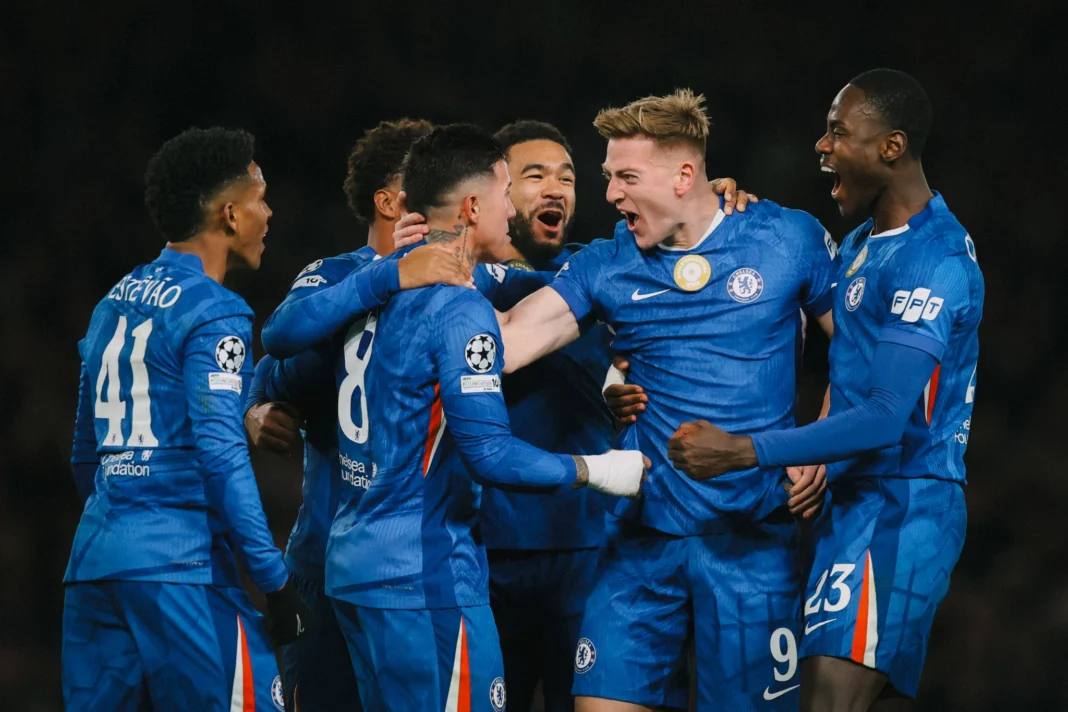
Chelsea didn’t score just 3; they practically scored 7 with 4 marginally offside. If those counted, the humiliation would’ve been even worse.
The Root Problem: Barça Can’t Score and Can’t Stop Conceding
This team always depends on outscoring opponents. But now, scoring feels completely situation-dependent. When the forwards have an off day, the entire system collapses. Against Chelsea, the three attackers couldn’t finish anything. The ball simply refused to go in.
Barcelona lost matches they should have sealed early. As I have discussed in my Barcelona vs Club Brugge analysis video, The Club Brugge 3–3 game gave every warning. Good teams, small teams, everyone knows they will get chances against Barça. As long as this team gives opponents opportunities, every match becomes a knife handed to the other side.
And the biggest issue? Barça cannot finish their chances early. Ferran Torres missing that clean one-on-one set the tone. Barça’s system demands early goals. When you don’t score early, when you don’t press well, the high line becomes a weapon against you.
This team needs natural, lethal finishers like Haaland, Mbappé. But not hopeful half-chances.
Pressure Breaks the Squad
Managers often set a simple rule: “Don’t concede before halftime.” But Barcelona reached halftime with 0–0 or 1–1 scorelines, then entered the second half with crushing pressure. You can’t win Champions League ties like this.
Last season’s run was already lost due to two minutes of immaturity. This season, nothing looks improved.
Overexpectations From Lamine Yamal
Barça put unrealistic pressure onto a 16-year-old. Expecting Lamine to perform Messi-like miracles every match is unfair and delusional.
Messi himself couldn’t save a 10-man Barça in Champions League knockouts. How will Lamine thrive? He needs support, not fans treating him like the savior of every broken performance.

This responsibility falls on Flick, Deco, and Laporta for pretending the squad is good enough. Someone said in my stream, “You can’t win an F1 race driving an Alto or Maruti 800.” That’s the truth about this squad.
Squad Selection Chaos
The line-up was wrong. Flick took huge risks.

As I discussed this in my video, Raphinha wasn’t fully fit. Ferran Torres had a nightmare with missed chances, poor link-up, and couldn’t help Balde on the left. Araujo started again despite his recent errors. Eric García, reliable in midfield so far, got pushed into uncomfortable roles.Casado didn’t even play, showing Flick clearly has issues with him.
Christensen wasn’t fit. But even then, playing Araujo again after PSG and Chelsea heartbreaks? Three big red-card moments in a row which were all costly.
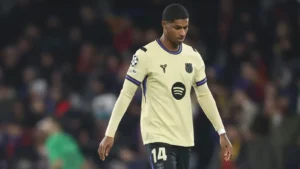
Barcelona did get intense in the 2nd half by bringing on Rashford, who was not included in the starting xi due to fever.
Chelsea’s Tactical Masterclass
Enzo Maresca didn’t just beat Barcelona; he dismantled them with a plan that exposed every structural weakness in Flick’s system. Chelsea executed a near-perfect balance of aggression, overloads, and disciplined defensive rotations. All built around maximizing their strengths on the wings.
1. Targeting Barça’s Right Side: The Estevão-Gusto Engine
Chelsea built their entire attacking rhythm through Estevão, and the support system behind him was elite.
How the right flank worked:
Estevão hugged the touchline, stretching Balde and Cubarsí. Gusto constantly rotated with sometimes overlapping, sometimes underlapping. Whenever Estevão received the ball, Gusto appeared as an immediate passing option, dragging Balde out of position.
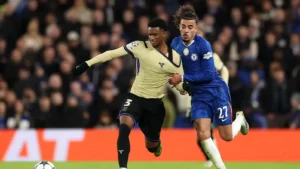
When Estevão cut inside, Gusto inverted into the half-space to maintain numerical superiority.
Chelsea NEVER left Estevão in isolation.
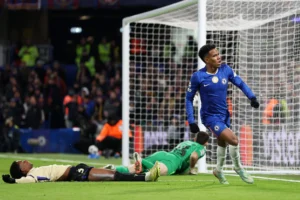
Barça ALWAYS left Lamine in isolation.
Chelsea always had two players supporting Estevão:
Enzo drifting toward the right half-space. Caicedo sliding across to compress space. Sometimes even Garnacho shifting from the opposite side to overload
Every time Estevão touched the ball, he had: Cucurella + Gusto + Enzo + Caicedo as options. That’s a 4v2 against Balde and Cubarsí almost every time.
2. Defensive Overload + Offensive Overload
Maresca created an unusual hybrid structure:
Backline when building:
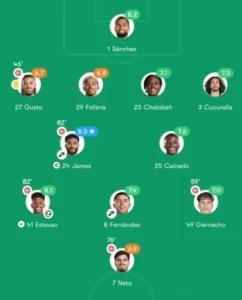
Cucurella (LB), Fofana (CB) and Gusto (RB, high/inverted).
But without the ball:
Reece James and Caicedo often dropped into defense, forming a temporary back three so both fullbacks could push high without leaving space behind.
This gave Chelsea compactness when defending, numbers when attacking and protection against transitions. It also allowed Gusto to press high because James would instantly slot in behind him.
3. Who was better- Estevão or Lamine Yamal?
Chelsea’s support for Estevão:
Gusto was making overlapping runs, Caicedo was screening behind, Enzo was drifting to the right and Cucurella was stepping up when needed.
Barça’s support for Lamine:
Kounde rarely advanced due to defensive instructions. No midfielder consistently supported the wide build-up. Lamine was trapped in repeated 1v2 and 1v3 situations. Cucurella shadow-marked him aggressively.
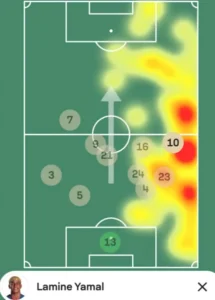

4. Chelsea’s Pressing System
Chalobah stepped into midfield to shut off Lewandowski’s lanes, forcing him backward. Also whenever Lamine was looking for forward passes, there had to be some pace which Lewandowski was not able to provide.
Caicedo hunted every loose touch. Enzo blocked inward passing options. Gusto pressed Balde immediately, preventing carries. Fofana stepped into midfield to mark Ferran or cut inside runs.
As I said in my video “Fermín made an excellent run behind the line, but Gusto’s recovery tackle was world-class. A symbol of Chelsea’s intensity and tactical preparation.”
Barça had to: Pull Fermín to the right, drop Lamine deeper, force Cubarsí into risky passes and push Balde into zones he wasn’t prepared for.
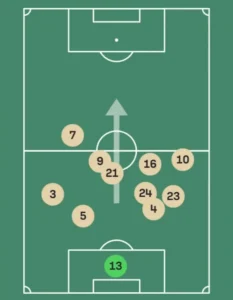
But Barcelona still lost the numbers fight because Chelsea always brought one extra man into the duel. This also led Barca to play the 2nd half in their own half.
Araujo’s Red Card
Barça still had moments at 1–1. They found space behind Chelsea’s defense. But Araujo destroyed the game with needless mistakes: He argued with the referee for no reason and took a cheap first yellow. He mistimed a risky second tackle when Chelsea players were making constant runs.
That red card killed any chance of competing. You can’t survive a Champions League knockout being a man down and especially against a team pressing with intensity.
Araujo’s 3rd consecutive red card has cost Barca a lot.
Are Barca’s Tactics Overexposed?
Yes. As I have talked about Barca’s plan exposed against big teams in my previous videos, this game was no less than a surprise.
Every big team now knows exactly how to beat Barcelona: press aggressively, overload the wings, force the high line into panic and target the predictable build-up patterns.
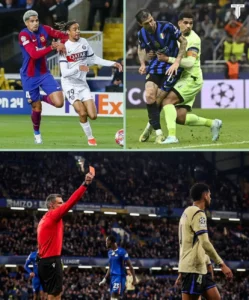
Club Brugge exposed it.Newcastle exposed it. Real Madrid exposed it. PSG exposed it.
Now Chelsea finished the job.
Barça have become too predictable, too readable, too fragile under pressure.
Conclusion
Enzo Maresca prepared Chelsea perfectly. Flick had no answers. Chelsea outplayed Barça in every way and deserved their place in the top eight.
Barcelona, meanwhile, sit in crisis — 15th in Europe, nowhere near Champions League level, and miles away from competing with Europe’s best.
Do let me know your hopes from Barcelona for La Liga and UCL in the comment section of my video.