

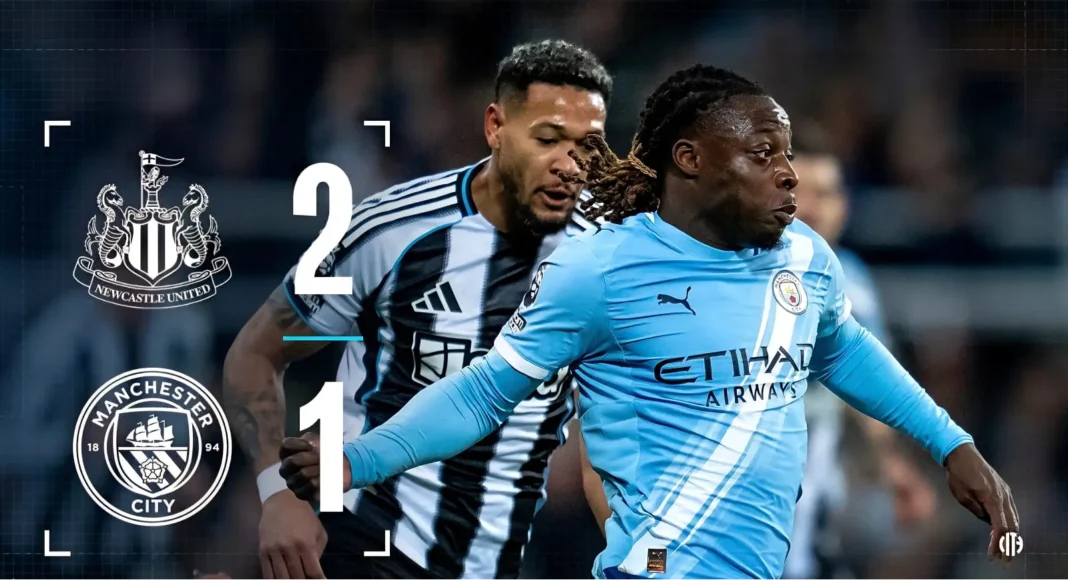

Manchester City’s 2-1 defeat to Newcastle United at St. James’ Park has dominated headlines for predictable reasons: Erling Haaland missing sitters, Phil Foden scuffing gilt-edged chances, a performance where 67% possession and 17 shots somehow yielded just one goal. The narrative writes itself – City were wasteful, Newcastle were clinical, and on another day the result could flip.
But that narrative, while superficially accurate, misses the deeper truth revealed across 90 chaotic minutes in the northeast. This wasn’t a match decided by finishing alone. It was a tactical exposé that laid bare structural vulnerabilities City have carried all season, issues with buildup play, reckless pressing, and defensive organisation that no amount of clinical finishing can permanently mask.
The Finishing Was Abysmal, But That’s Not the Story
Let’s address the elephant in the room first. City’s finishing was genuinely inexcusable. Haaland missed two tap-ins that he converts ten times out of ten in normal circumstances. The first saw him scuff wide from eight yards after brilliant work from Nico O’Reilly and Jeremy Doku. The second, arguably worse, came when he rounded Nick Pope only to panic, rush the finish, and somehow miss an open net.
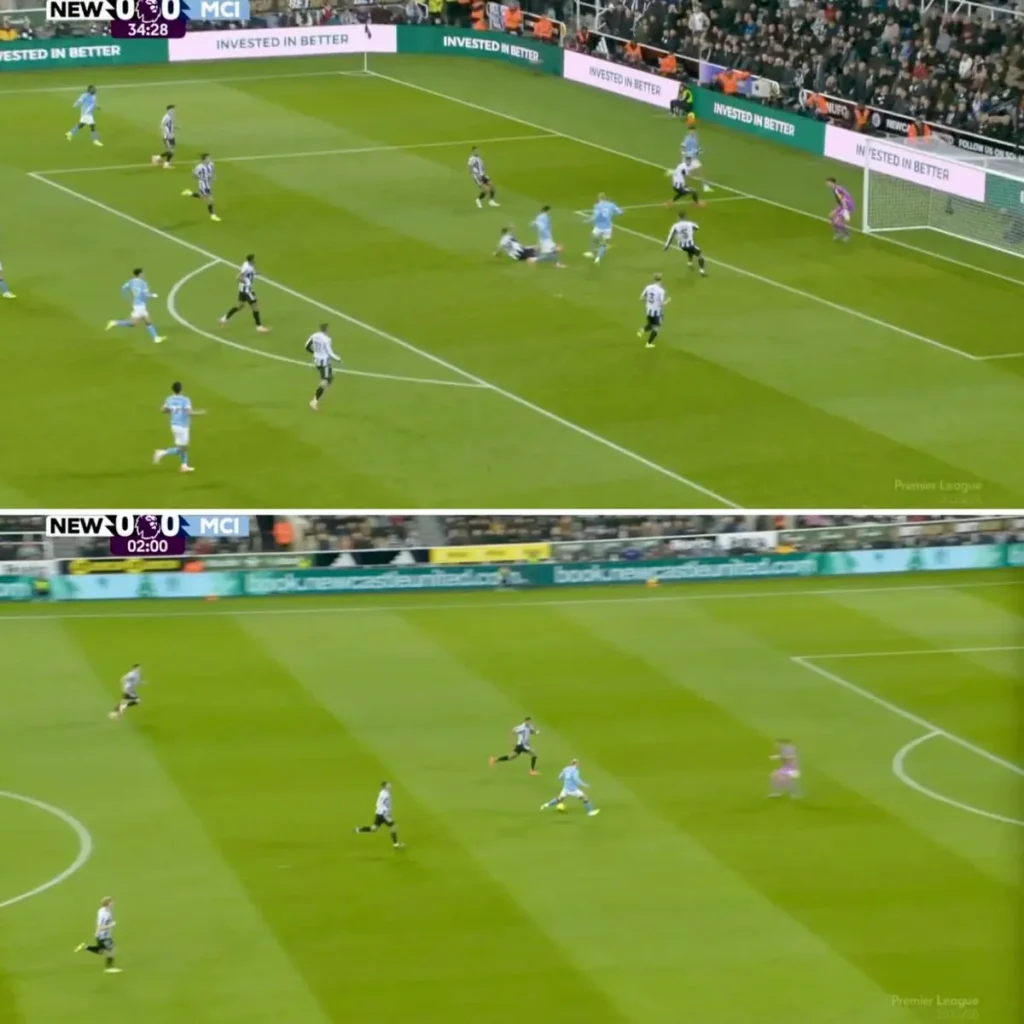
Foden’s miss might have been the worst of the lot, a simple finish after excellent buildup involving Rayan Cherki. That has to be a goal every single time. The Norwegian’s header straight into the ground from Foden’s perfect cross was another moment where Newcastle’s goalkeeper wasn’t tested nearly enough.
The statistics tell their own damning story: City created multiple big chances across both halves yet managed just one goal from Ruben Dias. For a team leading the Premier League in goals scored this season, it was an anomaly so extreme it feels almost statistically impossible.
But here’s the critical point: City are the league’s top scorers. Goalscoring isn’t their systemic problem. This was one of those weird matches where everything that could go wrong in front of the goal did. Haaland won’t miss those chances again. Neither will Foden. Focusing exclusively on the finishing obscures the structural issues that have plagued City all season and were brutally exposed by Newcastle’s intensity.
Exploiting Newcastle’s 4-5-1: City’s Excellent Attacking Structure
When City had possession in settled phases, particularly in midfield, they were genuinely excellent. Newcastle’s 4-5-1 mid-block, passive and designed to absorb pressure, created exactly the spaces City needed to exploit. The weakness of this structure was glaring: the gap between Newcastle’s defensive and midfield lines was sometimes enormous and easily manipulated with intelligent positioning.
City identified this immediately. Phil Foden’s positioning in the first half was notably higher than in recent matches against Liverpool and Bournemouth. Rather than building with a 2-3 structure where Foden acts as the bridge between defence and attack, City often deployed a 2-2 setup with Foden asked to occupy the pockets alongside Doku, Cherki, and occasionally Haaland.
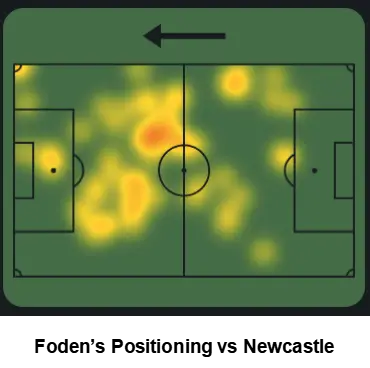
The execution was frequently brilliant. One early chance saw Foden drift left of centre, where he’s a far more effective playmaker, receive from Nico González, spot Cherki in acres of space, and deliver a perfect first-time pass that bypassed Newcastle’s entire midfield. Too easy.
Another sequence showcased Ruben Dias’ excellent passing, finding Doku in the pocket with a diagonal that split Newcastle’s structure. City’s ability to repeatedly penetrate those gaps demonstrated tactical preparation and individual quality that should have yielded far more goals.
Even when the pockets weren’t vast, City found ways through. Foden’s pass breaking Newcastle’s midfield to release Haaland created another dangerous situation. The movement, the positioning, and the execution in possession were all frequently excellent. What followed afterwards, however, was the problem.
The Tactical Twist: Foden and Haaland’s Positional Swap
Guardiola made an intriguing tactical adjustment from recent matches, swapping Foden and Haaland’s off-ball positions. Against Liverpool, Foden operated left of centre with Haaland right, the idea being to pin Virgil van Dijk while Foden pushed onto Ibrahima Konaté, forcing Liverpool to build down their ineffective right side.
Against Newcastle, they swapped. Foden operated right of centre, Haaland left. The logic seems to have been forcing Newcastle to build down their left side, where right-footed left centre-back Sven Schär and right-footed goalkeeper Nick Pope would theoretically be weaker.
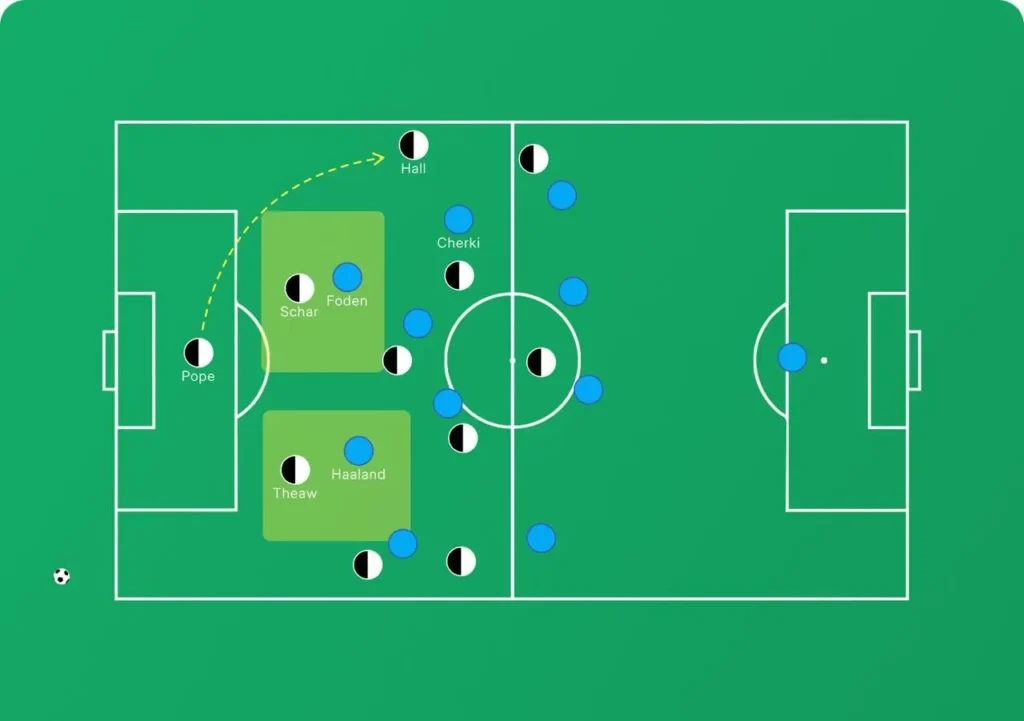
The theory was sound. The execution created complications. Foden and Cherki found themselves occupying similar spaces, almost standing on each other’s toes, with overlapping roles that diminished the effectiveness of both players. Foden is demonstrably more effective left of centre, where he can receive on the half-turn and create with his stronger foot. This match further illustrated that preference.
Buildup Problems: City’s Achilles Heel
Here’s where the analysis becomes concerning. City’s struggles building out from the back have been a consistent theme all season, temporarily masked by excellent performances against Liverpool and Bournemouth. Saturday suggested those might have been false dawns rather than genuine solutions.

Newcastle pressed aggressively and high when City were in early buildup phases, and City struggled repeatedly to establish any foothold. Even under minimal pressure, passes went astray with alarming frequency, atypical sloppiness that aggravated underlying structural issues.
The problems started within 30 seconds. Gianluigi Donnarumma attempted a pass to Foden that was horrendously executed, too central, forcing Foden onto his weaker right foot rather than his left, where a reverse pass to Nico might have bypassed the press. The pass was so bad that Harvey Barnes should have scored immediately. It was eerily reminiscent of Trafford’s disastrous pass against Tottenham earlier this season. Newcastle committed bodies forward relentlessly, particularly from City goal kicks, knowing Guardiola’s side struggles to retain possession in those situations. Joško Gvardiol ended up punting long repeatedly- a tactical surrender that ceded initiative and momentum.
One sequence epitomised the frustration. Gvardiol pointed to where he needed the ball played, in front of him, allowing him to surge through the centre and bypass Anthony Gordon entirely. The pass went behind him instead, forcing him to retreat, allowing Gordon to apply pressure, and necessitating a wide pass that led to a turnover. City are demonstrably weaker building-wide, yet repeatedly found themselves forced into that pattern.
The entire exchange mirrored the goal City conceded against Burnley earlier this season: inability to build centrally, forced wide, turnover, dangerous chance conceded. Newcastle couldn’t convert theirs, but the pattern was identical and deeply concerning.
Guardiola’s Halftime Adjustment
Recognising the first-half buildup issues, Guardiola made a crucial tactical change at the interval. Bernardo Silva and Foden essentially swapped positions, Bernardo now leading the press against Lewis Hall, with Foden returning to his preferred left-of-centre role in the diamond structure and 4-3-3 shape.
The impact was immediate and obvious. Foden’s touch map from the second half showed significantly more involvement in deep buildup phases compared to the first period, where he barely touched the ball in his own half. This structure felt far more natural, with Foden and Cherki no longer interfering with each other’s spaces.
One early second-half sequence demonstrated the improvement: Foden received deep, played a first-time ball to Doku, who found Haaland in a dangerous position. Only Dan Burn’s excellent challenge, perfectly timed to avoid a penalty, prevented a certain goal.
The buildup problems largely disappeared in the second half, suggesting Guardiola’s adjustment addressed the structural issues. Unfortunately, by then Newcastle had established momentum and confidence that proved difficult to overcome.
Reckless Pressing: City’s Defensive Vulnerability
City’s pressing against Newcastle was alarmingly reckless; a stark contrast to the more measured approach in recent matches. Perhaps Guardiola worried about Newcastle’s athletic, physical, yet technically skilled midfield. Maybe the plan was counter-pressing with extreme intensity to prevent them from progressing via carries through the centre.
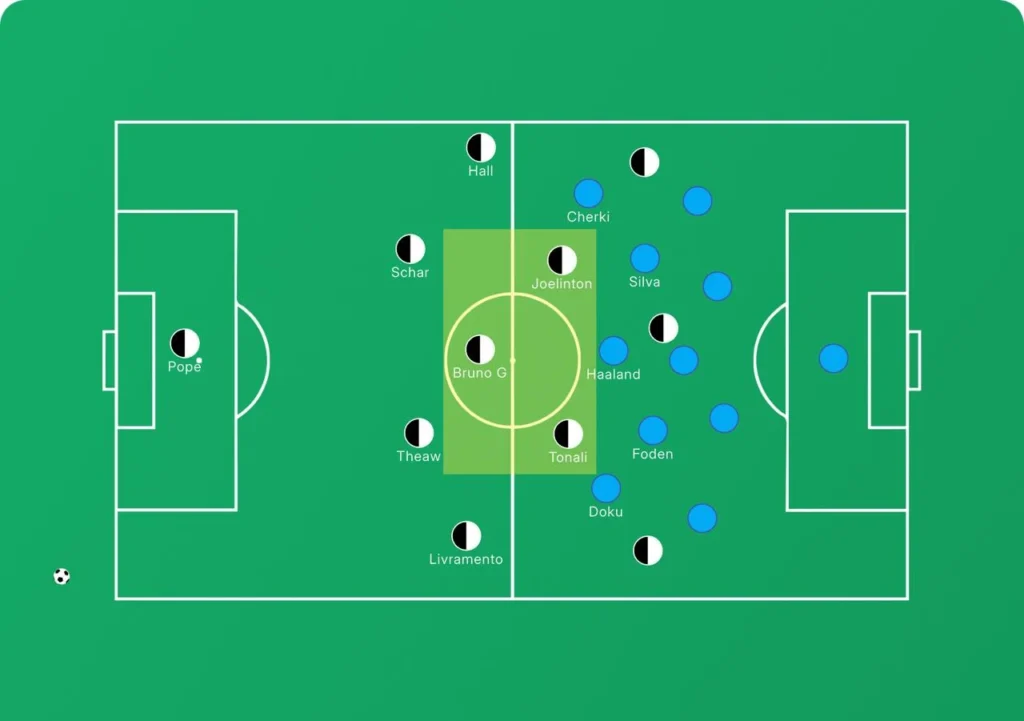
Whatever the reasoning, execution was poor. Newcastle bypassed City’s press far too easily and far too often, creating dangerous transitions that should have yielded more goals.
One early sequence captured the problem perfectly. Bernardo Silva charged in on Bruno Guimarães, got nutmegged. Nico González then charged in, beaten by a simple pass. Nico O’Reilly charged in next, also beaten easily. City’s entire left pressing chain was bypassed through a combination of passes through legs and simple balls around pressers.
The positioning compounded issues. Foden, nominally right of centre, had to fill gaps vacated by teammates engaging on the left, leaving City’s right side exposed. Cherki offered nothing defensively during this sequence, which is unusual given that he’s typically not a liability off the ball when used correctly. By the time he entered the frame to help Matheus Nunes, it was too late. Barnes and Hall were already creating danger in a 2v1 situation.
Newcastle’s Directness Exploited City’s Structure
Newcastle’s tactical approach- stretching the pitch as wide as possible, going direct at every opportunity- exposed how City’s diamond structure can be vulnerable against teams willing to bypass midfield entirely. Whereas Liverpool dropped bodies back and built more cautiously, Newcastle were content leaving huge gaps, knowing City would likewise be stretched thin.
City gave the ball away sloppily throughout, and Newcastle pounced. One sequence saw Cherki attempt an ambitious flick that didn’t come off, Nico González dive in with poor timing, and suddenly Newcastle had a 4v3 counter-attack. Only O’Reilly’s recovery run and Donnarumma’s save prevented a goal.

Another turnover, either Bernardo’s under-hit pass or Doku failing to reach it, led to Newcastle racing upfield. O’Reilly didn’t close down the cross adequately, and Donnarumma produced arguably his best save of the match, reacting brilliantly to deny Alexander Isak low to his right.
The Goals: Sloppy Play and Naïve Pressing
Newcastle’s first goal perfectly encapsulated City’s problems all match. O’Reilly played a blind clearance back into the danger zone rather than simply passing to Donnarumma to reset. Newcastle’s midfield, superior physically for winning second balls, inevitably won possession.
What followed was naive pressing. Nico charged at Joelinton and Guimarães, who evaded him brilliantly. Barnes held off Dias with impressive strength, waited for Guimarães’ supporting run, and the two combined beautifully before Barnes finished gorgeously. Sloppy ball, reckless counter-press against a team that City lack the physicality to overwhelm, goal conceded.
The second goal was chaotic, a horrendously misjudged corner clearance by Gvardiol, followed by inability to recover organizationally. These weren’t moments of tactical brilliance by Newcastle so much as City gifting opportunities through individual and collective errors.
Substitutions That Made No Sense
Guardiola’s late substitutions were baffling. With Newcastle sitting in a low block protecting their lead, City needed creative players capable of unlocking congested spaces. Instead, Guardiola removed Foden, Cherki, and Doku, some of City’s best threats against low blocks, replacing them with players ill-suited to that specific tactical challenge.
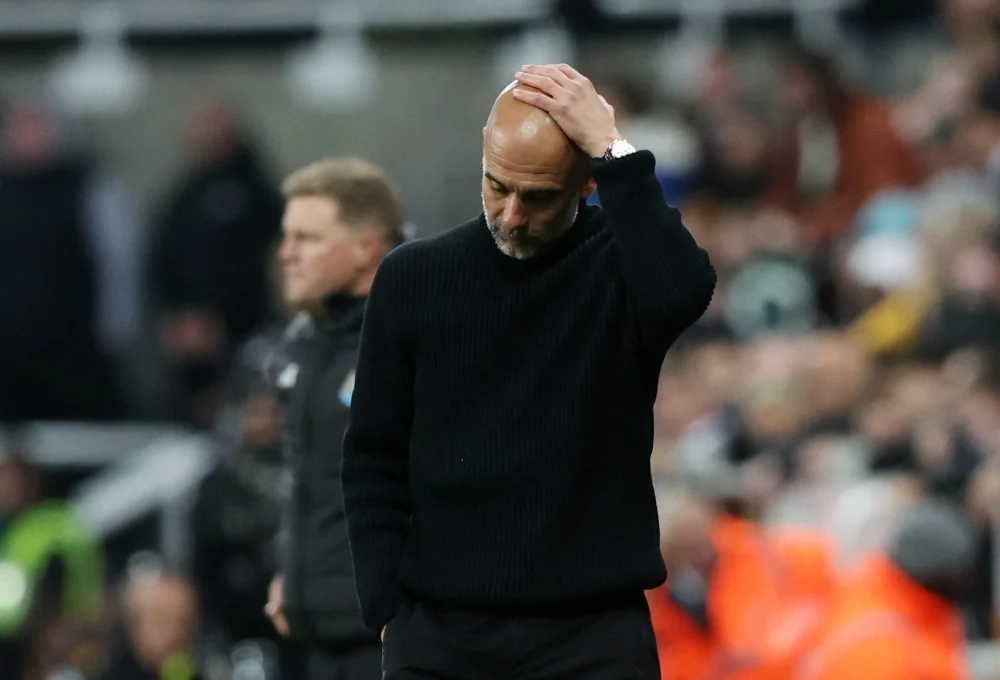 Savinho at the left wing is one-dimensional. The other substitutes weren’t ready to make an impact in the match at the required level. The only change that made conceptual sense was Reijnders for Bernardo, and even he couldn’t influence proceedings.
The Bigger Picture: Systemic Issues Remain
This wasn’t a match where City played badly overall. The attacking ideas were excellent when they had possession in settled phases. The movement, positioning, and chance creation were frequently outstanding. A draw might have been a fairer reflection of both teams’ performances.
But focusing purely on the finishing misses the point. Yes, it’s rare City will create four, five, six gilt-edged chances and convert none. That won’t happen again. What will continue happening, however, are the buildup struggles and defensive vulnerabilities that have plagued them all season.
Barcelona visited St. James’ Park and had a wonderful time. You don’t need a midfield of physical monsters to win these battles. Technical quality, proper structure, and smart pressing can overcome physicality. City achieved that against Liverpool and Bournemouth.
Saturday showed those performances might have been exceptions rather than the rule. The structural concerns remain: struggles building out against aggressive presses, reckless counter-pressing that leaves City exposed, and defensive disorganisation when transitions occur.
Conclusion
This is not the time to panic or throw the baby out with the bathwater. City’s forward play contained many good ideas. The midfield selection of Bernardo, Foden, and Nico wasn’t fundamentally flawed; it’s worked in other matches and can work again.
But the systemic issues cannot be ignored. City weren’t technically good enough with their passing. The sloppiness invited physical battles over loose balls, and Newcastle inevitably emerged victorious in those. When the buildup breaks down and possession is lost cheaply, even the most talented squads become vulnerable.
The finishing will only improve; it can hardly get worse from here. What needs addressing are the structural flaws that persist regardless of whether Haaland and Foden are clinical. Until those are resolved, matches like Saturday’s will continue revealing uncomfortable truths about where this City side currently stands.
Congratulations to Newcastle, who played very well. Lewis Hall and Tino Livramento’s returns significantly strengthened their structure. But for City, this defeat should prompt deeper reflection than simply lamenting missed chances. The problems run deeper than one chaotic afternoon of poor finishing, and acknowledging that is the first step toward solving them.