

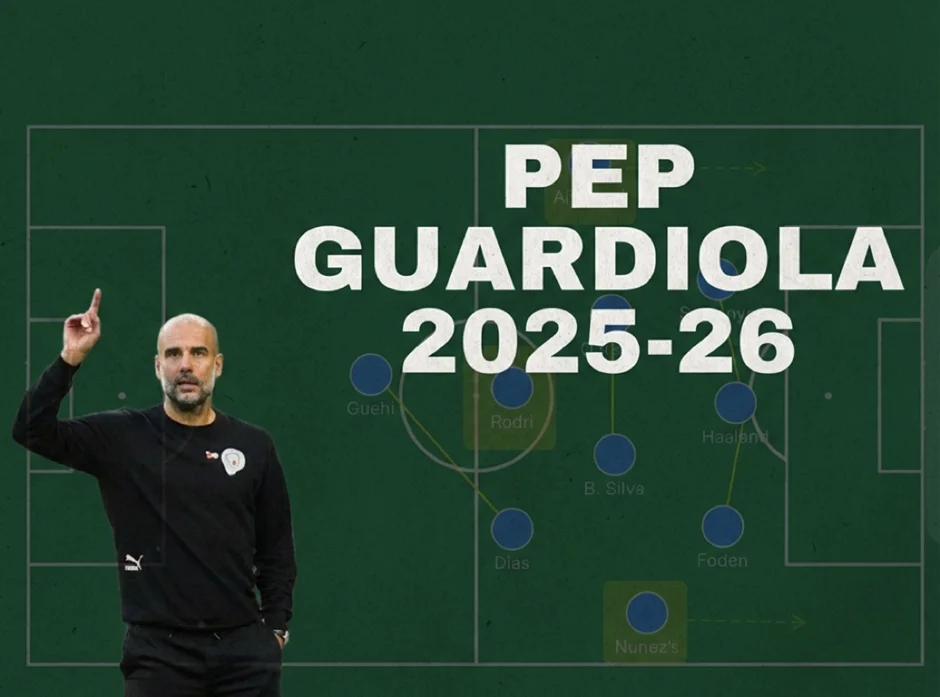

Twenty years ago, Pep Guardiola sat down to write a tactical column for El Pais, dissecting Spain’s 3-1 victory over Tunisia. It read like a fever dream for football purists, a deep dive into spatial relationships, timing, and the art of unlocking stubborn defences. Two decades later, that same manifesto is quietly underpinning Manchester City’s evolution in 2026, proof that some ideas age like fine wine while others expire like milk left in the sun.
When Guardiola was asked recently about City’s shift toward narrow, fluid attackers, he deflected with trademark wit: “Do you want to be my assistant coach? You are brilliant, you are top.” But behind the humour lay validation. His current tactics aren’t some revolutionary pivot, they’re a return to principles he championed long before he ever stood in a technical area at the Etihad.
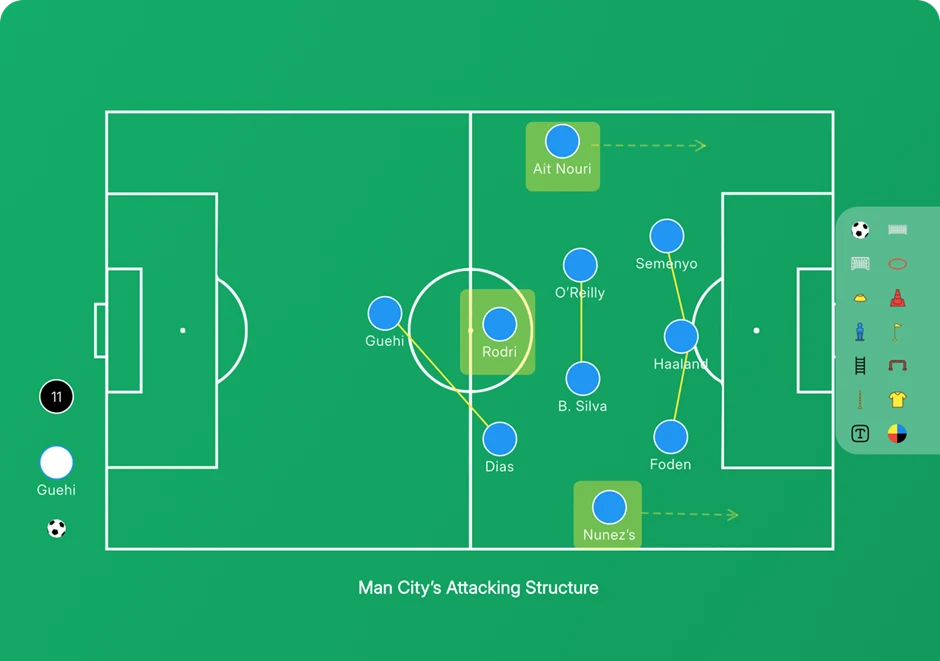
City’s system has transformed dramatically since the glory days of 2017-18, when Leroy Sane and Raheem Sterling hugged the touchlines so tightly they’d finish matches with white paint on their boots. Fast forward to today, and Guardiola’s attack looks unrecognizable. Antoine Semenyo and Erling Haaland operate as split strikers with Phil Foden lurking between the lines, a setup that mirrors Luis Aragones’ tiki-taka Spain side more than it does City’s Centurions.
The shift began out of necessity. Early this season, City leaned heavily into counter-attacking football, exploiting the blistering pace of Haaland and Tijjani Reijnders. By November, they’d scored more goals from fast breaks than in the previous two campaigns combined, bypassing low blocks altogether rather than attempting to dismantle them. But as Guardiola wrote in 2006, “when you play on the counter-attack, the ball belongs to the opponent.” That possession sacrifice comes at a cost, particularly when direct play leads to turnovers in dangerous areas, leaving City stretched and vulnerable.
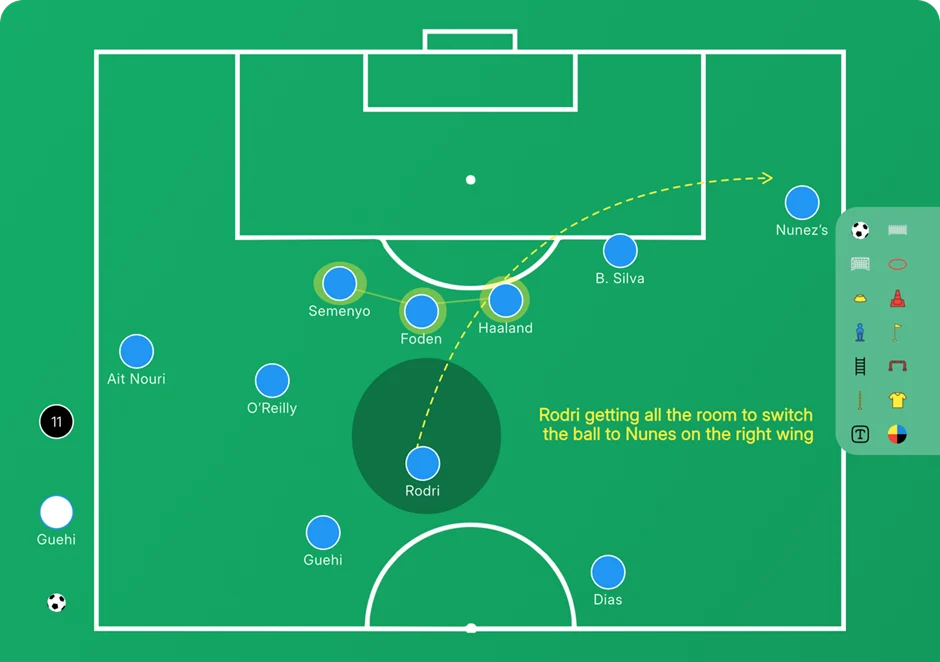
So Guardiola pulled back, and in doing so, returned to the core principles he outlined two decades ago. Against Fulham recently, City controlled 56% of possession in a 3-0 victory, their narrow front three operating in a “position-less” manner, just as Guardiola described Spain’s forwards in his column. The key, then and now, is timing. “It’s good the forwards drop deep to receive the ball, but they need to do it a little later,” he wrote. “Spotting this is difficult.”
That difficulty is what separates elite teams from good ones. City’s attackers must resist the urge to drop too early, which would compress the midfield and force Nico O’Reilly and Bernardo Silva back alongside Rodri, clogging the very spaces City need to exploit. Instead, they hold high positions to pin opponents back, creating room for Rodri to orchestrate from deep and for full-backs Matheus Nunes and Rayan Ait-Nouri to attack the flanks unopposed.
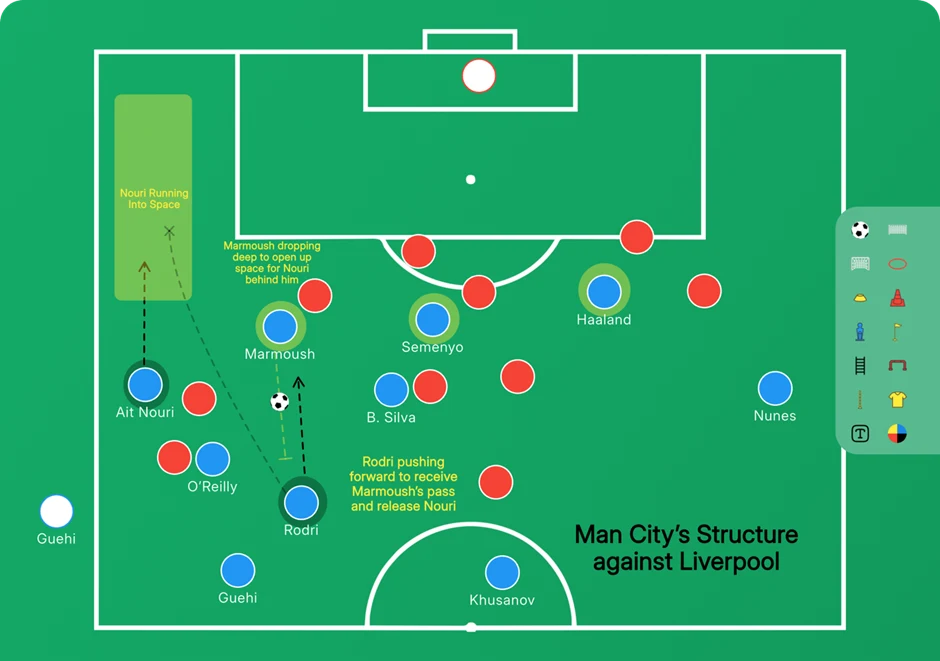
When City’s forwards finally do drop, they do so at precisely the right moment, arriving on the ball as defenders are forced to react, allowing City’s midfielders to surge into the space behind opposing lines. It’s chess at 100 miles per hour, and it only works because Guardiola has adapted his system to suit the players at his disposal. “We have just one proper winger right now in Antoine and we adapt the system to make the players comfortable,” he admitted.
That pragmatism separates Guardiola from coaches who cling stubbornly to dogma. His core beliefs remain unchanged, unlocking low blocks through possession dominance and spatial superiority, but the execution evolves with every squad he inherits. Promising managers are often labelled as “playing like Pep,” but the truth is Guardiola’s sides rarely resemble one another. What remains constant is how he thinks, and that 2006 column offers a window into a mind that was always destined for greatness.