

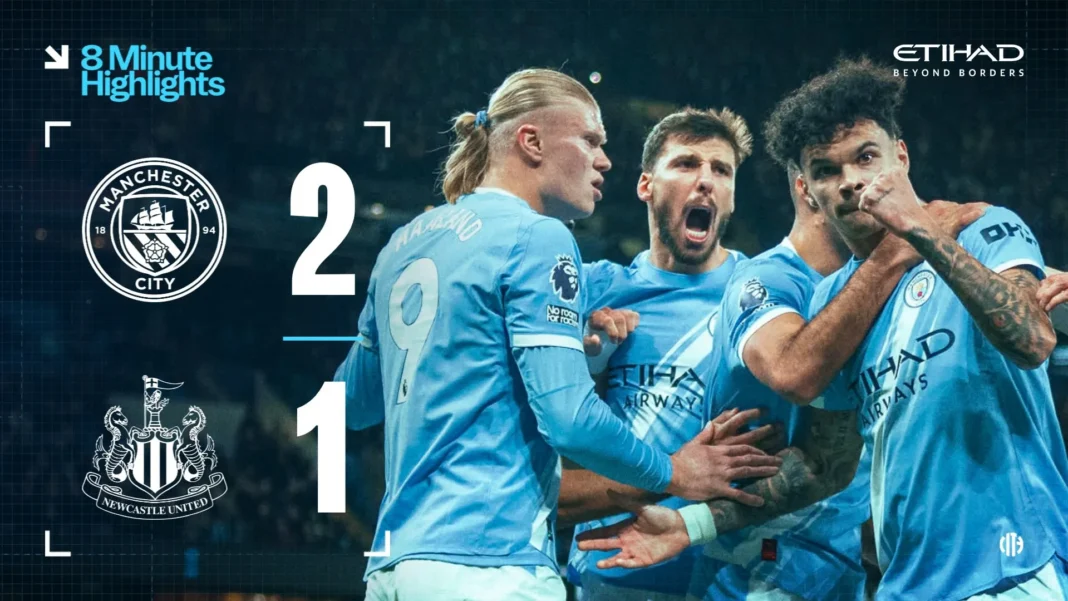

Manchester City beat Newcastle 2-1 in a must-win fixture by going long. Yes, hoofball at the Etihad. The question isn’t whether it worked, it clearly did, but whether this represents a fundamental shift in what City are under Guardiola, or simply another string to an already loaded bow.
The narrative around City has flipped violently in recent weeks. Having learned nothing from crowning Arsenal champions in January, the football public now expects City to steamroll their way to another title. It’s understandable. Recent history screams that City “go on a run” when it matters, overhauling Arsenal in 2023 and 2024, edging Liverpool on the final day in 2019, winning 18 games in a row in 2018. The assumption is that this new, transitional City side will flick a switch and do what the old guard always did.
Pep Guardiola isn’t so sure. “I promise you, many things are going to happen,” he said after the Newcastle win. “I have the feeling we are not going to win all the games.” That uncertainty stems from reality, 70 percent of this squad have never experienced a title run-in. Ederson, Kyle Walker, Ilkay Gundogan, Kevin De Bruyne, Jack Grealish, and Manuel Akanji have all departed since last year, representing a significant brain drain. What remains is the fourth youngest squad in the league, averaging 25 years old, with only 10 players who’ve won major trophies in City colours.
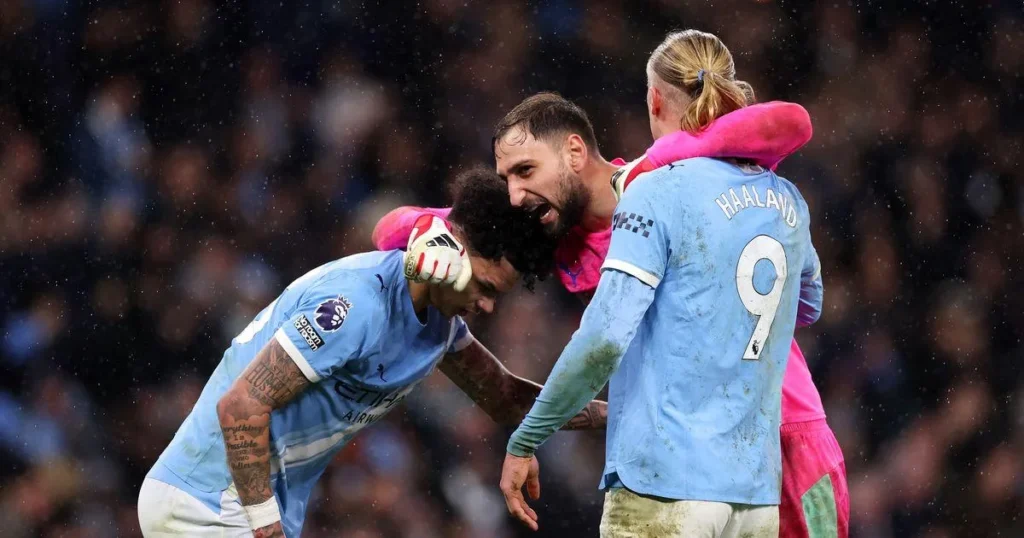
Against Newcastle, that inexperience showed, but so did something else: pragmatism. City averaged around 35 long passes per game this season. Against Newcastle, they attempted 53. This wasn’t desperation; it was design. Even in the first half, City’s long pass share sat at 10 percent, a figure that increased in the second half but remained deliberate rather than panicked. Compare that to the Liverpool match, where City’s long ball percentage doubled from 6 to 12 percent because the opposition forced it. Against Newcastle, City wanted to go long from the off.
Why? Because Gianluigi Donnarumma isn’t an especially good build-up goalkeeper, and going over the press circumvents that weakness entirely. But the strategy only works if you’ve got the personnel to win second balls, and that’s where City’s recent recruitment becomes crucial. Players like Haaland, Semenyo, Rodri, and Nico O’Reilly, who earned man of the match, are built for this kind of battle. In the first half, City won more defensive duels than Newcastle. Second half, same story. Rodri won 86 percent of his duels, Semenyo 100 percent, Bernardo 83 percent, and O’Reilly more than two-thirds. Haaland won his, too. This wasn’t accidental.
The opening goal perfectly illustrated the approach. Newcastle’s Eddie Howe deployed Alexander Isak in midfield, a curious gambit likely intended to compensate for the absence of Bruno Guimaraes and Callum Wilson’s physicality. From goal kicks, Newcastle aimed for Isak aerially, hoping his height would win out. It didn’t. Rodri dominated him repeatedly. What made City’s setup clever was O’Reilly’s positioning, stationed higher than Omar Marmoush.
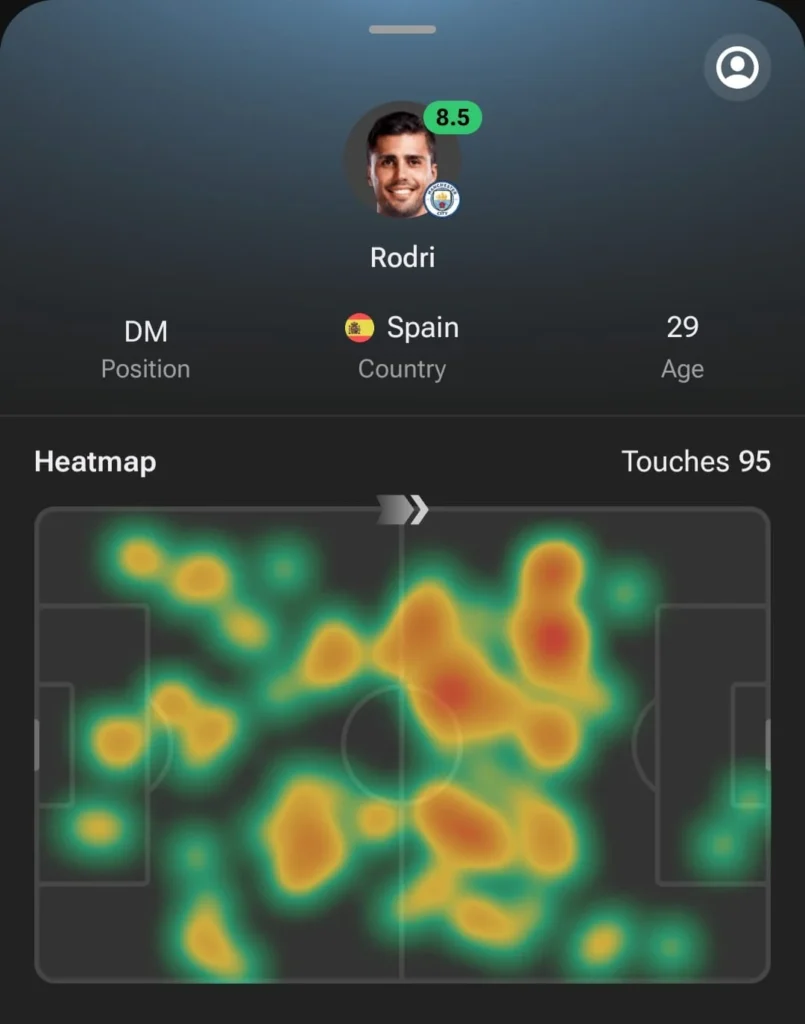
When Rodri won the first ball and flicked it forward, O’Reilly was there to compete for the second, with Marmoush arriving late from deep. Remember Marmoush getting bullied by Ibrahima Konate at Anfield? That’s exactly why O’Reilly was pushed higher. He’s far more likely to win that physical battle, and when he does, Marmoush can run onto it. Minutes after nearly working once, the exact sequence produced the opener. Rodri won the aerial duel, O’Reilly made himself a nuisance, Dan Burn was forced into an error, and Marmoush finished brilliantly.
But here’s where the debate gets thorny. If this is just one tool among many, fine. Ederson has the most assists of any Premier League goalkeeper for a reason; City have always been capable of going long when needed. The concern is whether this becomes the default, because fundamentally, it’s a low-ceiling style of play. It relies on 50-50s and probabilities rather than proactive control. It’s reactive, not dominant.
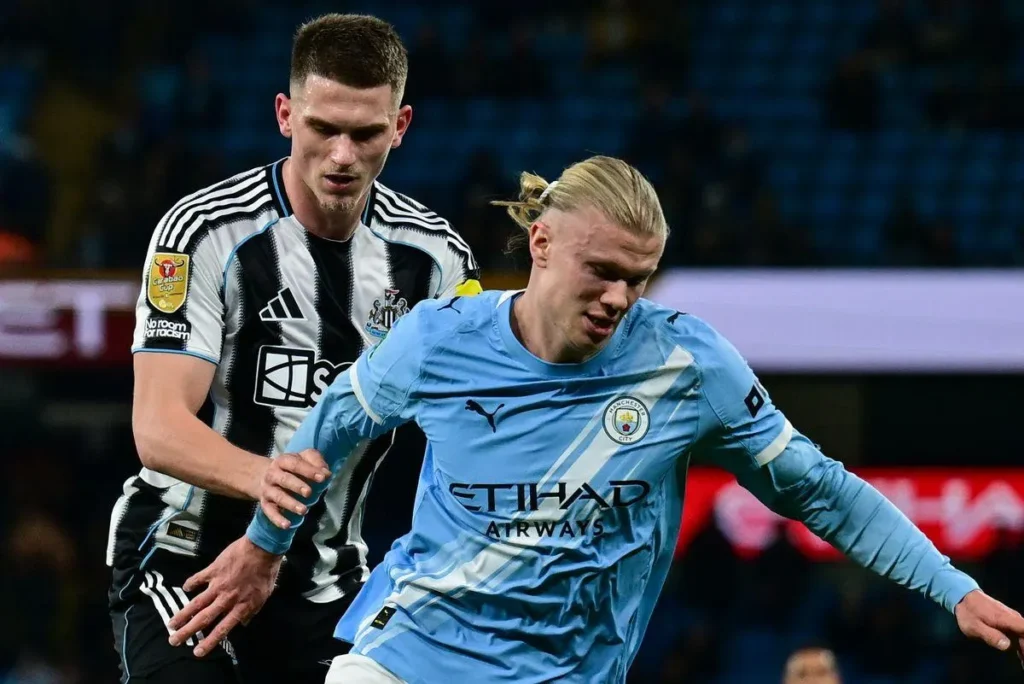
The second goal offered reassurance. After a 20-pass sequence, City demonstrated they’re still capable of slowing things down and playing the football we’ve come to expect over the past decade. Semenyo glided past Isak far too easily, exposing Newcastle’s flawed experiment of deploying a striker in midfield. Lewis Hall rushed out to cover, leaving a gaping hole for Haaland to exploit. The ball from Semenyo was exquisite, Haaland’s pass into O’Reilly even better. That goal required patience, intelligence, and technical execution. It was vintage City, proof that they haven’t abandoned their principles entirely.
Yet the second half control evaporated. Of the 13 long passes City attempted beyond Donnarumma’s half from goal kicks, only three were accurate. That’s why City looked nervy, why the game felt uncomfortably open with 11 matches still to play. At Anfield, you accept that level of chaos because it’s Liverpool. Should City be accepting it at home against Newcastle? That’s the debate worth having.
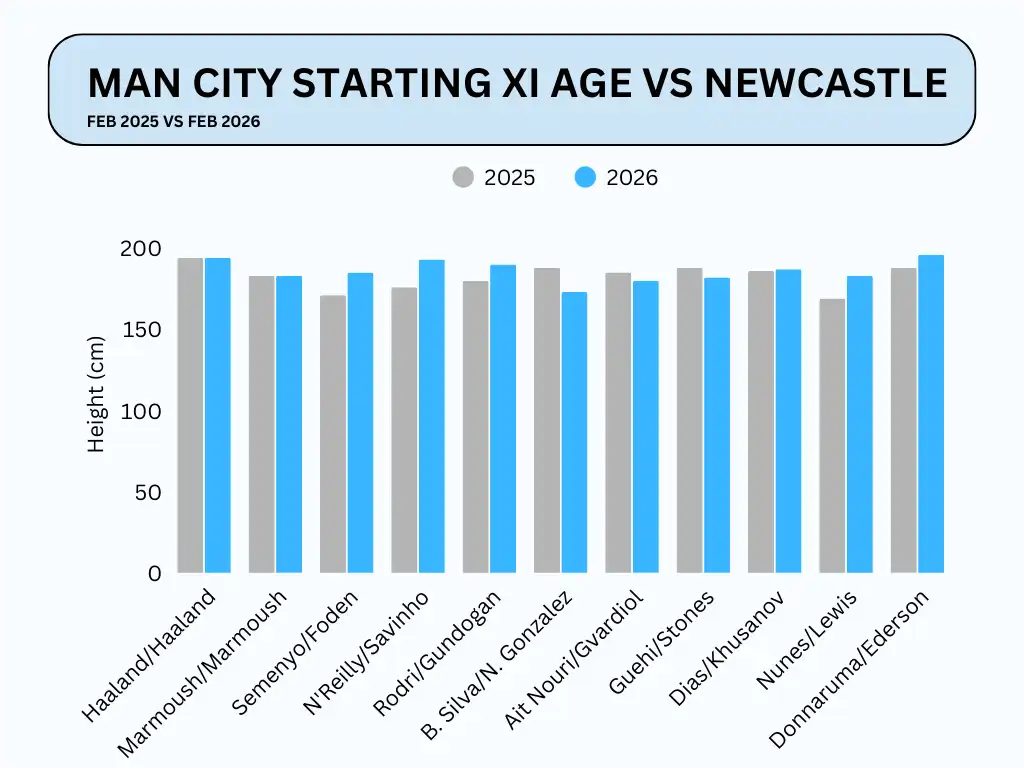
Guardiola’s challenge now is stark. This squad consists of 11 senior players signed since January 2025, with proven winners like Rodri, Bernardo, Dias, and Haaland representing the captaincy group but surrounded by relative novices. The average age is 25. In the dark days of last season, Guardiola lamented having “an old team.” Now he has the opposite problem: a young squad that’s never experienced a title run-in, learning on the fly with no margin for error.
“When you win Premier Leagues and Champions Leagues, you don’t win 5-0 every weekend,” Guardiola said recently. “All the games, 1-0, 0-1, playing rubbish, playing not good. But the personality was there, how we handled those moments.” That’s what he’s searching for now, that mentality forged through experience that cannot be taught in training sessions.
The Newcastle performance was neither perfect nor ideal, but it was effective. Whether this long ball approach becomes a permanent fixture or remains a tactical wrinkle depends on how quickly this young squad gels. City may yet win the title. The old DNA may kick in. But this is a very different side, and there are likely to be plenty more twists before the season concludes.