


What Is xG and How Is It Calculated? Football’s Most Misunderstood Metric Explained
Few modern football terms divide opinion like xG. Some fans swear by it. Others dismiss it instantly. Managers quote it. Pundits argue over it. Expected Goals, better known as xG, has become one of football’s most powerful tools, and one of its most misunderstood.
So what does xG actually mean, and how is it calculated?
What Is xG?
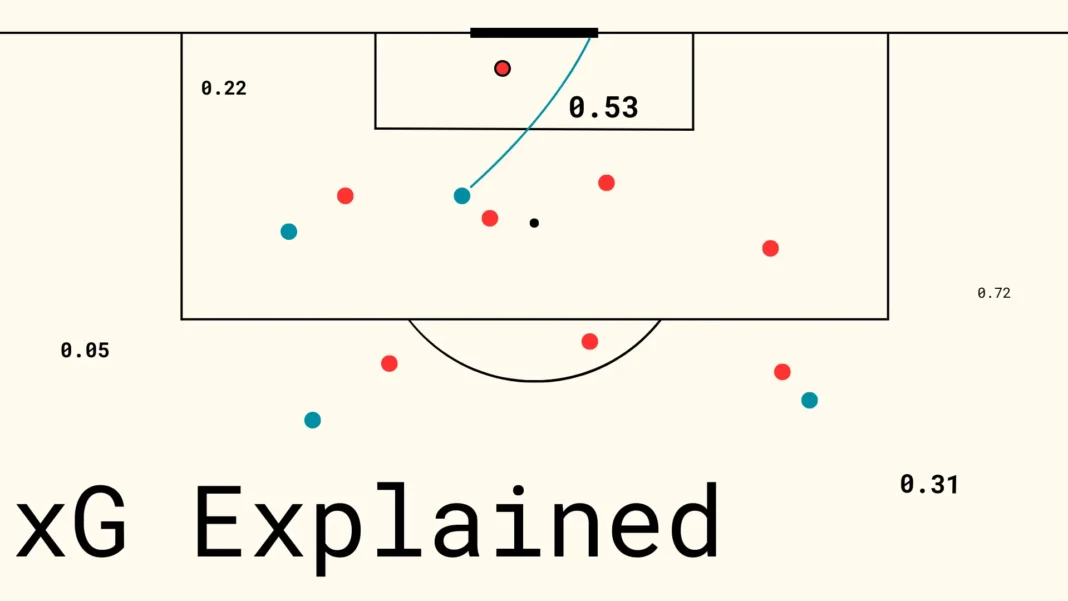
xG measures the quality of a goal-scoring chance. Instead of asking whether a shot went in, xG asks a different question: How likely was that shot to result in a goal? Each shot is assigned a value between 0 and 1. The closer the number is to 1, the higher the probability of that shot becoming a goal. An xG of 0.50 means the chance is expected to be scored 50 percent of the time. An xG of 0.05 means it would be scored only 5 percent of the time. Over a match, a team’s xG is the sum of all their shots.
How Is xG Calculated?
xG is built using historical data. Data analysts look at thousands, sometimes millions, of shots from past matches and identify patterns. These patterns help estimate how likely a similar shot is to result in a goal. Key factors include Distance from goal, Angle of the shot, Body part used, foot or head, Type of assist, pass, cross, cutback, Position of defenders, Position of the goalkeeper, Game situation, open play, set piece, and counterattack. The model compares a current shot to previous shots taken under similar conditions and assigns a probability.
It is not a prediction of what will happen. It is a measurement of what usually happens.
Why Tap Ins Have High xG?
A tap-in from close range with an open goal has a very high xG value. That is because historically, shots from that position are almost always scored. A long-range shot from thirty yards might look spectacular if it goes in, but it carries a very low xG because it rarely results in goals. xG rewards chance creation, not aesthetics.
What xG Is Good At?
xG is excellent at explaining performance over time. It helps answer questions like, Did a team create enough quality chances? ” and ” Was a striker unlucky or wasteful? Did a goalkeeper overperform or underperform? Did a scoreline reflect the actual game. If a team consistently produces high xG but scores few goals, finishing is likely the issue.If a team scores regularly from low xG chances, regression usually follows. This is why clubs trust the metric even when fans don’t.
What xG Is Not?
xG does not measure everything. It does not account perfectly for player skill. It does not measure shot power or placement in detail. It does not capture decision-making before the shot. A world-class finisher can outperform xG consistently. A poor finisher can underperform. xG explains chances, not talent.
Why Different Sites Show Different xG Numbers?
This confuses fans the most. Different data providers use different models. Some include defensive pressure. Some include goalkeeper positioning. Some use more granular shot location data. The concept is the same. The exact numbers may differ slightly. xG is a model, not a universal truth.
Why xG Became So Popular?
Modern football demands objectivity. Goals are rare. Results can be misleading. xG offers a way to judge performance beyond the scoreline. Coaches use it to analyse tactics. Recruitment teams use it to evaluate players. Broadcasters use it to explain matches. It is not meant to replace watching football. It is meant to support understanding it.
The Biggest Misuse of xG?
The biggest mistake fans make is using xG to decide who deserved to win a match. Football is not about deserving. It is about execution. xG explains patterns. It does not rewrite results. A team with lower xG can still win fairly. A team with higher xG can still fail. That is football.
Why xG Still Matters?

xG has changed how the game is analysed. It has shifted focus from shots to chances. From moments to patterns. From emotion to evidence. Used correctly, it adds context. Used blindly, it fuels arguments. Like every tool in football, its value depends on how well it is understood. The next time someone says, “But the xG says otherwise,” remember, xG is not telling you who won. It is telling you how the game was played. And that distinction makes all the difference.