


Ever since its inception, the Video Assistant Referee (VAR) has arguably been one of the most significant and controversial innovations in the game of football. Although the device is intended to be a simple one, to remove “clear and obvious errors”, the way it is used, has in fact, changed the rhythm and the suspense of the beautiful game to a very large extent.
Whether you are a seasoned supporter or a new fan, Here is a perfect guide to understand how VAR works.
What is VAR?
VAR is an acronym for Video Assistant Referee. It is a match official who works out of a centralized video operation room (VOR) and oversees the match through numerous camera angles. The role of VAR is to contact the referee on the field in order to rectify any obvious errors or in case of a serious incident that has been overlooked. The thing that must be remembered is that the VAR is not the one who makes the final decision; They just merely offer a recommendation. The referee on the field is the one who has the ultimate authority.
When is VAR used?
Even though it acts as a match official, VAR cannot intervene in every minor foul or throw-in decision.
It is restricted to only four specific “game-changing” situations
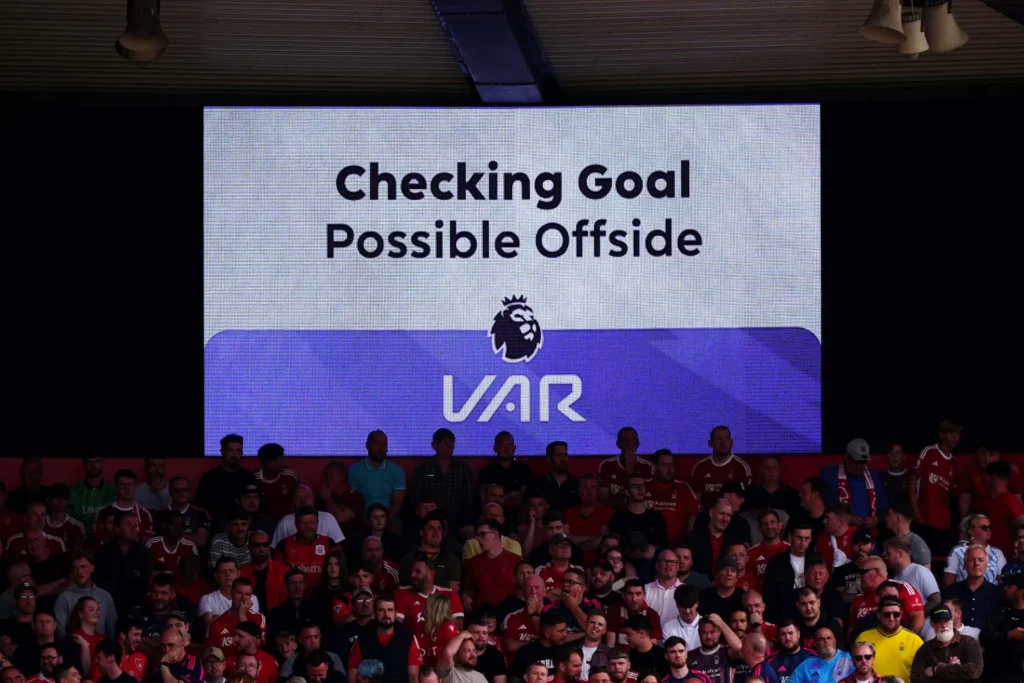
1. Goals and Violations Leading to Them
The system checks every goal to ensure no offense was committed in the buildup.
- Offside: Was the scorer or an assisting player offside?
- Fouls: Was there a foul committed by the attacking team during the play?
- Ball out of play: Did the ball leave the field of play prior to the goal?
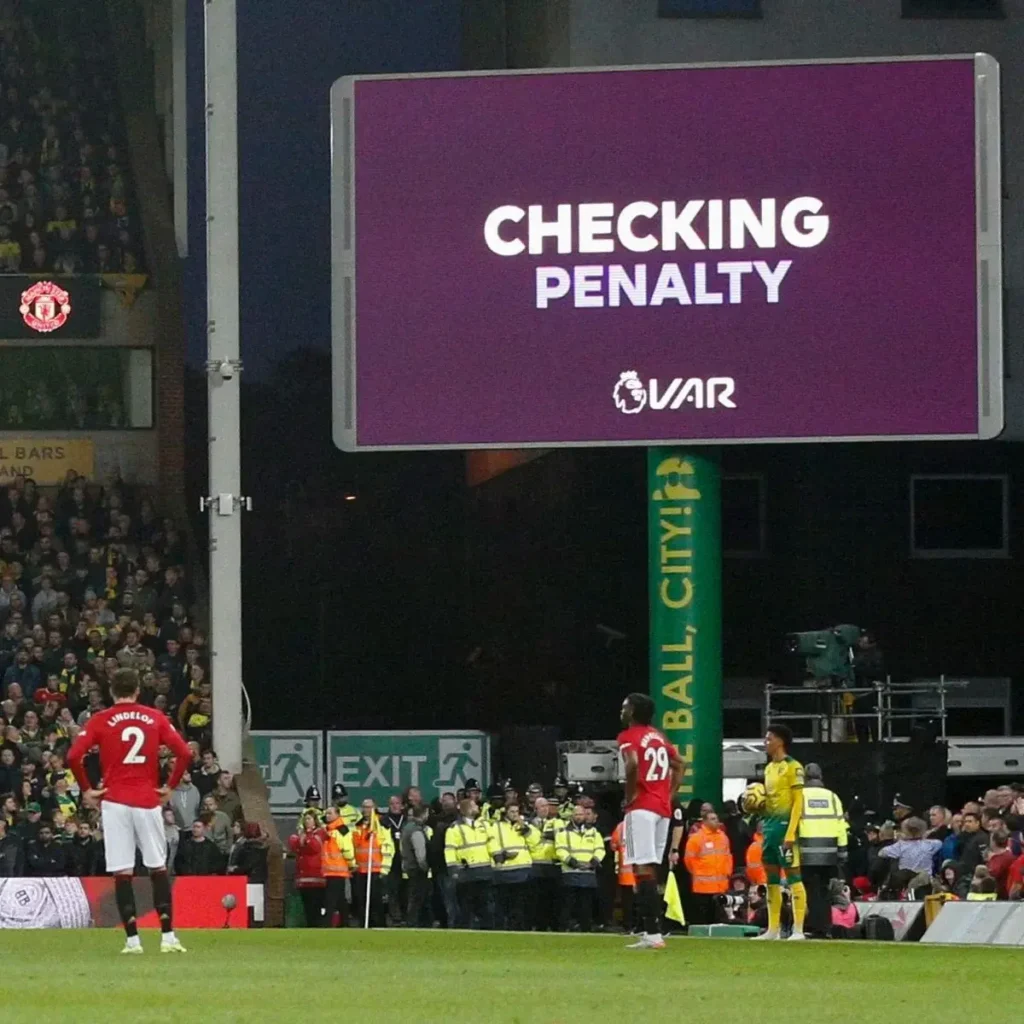
2. Penalty Decisions
VAR reviews all penalty kick awards and non-awards.
- Wrongly awarded: Was the contact actually a dive, or outside the box?
- Missed penalty: Did the referee miss a clear foul inside the area?
- Goalkeeper encroachment: During the taking of a penalty, did the keeper move off the line early?
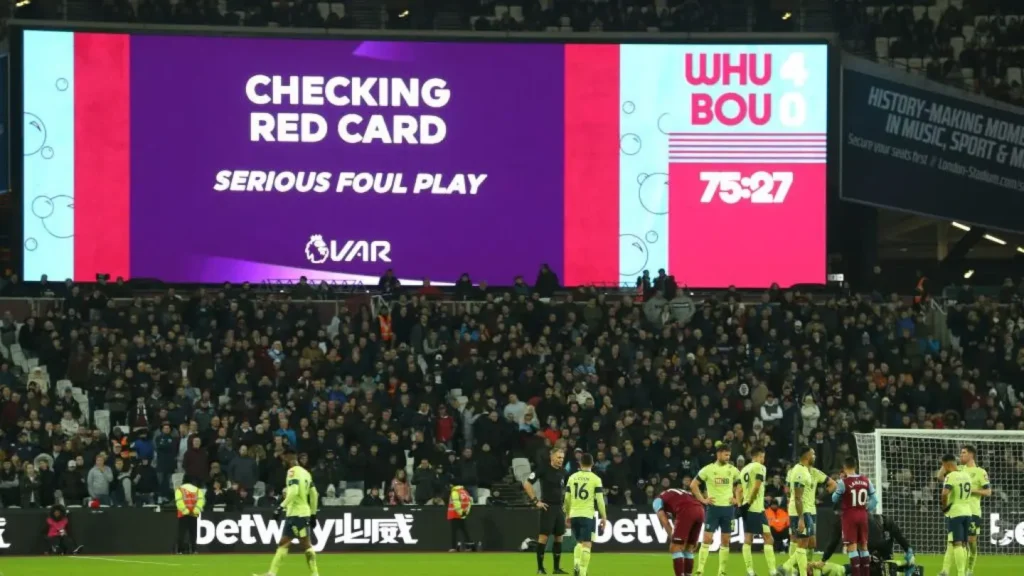
3. Direct Red Card Incidents
VAR checks for serious foul play or violent conduct that warrants a straight sending off.
Note: VAR does not review second yellow cards. A player sent off for two cautionable offenses cannot be reviewed by VAR.
4. Mistaken Identity
If a referee sends off or cautions the wrong player (e.g., #8 commits the foul but #28 gets the card), VAR will intervene to correct the record.
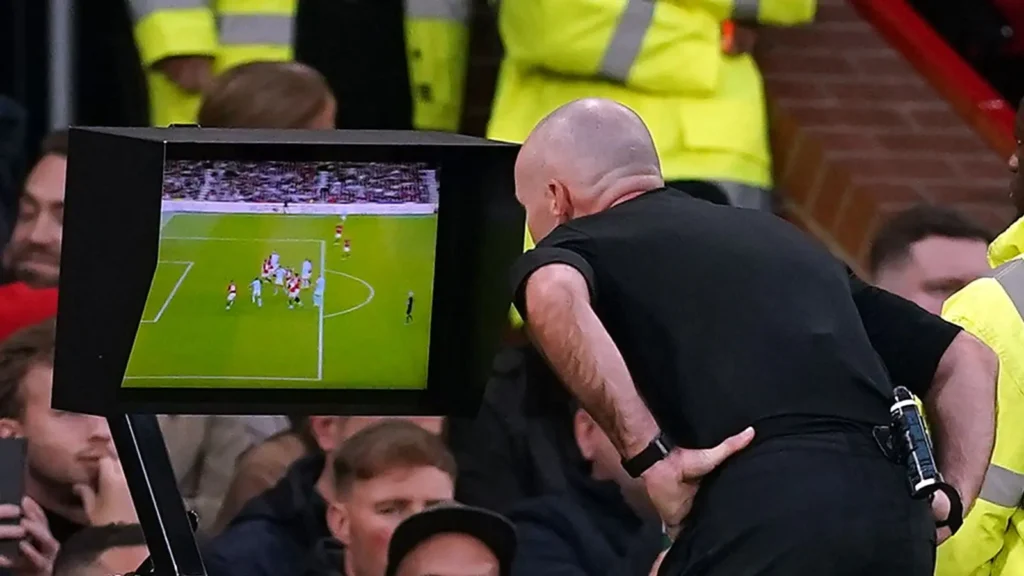
How does the VAR work?
The communication between the referee on the field and the VAR team in the video operation room (VOR) generally follows the following steps:
- Incident Occurs: The referee on the field makes a decision in the game (or lets the game go on).
- Silent Check: The VAR team is always ready to check the situation in the video. If the decision on the field is definitely good, they do not intervene. This is the main reason why you often see the players waiting for the continuation of the game.
Recommendation:
- Factual Decisions (e.g., Offside): VAR conveys the information about the error to the referee (e.g., “The player was offside”). The decision is changed immediately without the referee having to see the video.
- Subjective Decisions (e.g., Fouls): The VAR suggests an On, Field Review (OFR). They will say something like, “I suggest you review the scene for a possible penalty.”
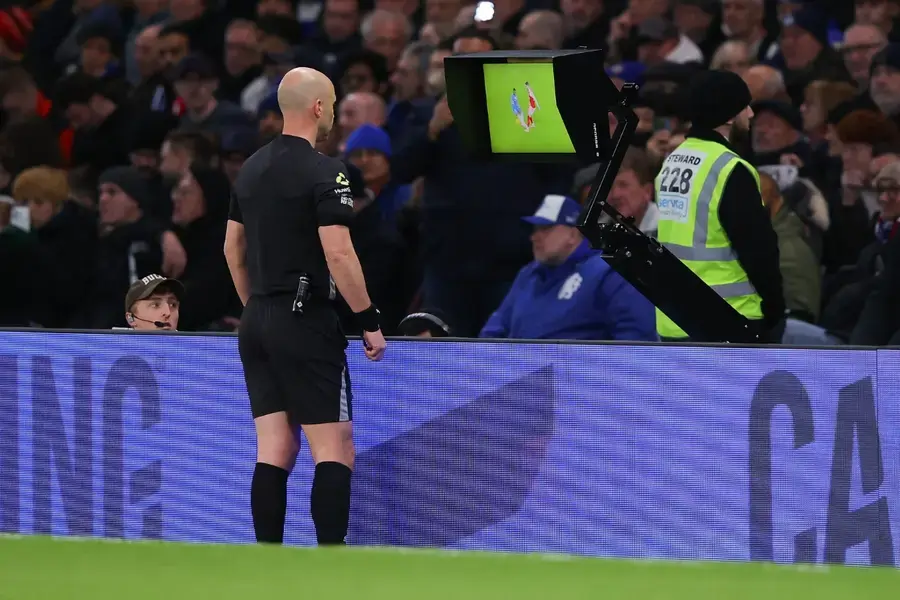
- The Monitor: The referee goes to the pitch, side monitor (the RRA, Referee Review Area) to see the replay.
- Final Decision: After the referee watches the video, he returns to the pitch and signals the outcome, either his original decision or the one being overturned.
The Technology Behind the Scenes
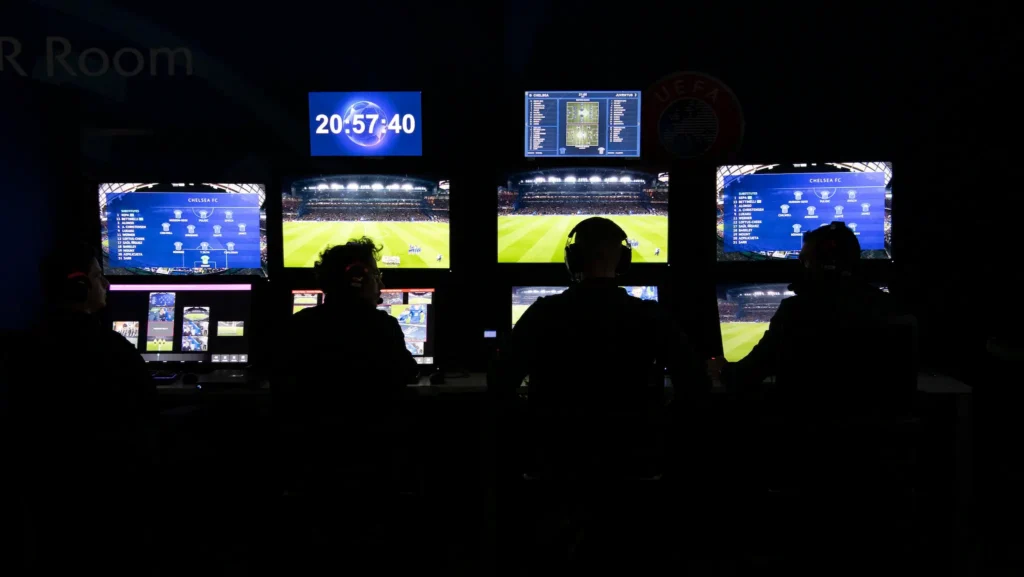
VAR is a technology dependent system that uses the following technologies:
- Semi, Automated Offside Technology (SAOT): This technology is used in big events such as the World Cup and the Champions League. The technology uses sensors to track the ball and cameras to track a player’s limb, thus creating 3D animations that show the exact moment when the offside happened and this happens in seconds with high precision.
- Goal Line Technology: The referee gets an instant buzz on his watch if the ball crosses the line; hence, this technology is independent of VAR. Only in the case of a failure (which is very rare) will the VAR be checking for this.
FIFA’s new VAR rules for WC 2026
FIFA and IFAB are expanding the VAR protocol to address the most glaring issues that have been hotly debated in the 2026 World Cup. The most important changes authorize VAR to intervene in the awarding of corner kicks and second yellow cards, in both cases, it was previously impossible. In other words, referees can now correct a set piece that is wrongly given and avoid an unjustified sending off that could unbalance a match of great importance unfairly.
Along with these modifications, there is a new rule called “two minutes” for medical care, which aims to prevent simulation and tactical time wasting and keep the game as continuous as possible despite the increased supervision. By enabling VAR to monitor corners and second bookings, FIFA is striving to eradicate “factual errors” that have been the bane of major tournaments.
Conclusion
These proposals are still being reviewed and, if they were to be put in place, would need the green light from the International Football Association Board. At present, VAR is still confined to the framework from which it was initially derived, and there are continuous attempts to enhance the clarity and consistency of the decisions.
As the system is gradually being perfected, VAR is still an instrument whose main purpose is to help referees, not to take over their role, the ultimate goal being to achieve a compromise between precision, the referee’s control, and the game’s rhythm.