

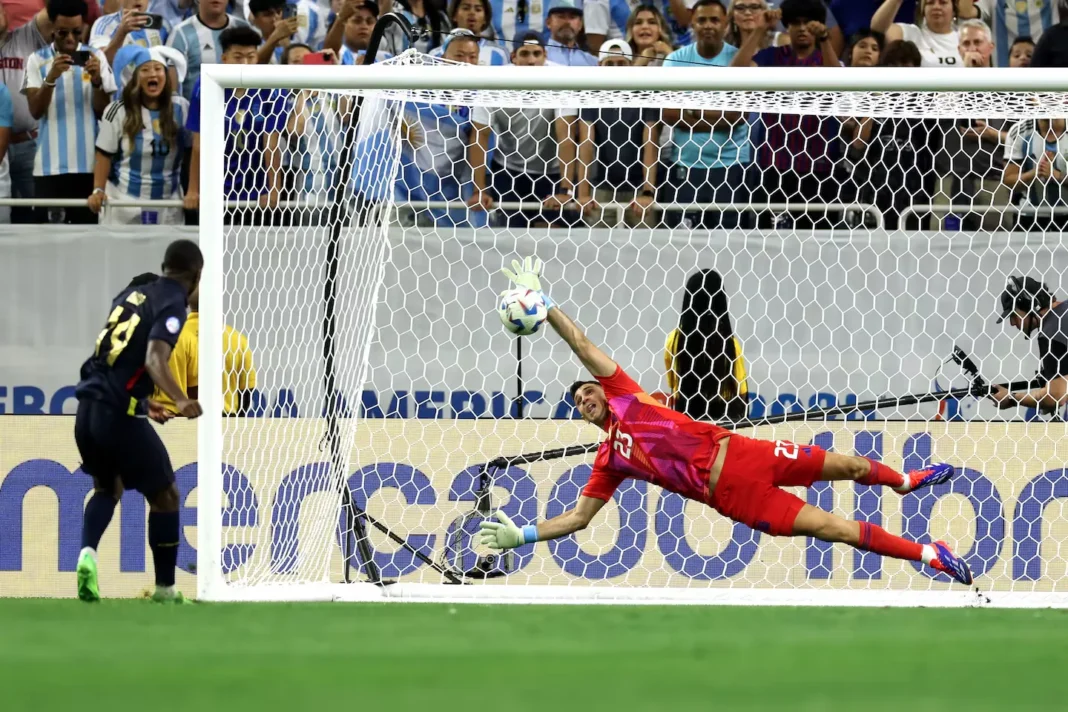

No moment in football is more unforgiving than a penalty.
Twenty two players spend ninety minutes fighting for space, rhythm, and control, only for everything to be reduced to one kick, one goalkeeper, and twelve yards of silence.
Penalties decide finals, titles, relegations, and legacies. They are accepted as normal now, but their existence represents football’s most extreme compromise between justice and cruelty.
This is the story of the penalty, why it exists, why it looks the way it does, and why football has never found a better alternative.
Why the Penalty Was Created
Penalties were not introduced for drama. They were introduced out of frustration.
In the late nineteenth century, defenders routinely fouled attackers close to goal because the punishment was minimal. A free kick could be defended by stacking bodies on the goal line. Cynicism paid.
Football had a problem.
Attackers were being denied goals illegally, and the laws offered no meaningful deterrent.
The penalty kick, introduced in 1891, was football’s answer.
- Not elegance,
- Not entertainment,
- Punishment.
Why the Penalty Is So Severe
A penalty is deliberately disproportionate.
A single foul can be punished with a goal scoring opportunity far greater than the chance that was originally denied. That imbalance is intentional.
Football decided that,
- Stopping a clear chance illegally must hurt more than conceding one honestly.
- The penalty exists to change behaviour, not to reflect fairness in isolation.
- That is why it still feels harsh.
Why the Spot Is 12 Yards From Goal
The now iconic penalty spot was not chosen randomly. Twelve yards offered the perfect middle ground, Close enough to heavily favour the attacker, Far enough to give the goalkeeper a chance, Consistent enough to be replicated everywhere. At twelve yards, the ball reaches the goal in roughly 0.4 seconds. That leaves just enough time for anticipation, but not enough for reaction alone. Move the spot closer and penalties become automatic. Move it further away and fouling becomes acceptable again. Football found its balance early, and never touched it again.
Why Goalkeepers Are So Restricted
Penalty rules often feel biased against goalkeepers. That is because they are.
Goalkeepers must, Remain on the goal line, Face the shooter, React without encroaching early. These restrictions exist to preserve the penalty’s deterrent value. If goalkeepers were allowed to advance freely, the balance would tilt back towards defenders.
The penalty is meant to favour the attacker. Always has been.
Recent rule changes allowing one foot on the line are not generosity. They are damage control in a game where goalkeepers were being punished for physics, not intent.
The Psychological War of Penalties
Penalties are less about technique and more about nerve.
The goalkeeper waits. The taker overthinks. The crowd hums with expectation. There is no teammate to bail you out. No second phase. No tactical reset. A missed penalty is remembered longer than a missed pass or shot from open play. That emotional asymmetry is unique in football.
Penalties isolate players, and football knows it.
Why Penalty Shootouts Feel Unfair, But Stay
No one truly likes penalty shootouts. They feel detached from the game. They reduce team sport to individual survival. They break hearts with clinical efficiency. And yet, football keeps them. Because every alternative has failed. Replays overload calendars. Golden goals reward caution. Counting corners or possession is absurd. Penalties may be cruel, but they are decisive. Football values closure.
VAR and the Modern Penalty Crisis
VAR has not changed penalties. It has exposed them. Marginal handballs, minimal contact, frame by frame scrutiny, penalties are now awarded for actions invisible to the naked eye. The law has not become harsher. Its application has become microscopic. This has shifted penalties from punishment for obvious wrongdoing to consequences of technical infringement. And that is why debate has exploded.
Why Football Still Needs the Penalty
Despite all its flaws, football cannot remove penalties. Without them, Defenders would foul more, Goal scoring chances would be cynically erased, Justice would become negotiable. The penalty is football’s line in the sand. Cross it illegally, and the punishment is severe. That threat keeps the game honest.
The Penalty’s Uncomfortable Truth
Penalties are not fair.
They are not poetic. They are not kind. They are necessary.
Football survives because it accepts that some moments must hurt more than others. The penalty does not exist to feel right. It exists to make players think twice. And that, more than anything else, is why twelve yards still decide everything.