

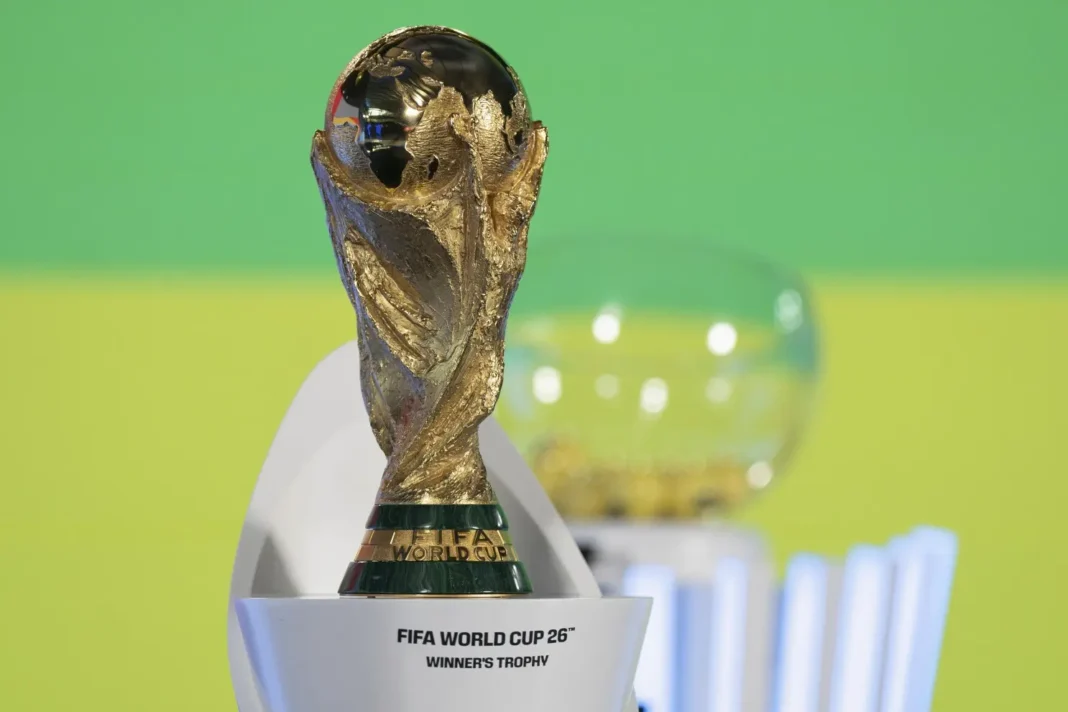

Every major tournament cycle reveals unexpected narratives buried beneath the predictable headlines. While the world watches Erling Haaland smash records and Harry Kane chase milestones, the UEFA European Championship Qualifiers for the 2026 FIFA World Cup have produced statistical leaders that tell far more interesting stories. Some names will surprise you. Others have been invisible from the limelight for years, quietly excelling for smaller nations. And a few, predictably, are exactly where you’d expect champions to be.
Welcome to the statistical deep dive that reveals who’s truly driving their nations toward the World Cup 2026.
Big Chances Created: The Architects of Opportunity
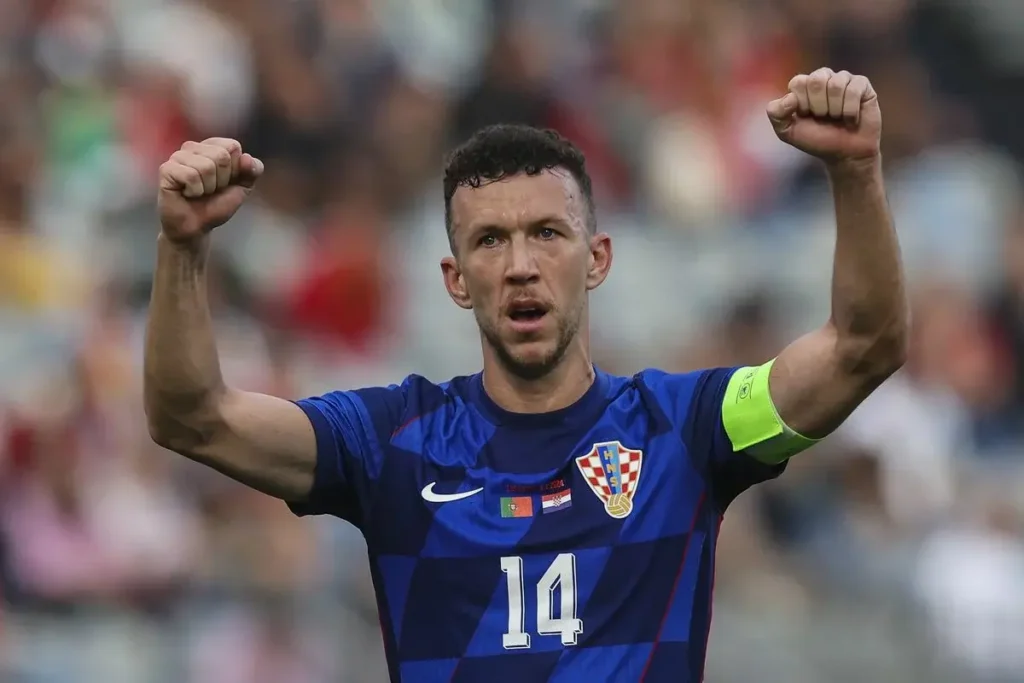
- Ivan Perišić (Croatia)– 10 big chances created
- Cody Gakpo (Netherlands)– 10 big chances created
- Sorba Thomas (Wales)– 8 big chances created
- Julian Ryerson (Norway)– 8 big chances created
- Pedro Porro (Spain)– 7 big chances created
Ivan Perišić topping this chart at 36 years old is a remarkable testament to longevity and tactical intelligence. The Croatian veteran, who’s played everywhere from Wolfsburg to Inter Milan to Tottenham, and eventually to PSV, continues delivering world-class service for his national team. His ability to create gilt-edged opportunities, defined as chances where the player receiving should reasonably score, demonstrates vision that hasn’t diminished with age.
 Sharing top honours is Cody Gakpo, whose creative evolution at Liverpool has translated seamlessly to the international stage. While he’s primarily known for goal-scoring, these statistics reveal a player capable of unlocking defences with incisive passing.
But the real revelation? Sorba Thomas of Wales. Playing for Huddersfield Town in the Championship, Thomas operates far from the Premier League spotlight yet delivers elite-level creativity for his country. Eight big chances created from a player most casual fans have never heard of, that’s the beauty of international football, where quality transcends club stature.
Goals Scored: Haaland’s Historic Rampage
- Erling Haaland (Norway)– 16 goals
- Marko Arnautović (Austria)– 8 goals
- Memphis Depay (Netherlands)– 8 goals
- Harry Kane (England)– 8 goals
- Mikel Oyarzabal (Spain)– 6 goals
Sixteen goals. Erling Haaland has scored sixteen times in Euro 2026 qualifying, a number so absurd it barely registers as real. For context, that’s double what Harry Kane, Memphis Depay, and Marko Arnautović have managed. The Norwegian’s scoring rate for his country mirrors his club form: relentless, clinical, and historically unprecedented.
 Marko Arnautović sharing second place is the feel-good story buried in these numbers. The 36-year-old Austrian striker, now plying his trade in Saudi Arabia, continues delivering for his national team with the kind of consistency that’s defined his international career. Eight goals represent genuine impact for a player many assumed had faded from relevance.
Memphis Depay’s eight goals reflect his resurgence since leaving Barcelona. The Dutchman has rediscovered confidence and form, becoming the focal point of the Netherlands’ attacking structure. His combination of goals and creativity (more on that shortly) makes him one of the qualifying’s most complete forwards.
Chances Created: The Playmakers Pulling Strings
- Sorba Thomas (Wales)– 27 chances created
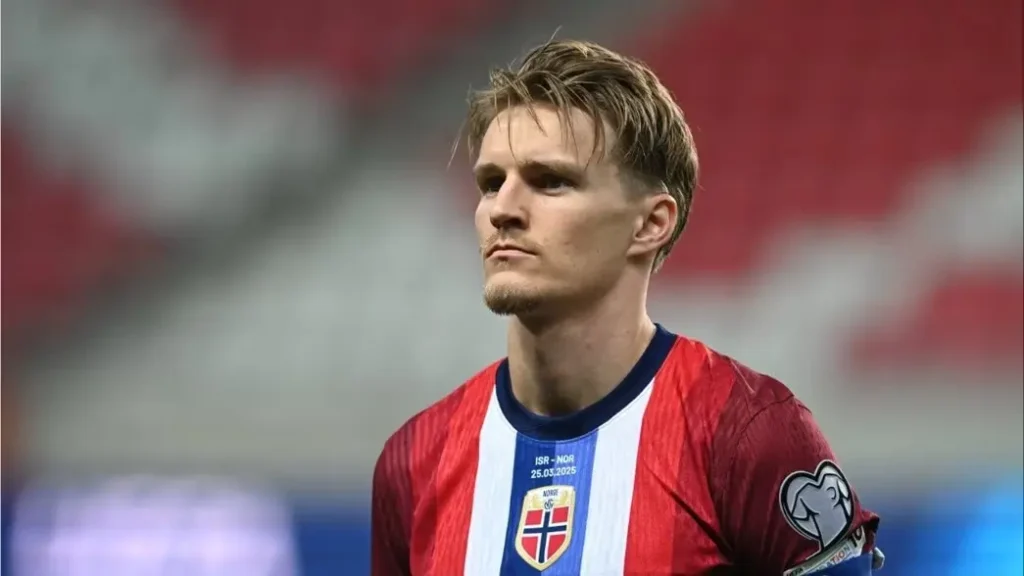
- Martin Ødegaard (Norway)– 25 chances created
- Memphis Depay (Netherlands)– 24 chances created
- Jérémy Doku (Belgium)– 24 chances created
- Sandro Tonali (Italy)– 23 chances created
Sorba Thomas appears again, this time leading the entire qualifying campaign for chances created. Twenty-seven opportunities created for teammates from a Championship winger represent extraordinary output. Wales’ qualification hopes rest significantly on Thomas’ creative shoulders, and he’s delivering performances that should have Premier League scouts circling.
Martin Ødegaard’s 25 chances created for Norway underscore why he captains Arsenal. His vision, technical execution, and tactical intelligence translate perfectly to international football, where he operates with even more freedom than at the club level. Partnering with Haaland gives him a target guaranteed to capitalise on quality service.
 Memphis Depay’s dual threat- eight goals and 24 chances created- positions him among qualifying’s most influential players. The combination of scoring and creating makes him the Netherlands’ most valuable attacking asset.
Jérémy Doku’s 24 chances created reveal a player maturing rapidly. His reputation centres on explosive dribbling, but these statistics showcase developing vision and decision-making that complements his raw athleticism.
Touches in Opposition Box: The Penalty Area Predators
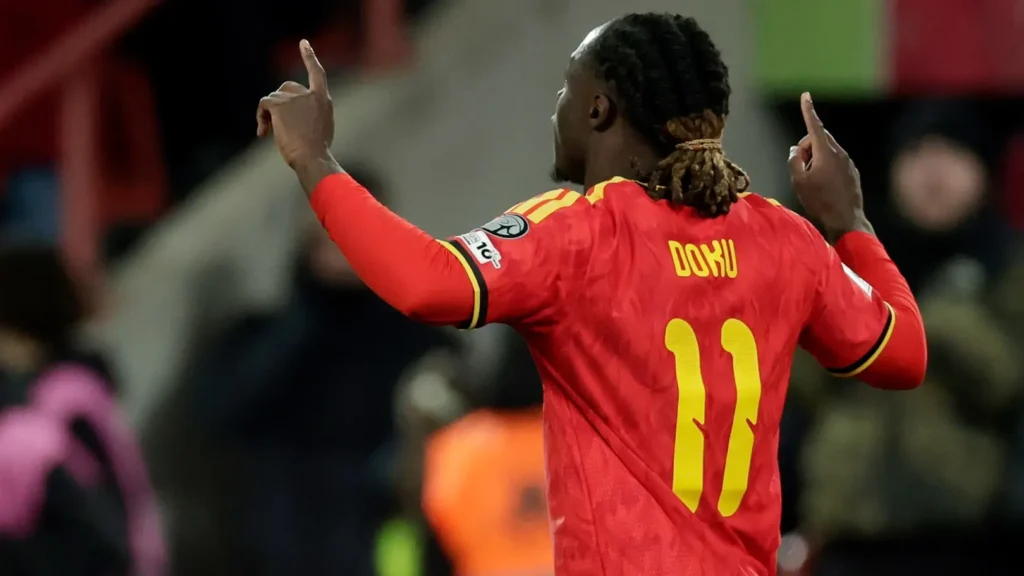
- Jérémy Doku (Belgium)– 110 touches
- Erling Haaland (Norway)– 68 touches
- Cody Gakpo (Netherlands)– 59 touches
- Marcel Sabitzer (Austria)– 58 touches
- Harry Kane (England)– 57 touches
Jérémy Doku recording 110 touches in opposition penalty areas is staggering. For context, that’s 42 more than Haaland, a player whose entire game revolves around occupying dangerous spaces. Doku’s number reflects his role as Belgium’s primary ball-carrier into the final third, constantly penetrating defences with dribbling before creating or shooting.
 Haaland’s 68 touches demonstrate predatory positioning; he’s not involved in build-up play, but when attacks reach the box, he’s inevitably there. His touch count correlates directly with his 16 goals, showcasing ruthless efficiency.
Marcel Sabitzer’s 58 touches for Austria represent underrated excellence. The midfielder’s ability to arrive late into dangerous areas provides Austria with attacking variety beyond Arnautović’s target-man presence.
Fouls Won: The Players Opponents Can’t Handle
- Leandro Barreiro (Luxembourg)– 26 fouls won
- Jérémy Doku (Belgium)– 24 fouls won
- Grigoris Kastanos (Cyprus)– 23 fouls won
- Justas Lasickas (Lithuania)– 23 fouls won
- Breel Embolo (Switzerland)– 19 fouls won
Leandro Barreiro topping this chart for Luxembourg highlights how crucial he is to their approach. Playing for a smaller nation means facing superior opponents regularly, and drawing 26 fouls demonstrates both his quality and his importance in disrupting opposition rhythm.
Doku’s 24 fouls won complement his other attacking statistics. Defenders can’t legally stop him, so they resort to tactical fouling. That’s the ultimate compliment for a dribbler; opponents would rather concede free kicks than let him run at them.
Most Assists: The Final Ball Specialists
- Martin Ødegaard (Norway)– 7 assists
- Sorba Thomas (Wales)– 5 assists
- Alexis Saelemaekers (Belgium)– 4 assists
- Hakan Çalhanoğlu (Türkiye)– 4 assists
- Mikel Oyarzabal (Spain)– 4 assists
Ødegaard’s seven assists, combined with his 25 chances created and nine through balls completed, paint the picture of qualifying’s most complete creative midfielder. His partnership with Haaland has been devastating for Norway’s opponents.
Sorba Thomas’ five assists for Wales further cement his status as one of the qualifying tournament’s biggest revelations. From Championship obscurity to international stardom, his story deserves far more attention.
Through Balls Completed: The Vision Masters
- Martin Ødegaard (Norway)– 9 through balls
- Michael Olise (France)– 7 through balls
- Oscar Gloukh (Israel)– 6 through balls
- Mikkel Damsgaard (Denmark)– 5 through balls
- Florian Wirtz (Germany)– 5 through balls
Through balls, those perfectly weighted passes that split defensive lines, require vision, timing, and technical execution. Ødegaard’s nine successful deliveries showcase all three qualities.
Michael Olise’s seven for France demonstrates why Bayern Munich invested heavily in him. His creative intelligence complements France’s attacking riches perfectly.
Oscar Gloukh’s presence here is intriguing; the Israeli midfielder operates outside mainstream attention but possesses the vision of players twice his age.
Final Third Passes Completed: The Progressive Passers
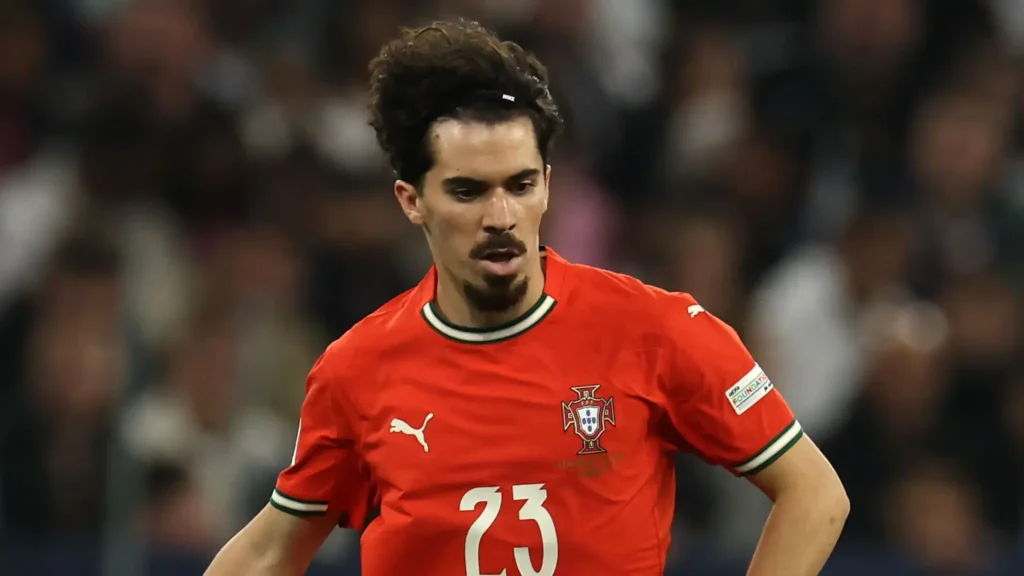
- Vitinha (Portugal)– 224 passes
- Jérémy Doku (Belgium)– 203 passes
- Oscar Gloukh (Israel)– 200 passes
- Sander Berge (Norway)– 194 passes
- Frenkie de Jong (Netherlands)– 193 passes
Vitinha’s 224 completed passes into the final third for Portugal reflect his role as their primary progressive midfielder. He’s the connector between defence and attack, the player who advances possession into dangerous areas.
 Doku appearing again, this time for passing rather than dribbling, shows his evolution. He’s not just beating defenders anymore; he’s combining with teammates to unlock defences systematically.
Ground Duels Won: The 1v1 Champions
- Jérémy Doku (Belgium)– 73 duels won
- Dennis Man (Romania)– 53 duels won
- Grigoris Kastanos (Cyprus)– 51 duels won
- Khvicha Kvaratskhelia (Georgia)– 49 duels won
- Justas Lasickas (Lithuania)– 45 duels won
Seventy-three ground duels won. Jérémy Doku isn’t just creating chances and getting fouled; he’s systematically beating defenders in individual battles. That number is 20 clear of second place, demonstrating physical and technical dominance that few wingers in world football can match.
Khvicha Kvaratskhelia’s 49 duels won for Georgia underline why PSG made him one of their most shining signings. His ability to win individual battles against superior opposition has been crucial for Georgia’s qualification push.
Most Tackles Made: The Defensive Warriors
- Jakub Kiwior (Poland)– 22 tackles
- Abdulla Xaybulayev (Azerbaijan)– 22 tackles
- Justin Devenny (Northern Ireland)– 21 tackles
- Eliel Peretz (Israel)– 21 tackles
- Emin Mahmudov (Azerbaijan)– 20 tackles
These names represent the unsung heroes, defensive midfielders and centre-backs grinding through qualification by winning possession for smaller nations facing constant pressure.
Jakub Kiwior’s 22 tackles for Poland demonstrate his importance beyond his Arsenal role, right now on loan at Porto. International football often requires defenders to tackle more frequently than possession-dominant clubs, and Kiwior has embraced that challenge.
The Takeaway
The UEFA European Championship Qualifiers for the 2026 FIFA World Cup have revealed heroes operating outside the spotlight- Sorba Thomas creating chances from the Championship, Leandro Barreiro drawing fouls for Luxembourg, and Oscar Gloukh threading passes for Israel. These players embody international football’s magic: quality transcends club prestige when pride and passion drive performance.
But it’s also confirmed the expected: Haaland scoring at historic rates, Ødegaard orchestrating Norway’s attacks, Doku dominating in virtually every offensive category. The blend of revelation and confirmation makes these qualifiers compelling, predictable excellence alongside unexpected brilliance.
As the qualification concludes and attention turns to the 2026 World Cup, remember these names. Some will shine on the biggest stage. Others will have carried their nations as far as talent allows. All have contributed to qualifying’s rich statistical tapestry, proof that football’s beauty exists at every level, in every statistic, if you know where to look.