


Two Kinds of Football Fans
There are two types of football fans. Some believe a defensive midfielder should be tall, strong, and combative. Others don’t. Neither view is wrong; it all depends on the system and the manager’s philosophy.
If you fall into the first category, don’t worry, even the Spanish Federation once thought the same way. That was before Sergio Busquets arrived and changed everything.
The System Player Who Redefined the Role
Sergio Busquets is widely regarded as one of the greatest midfielders ever and arguably the best defensive midfielder in history. Recently, while playing for Inter Miami, he announced that this would be his final season.
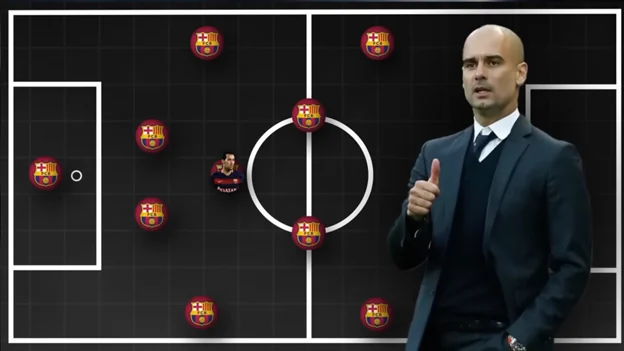
Many call him “a system player,” someone who thrived only in Barcelona’s structure. But critics forget he anchored the midfield for two of the most dominant teams in football history that is, Spain and Barcelona. Did he really need to prove himself elsewhere? Not at all. His brilliance spoke for itself.
The Misunderstood Genius
Busquets divided fans. Some admired his intelligence; others disliked his theatrics and so-called “cheating.” But his craft went far beyond that reputation.
You’ve probably heard Spain’s World Cup-winning coach Vicente del Bosque’s supposed quote:
“When you watch the game, you don’t see Busquets. But when you watch Busquets, you see the whole game.”
Surprisingly, Del Bosque never said it. A writer named Señor Mono’s wife did, and it spread like wildfire. What Del Bosque actually said was, “If I were a player, I’d want to look like Sergio Busquets.”

Even Pep Guardiola echoed that admiration:
“I would like to reincarnate myself in him. He is the best player in the world.”
The Hardest Role: The Single Pivot
When people ask which position is hardest to play, most say “defensive midfield.” But the correct answer is single pivot.
As I have discussed in my video, in a double pivot, you have support beside you. In a single pivot, every mistake gets exposed. Done right, you barely notice it; done wrong, it breaks the team’s shape.
Busquets mastered this invisible art.
Pep’s Discovery: From Barca B to the Treble
In 2008, after the Ronaldinho era, Barcelona was struggling. Pep Guardiola took charge of the first team after managing Barça B, where a young Busquets played. Pep trusted him immediately.
Busquets debuted in the 2008–09 season, competing with legends Xavi and Iniesta for midfield spots. Despite limited minutes, he won La Liga’s Breakthrough Player of the Year award that season.
When Barcelona reached the 2009 Champions League Final against Manchester United, Yaya Touré shifted to center-back due to injuries. And you know what was the result of the game. Barca beat United 2-0
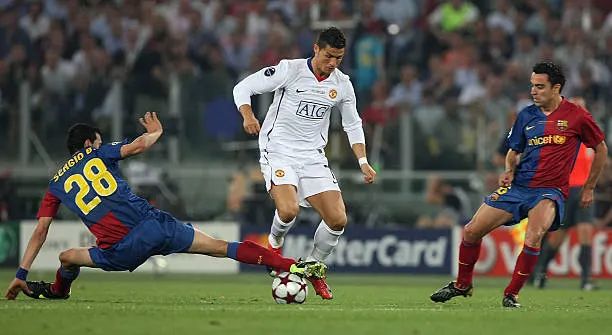

Busquets started in midfield, and the rest is history. He became part of Barcelona’s legendary trio with Xavi and Iniesta, playing alongside Messi in Pep’s revolutionary tiki-taka system.
Spain’s World Cup Miracle
Before 2010, Spain’s best World Cup finish was fourth place and way back in 1950. Under Del Bosque, that changed.
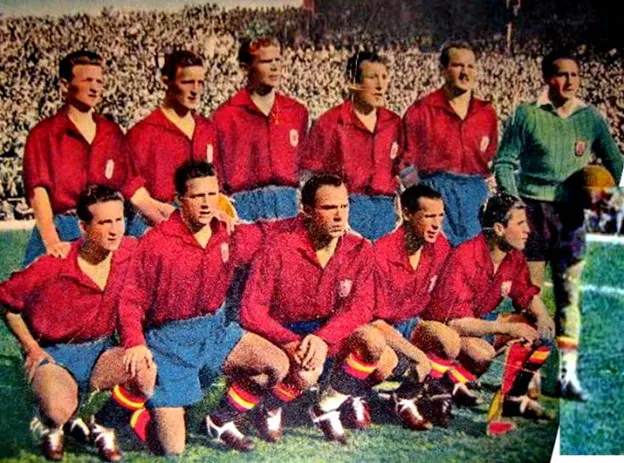
Spain’s group featured Chile, Switzerland, and Honduras. After a shock loss to Switzerland that ended a 35-match unbeaten run, Spain bounced back with wins against Honduras and Chile. Busquets started every match, often alongside Xabi Alonso but operating as the true defensive midfielder.

From then on, he was untouchable. He anchored Spain as they beat Portugal (1–0), Paraguay (1–0), and then Germany (1–0), where he neutralized Mesut Özil. In the final, Spain defeated the Netherlands 1–0, with Busquets controlling the space that others couldn’t see.

He wasn’t just marking players; he was controlling space.
Conquering Europe Again
In Euro 2012, Spain crushed Italy 4–0 in the final. Everyone praised Xavi and Pirlo, but the real engine was Busquets. He finished the final with 96% passing accuracy, the perfect symbol of his calm precision.

By age 23, Busquets had won a World Cup, two European Championships, and two Champions League titles. He had already mastered football.
The Brain Behind Tiki-Taka
I have comprehensively discussed the Tiki Taka system in my video, where I proved that Tiki Taka could not have existed without Sergio Busquets. Before Busquets, football celebrated physicality. Strength, tackling, and long balls ruled the game. Busquets flipped the script. He made football about control, rhythm, and anticipation.
Trained under Guardiola, who was in turn mentored by Johan Cruyff, Busquets learned to dictate tempo as the single pivot. Surrounded by Xavi, Iniesta, Messi, and Pedro, he was the silent conductor while ensuring the rhythm never broke.
The Master of “Boring” Football
Busquets was never flashy. His game was about subtle brilliance with positioning, awareness, and tactical intelligence.
He wasn’t a hard tackler like Makélélé or Vieira. Instead, he predicted danger before it happened. He would stop time. He once explained:
“I like stopping counter-attacks, but I like even more to prevent them from happening in the first place.”
While others put out fires, Busquets made sure fires never started. He played football five seconds ahead of everyone else. He was a true time traveler on the pitch.
The Invisible Genius
Busquets’ greatness often lay in what didn’t happen. His press resistance was unmatched. Where others panicked under pressure, he stayed calm, twisting and turning through impossible angles.
Back in Guardiola’s era, pressing wasn’t as aggressive. But in Busquets’ time, opponents pressed high, yet he rarely lost the ball. He didn’t fight duels; he froze time and escaped traps.
Even elite players admired him.
Frank Lampard said Busquets teaches “the quality and value of one-touch football.”
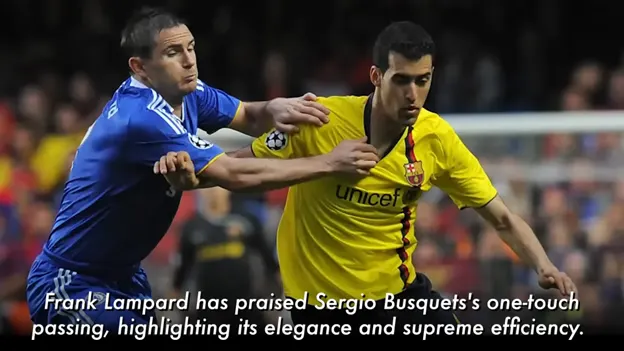
Steven Gerrard admitted pressing him was pointless.
Rio Ferdinand joked, “You could go out there in velvet slippers and still perform like him.”
The Calculated Mind
Busquets once said,
“I spent the whole match calculating. I count the players on my right and left. The key logic is to judge well.”
That intelligence defined him. His calm passing and control let Barcelona and Spain breathe. Ask any true football fan, and their opinion on Busquets reveals how deeply they understand the game.
Style, Technique, and the Art of Disguise
Busquets wasn’t born a midfielder. His father was a goalkeeper, and young Sergio began as a striker. Over time, he chose the deep-lying role because he saw how underdeveloped it was, and he wanted to master it.
His key weapon was body orientation. Tall, lanky, and graceful, he used feints, hip movement, and disguise passes to deceive entire defenses.
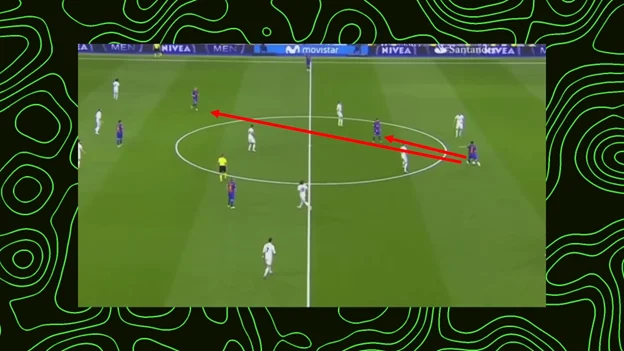
As I explained in my video, he mastered La Salida Lavolpiana, which is dropping between center-backs to form a back three and escape high presses. Guardiola learned the principle in Mexico and implemented it with Busquets.
His signature moves include the pullback, the roll, and the heel turn, which is turned pressing traps into open flanks. He wasn’t just surviving pressure; he was inviting it.
Evolution and Longevity
As he aged, Busquets added long passes to his skill set, expanding beyond short interplay. His execution was nearly flawless because any mistake could trigger a counterattack. That consistency kept him vital at Barcelona for over 15 years.
He was never the fastest, but his tight-space tackling and positional discipline made up for it. When Xavi and Iniesta departed, Busquets became Barcelona’s anchor during tactical transitions.
Legacy of an Extinct Species
Legendary Argentine coach César Menotti once said after watching Busquets,
“I’ve found a player of an extinct species.”
That’s exactly what Busquets was — a midfielder who made himself visible only by absence. He didn’t need goals or flair; he controlled time and space.
Now, as he retires, football loses one of its purest thinkers. We’ll miss his calm, his logic, and all the moments we never saw — because he prevented them from ever happening.
Let me know what you think about Sergio Busquets in the comment section of my video.