

José Mourinho: Master Tactician, Relentless Winner, Football Icon
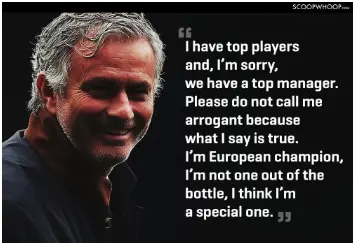
José Mourinho has never just managed football teams he has managed moments, narratives, and emotions. From the instant he announced himself as “a Special One” Mourinho turned the touchline into a stage, blending tactical brilliance with confrontation, charisma, and control. Loved with fierce loyalty by his players and fans, resisted just as passionately by his critics, he remains one of the most influential figures of the modern game. This is the story of a coach who built dynasties, courted chaos, and forced football to reckon with a simple truth: winning changes everything, but how you win can define an era.
José Mourinho rose from modest Portuguese roots to become one of football’s most polarizing geniuses, a tactician who turns underdogs into champions and sparks endless debate. His journey blends brilliance, bravado, and backlash, making him a figure fans love to hate or hate to love.
More than trophies, Mourinho has shaped eras with his mind games, siege mentalities, and unshakeable belief in control. He thrives in pressure, weaponizes doubt, and often positions himself against the world to protect his players. Whether celebrated as a master strategist or criticized as a provocateur, Mourinho’s presence guarantees one thing: football is never quiet when The Special One is in charge.
O COMEÇO EM PORTUGAL
José Mourinho’s story begins far from the floodlights and feuds that would later define him. Born in Setúbal and raised in a deeply football-rooted family, he learned the game through observation, study, and discipline rather than stardom on the pitch. When his playing career stalled early, Mourinho turned to coaching with an almost academic obsession, absorbing ideas, analysing systems, and understanding football as a battle of details.
His breakthrough came at FC Porto, where preparation met opportunity. Blending tactical rigor with an emerging siege mentality, Mourinho built a side that feared no one and outthought everyone. Domestic dominance soon followed, but it was Europe that announced him to the world as a young Portuguese coach proving that intelligence, conviction, and control could topple giants.
Humble Beginnings:
Born in 1963 in Setúbal, Portugal, to a professional footballer father, Félix Mourinho, and a schoolteacher mother, young José initially dreamed of following his father onto the pitch. He passed through Belenenses’ youth system before joining Rio Ave’s reserves, where, under his father’s management, he developed a sharp tactical eye while contributing goals and analysing opponents. A lack of elite pace cut his playing ambitions short at just 24, but it clarified his true calling
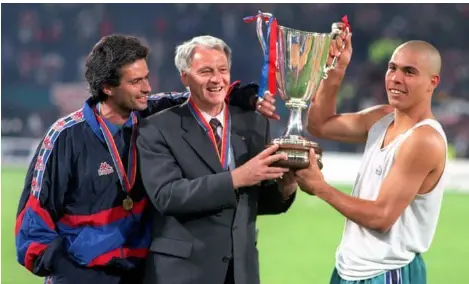
Mourinho immersed himself in coaching education, studying physical education and sports science before becoming an assistant and translator for Sir Bobby Robson at FC Barcelona, a role that proved transformative. From that apprenticeship, Mourinho learned elite man-management and tactical adaptability, laying the foundations for his rise as a coach rather than a player.
Working daily with world-class talents, he mastered the psychology of dressing rooms filled with egos and expectations. He became known for exhaustive opposition analysis, detailed training plans, and clear tactical messaging. Robson’s trust gave him authority beyond his years, while Barcelona’s elite environment sharpened his competitive edge. By the time Mourinho stepped out on his own, he carried not just ideas, but the confidence to impose them at the highest level.
In his 20s and 30s, Mourinho honed his craft as a translator and assistant, first for Bobby Robson at Sporting CP and Porto, then at Barcelona under Robson and Louis van Gaal. He absorbed tactical frameworks, designed training sessions, and obsessively analysed opponents, turning his background in physical education into a competitive edge earning praise from mentors like Andy Roxburgh for his attention to detail.
Crucially, Mourinho was never just translating language, but ideas, acting as a bridge between dressing room and dugout. At Barcelona, he witnessed contrasting leadership styles, learning man-management from Robson and structural discipline from Van Gaal. These experiences sharpened his belief in preparation and control as the foundations of success. By 2000, brief head-coach spells at Benfica ending after nine games and União de Leiria, whom he improbably lifted to third place, marked him out as a coach ready for a bigger stage, firmly putting Porto on alert.
Explosão no Porto (The Porto Explosion)
Taking over Porto in the 2002–03 season while the club sat fifth, Mourinho immediately imposed structure, belief, and a ruthless winning mentality. He built a fearless spine around Deco’s intelligence, Ricardo Carvalho’s authority, and Costinha’s balance, turning Porto into a tactically drilled, emotionally united machine. The result was a historic treble Primeira Liga, Taça de Portugal, and the UEFA Cup achieved through meticulous preparation and absolute conviction.
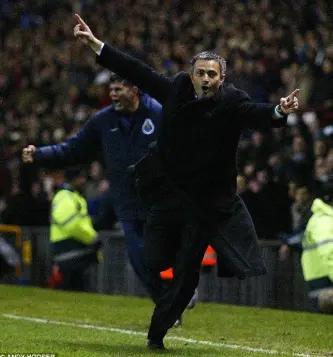
The following season elevated him from rising coach to continental force. Porto defended their league crown and tore through Europe, combining compact defending with devastating transitions. Victories over Manchester United, Lyon, and Deportivo La Coruña showcased Mourinho’s strategic adaptability, but it was the dramatic Old Trafford moment Costinha’s late goal and Mourinho’s touchline sprint that crystallized his arrival. At just 41, he had conquered Europe and announced a new managerial archetype: bold, defiant, and obsessively prepared.
Overnight, Mourinho transformed from a respected tactician into football’s most compelling new personality. Clubs across Europe took notice, sensing not just a winner, but a man ready to challenge the established order.
Domínio do Chelsea (Chelsea Dominance)
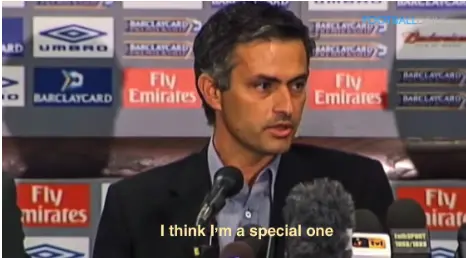
Arriving in 2004, Mourinho declared himself “The Special One” and immediately justified it. Chelsea stormed to back-to-back Premier League titles between 2004 and 2006, setting records with 95 points and conceding just 15 league goals in 2004–05 a defensive benchmark that still stands today. That side turned Stamford Bridge into a fortress, going nearly five full seasons unbeaten at home in the league, a reflection of Mourinho’s control, structure, and psychological grip.
Crucially, Mourinho didn’t just buy stars he built leaders. Players like Frank Lampard, John Terry, Didier Drogba, Petr Čech, and later Michael Essien and Claude Makélélé were moulded into a ruthless, battle-hardened core. Young or raw talents were given clear roles, responsibility, and belief, transforming “a bunch of boys into men.” Tactically, Chelsea were relentless: compact without the ball, ruthless on transitions, and emotionally unbreakable in big moments.
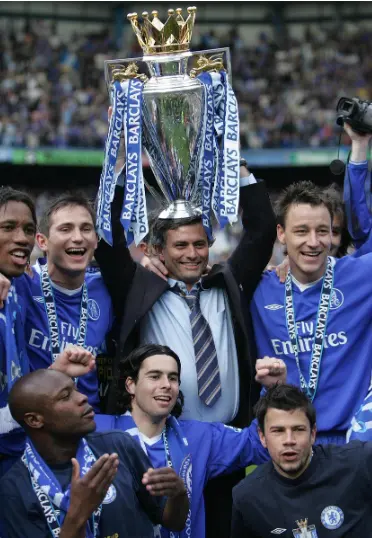
Mourinho instilled a siege mentality that united the dressing room against critics and rivals alike. Even in tight, attritional matches, Chelsea rarely looked vulnerable, winning games through control as much as flair. His influence extended beyond trophies, resetting the Premier League’s standards for organisation, intensity, and winning mentality, a blueprint many tried to copy, but few ever matched.
Opponents knew that beating Chelsea required near-perfection, while Chelsea themselves thrived on marginal gains and mental dominance. Mourinho’s teams were unapologetically pragmatic, comfortable winning ugly if that was what the moment demanded. In doing so, he reshaped English football’s understanding of power, proving that discipline and psychology could be just as decisive as attacking brilliance.
Glória do Triplete no Inter (Inter Treble Glory)
At Inter Milan between 2008 and 2010, Mourinho didn’t just win he etched history. After securing consecutive Serie A titles, he delivered Italian football’s first-ever treble: Serie A, Coppa Italia, and the Champions League. This Inter side was built on balance and sacrifice, blending relentless defensive organisation with lethal attacking clarity. Wesley Sneijder became the tactical heartbeat, orchestrating play between the lines and enjoying a Ballon d’Or–calibre season.
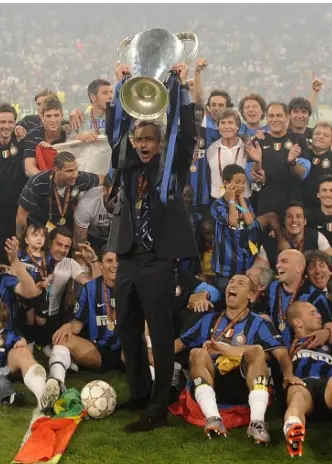
Diego Milito embodied Mourinho’s faith in big-game players, scoring decisive goals throughout the campaign, including both strikes in the Champions League final. Samuel Eto’o accepted a selfless role, tracking full-backs and pressing tirelessly, symbolising Mourinho’s demand for collective commitment. Defensively, Lucio, Walter Samuel, and Júlio César formed an unbreakable spine, conceding space but never control. The semi-final triumph over Barcelona, especially the heroic, backs-to-the-wall display at Camp Nou with ten men became one of Mourinho’s greatest tactical masterpieces. Inter didn’t just beat Europe’s best; they out-thought them, sealing Mourinho’s legacy as a manager for the grandest occasions.
Caos em Madrid (Madrid Mayhem)
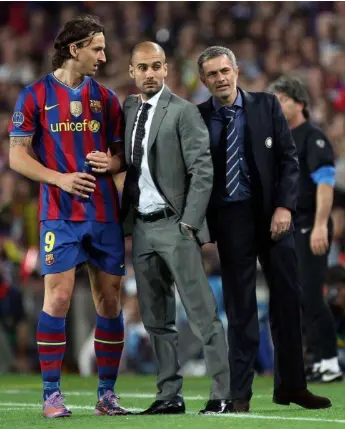
At Real Madrid between 2010 and 2013, Mourinho arrived with a mission: to break Barcelona’s dominance and restore Madrid to the pinnacle of Spanish and European football. His teams combined high-intensity pressing with disciplined defensive organisation, often ceding possession to strike ruthlessly on the counterattack. Real’s 100-point 2011–12 La Liga season, featuring 121 goals,remains a record-breaking display of attacking efficiency and relentless ambition.
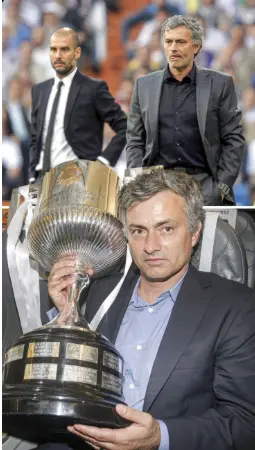
Cristiano Ronaldo reached unprecedented heights under Mourinho, scoring 60 goals in a single season, while other stars like Karim Benzema, Mesut Özil, and Ángel Di María flourished within defined tactical structures. Mourinho emphasised transitions: quick, vertical moves exploiting space left by opponents, often turning defensive solidity into immediate attacking danger. The Copa del Rey and Supercopa victories showcased his ability to manage two-legged affairs, using away goals and meticulous preparation to his advantage.
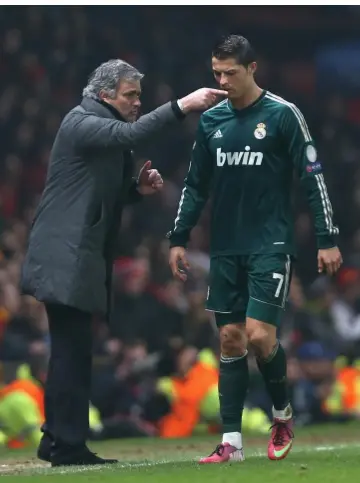
Madrid’s style under Mourinho was pragmatic yet spectacular, a blend of tight defensive blocks, disciplined midfield coverage, and explosive forward thrusts. He developed players not just technically but mentally, demanding focus, resilience, and situational intelligence. Even in high-pressure Clasicos, his side executed game plans with precision, mixing flair with ruthless pragmatism. While records were shattered, it was Mourinho’s insistence on balance, counter-attacking process, and man-management that left a lasting imprint on Real Madrid’s modern identity and helped them lay the foundation for their future European dominance.
Later Conquests
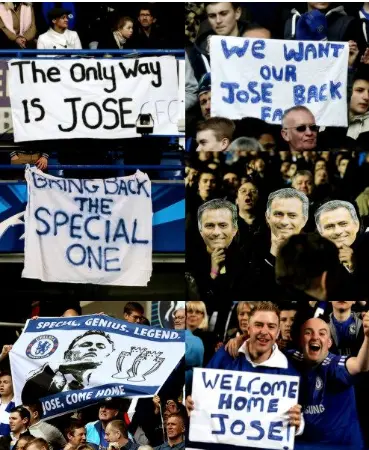
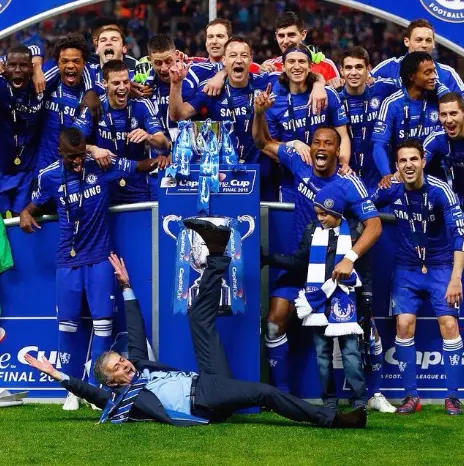
Mourinho’s second spell at Chelsea (2013–2015) reaffirmed his ability to dominate and transform squads. Returning to Stamford Bridge, he quickly rebuilt a side capable of winning again, capturing the Premier League in 2014–15 and adding a League Cup. Once again, Mourinho combined tactical discipline with psychological mastery, turning emerging talents into leaders and ensuring that Chelsea remained a fortress both at home and away. Key players like Diego Costa, Cesc Fàbregas, and Eden Hazard were central to this resurgence Costa’s aggression and finishing gave Chelsea a relentless focal point up front, Fàbregas dictated play from midfield with vision and precision, while Hazard’s creativity and dribbling provided the spark in tight games.
Even amid tensions with owner Roman Abramovich, Mourinho’s methods produced results, cementing his reputation as a manager who could impose his vision under pressure.Drogba’s experience and leadership uplifted the squad in crucial moments. Even amid tensions with owner Roman Abramovich, Mourinho’s methods produced results, cementing his reputation as a manager who could impose his vision under pressure.
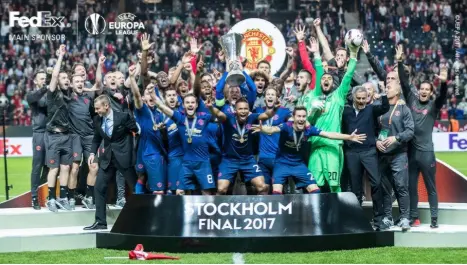
At Manchester United (2016–2018), Mourinho continued his pattern of silverware accumulation, winning the Europa League, League Cup, and Community Shield. He introduced a pragmatic, counter-attacking style that maximized United’s strengths, particularly in knockout competitions, and restored a winning mentality to a squad seeking identity after years of transition. While criticism followed in the league, Mourinho’s capacity to extract results in crucial matches proved once more why he was one of football’s most demanding tacticians.
He emphasized defensive solidity and structured pressing, turning United into a team that could absorb pressure and strike with clinical efficiency. Players like Paul Pogba, Marcus Rashford, and Anthony Martial developed under his guidance, learning the nuances of tactical discipline while still being allowed moments of individual brilliance.
The arrival of Zlatan Ibrahimović added a new dimension to United’s attack, bringing experience, leadership, and a ruthless goal-scoring instinct. Zlatan’s physical presence and clutch performances complemented Mourinho’s counter-attacking philosophy, often turning tight games in United’s favor and providing a mentor figure for the younger forwards.
His tenure at Tottenham Hotspur (2019–2021) highlighted his developmental strengths. He evolved Harry Kane from a pure striker into a creative hub, allowing the England captain to both score and assist prolifically.
The Son-Kane partnership became one of Europe’s most lethal attacking duos, combining for 45 goals and 18 assists across competitions. Mourinho integrated young talents such as Dele Alli and Lucas Moura into high-responsibility roles, emphasizing counter-attacking speed and tactical awareness. Tottenham reached the League Cup final, and although they fell short, Mourinho’s influence on tactical structure, counter-attacking efficiency, and player growth was evident.
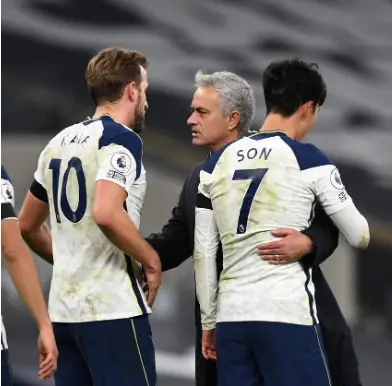
Under his guidance, Tottenham played some of their most disciplined and effective football in years, blending defensive organisation with lightning-quick transitions. Many analysts and fans have argued that if Mourinho had not been sacked mid-season, his methods and experience could very realistically have delivered the club a long-awaited trophy. His ability to inspire belief, extract peak performances from key players, and manage high-pressure moments suggested that silverware was within reach a “what could have been” in the club’s modern history that highlights Mourinho’s enduring impact even in truncated tenures.
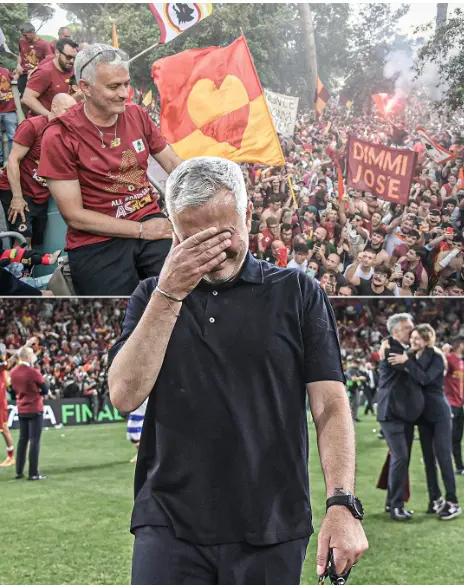
At Roma (2021–2024), Mourinho reached a new milestone, winning the Europa Conference League the club’s first European trophy in decades. This achievement made him the first manager in football history to win major trophies with four different clubs across three countries. His defensive organisation, meticulous preparation, and ability to inspire belief in players again proved decisive, while his leadership helped a mix of young and experienced players flourish. Roma became resilient in matches, capable of both absorbing pressure and exploiting transitions with speed and precision, hallmarks of Mourinho’s managerial philosophy.
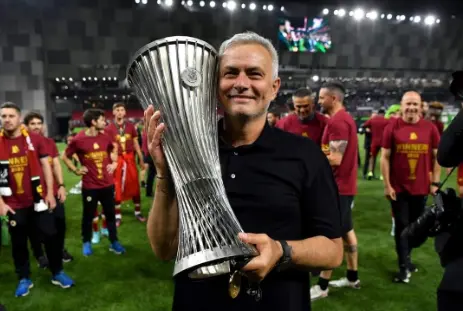
During his time in Rome, Mourinho also focused on developing key players, helping talents like Lorenzo Pellegrini, Nicolo Zaniolo, and Tammy Abraham refine their tactical awareness and decision-making under pressure. The Europa Conference League triumph not only ended Roma’s long wait for continental silverware but also completed Mourinho’s remarkable personal set of trophies across Europe, cementing his legacy as a manager capable of achieving historic feats wherever he goes.
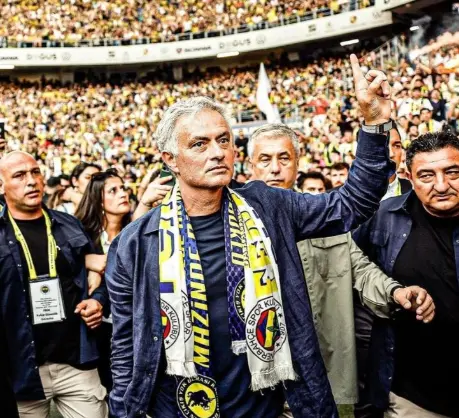
A brief, turbulent spell at Fenerbahçe (2024–2025) ended in dismissal following a failure to reach the Champions League, but even in setbacks, Mourinho’s methods, intensity, and exacting standards left an imprint. During his time in Turkey, he worked to instill discipline and tactical structure in a squad adapting to European ambitions, while pushing younger players to step up in high-pressure moments. Despite not achieving continental qualification, his presence elevated professionalism at the club and showcased his commitment to defensive organisation and counter-attacking efficiency. Even in a short period, Mourinho left a mark on the culture and mentality of Fenerbahçe, proving that his influence extends beyond immediate results.
Most recently, at Benfica, Mourinho added another chapter to his legendary career by defeating Real Madrid in Europe. His tactical acumen was on full display, orchestrating a disciplined, high-intensity side capable of absorbing pressure and exploiting opponents’ weaknesses. Under his guidance, Benfica demonstrated resilience, strategic intelligence, and a hunger for silverware, while younger players gained invaluable experience under his mentorship. This victory not only reaffirmed Mourinho’s enduring genius but also highlighted his ability to craft masterful performances in high-stakes matches, even at this stage of his career.
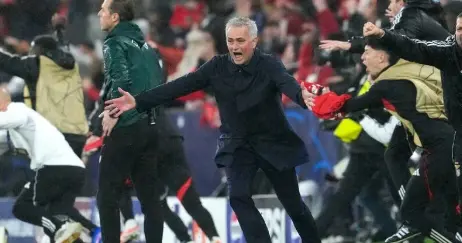
Across decades and leagues, Mourinho’s later conquests illustrate a manager whose influence stretches beyond trophies: a mentor, strategist, and relentless competitor capable of transforming teams into disciplined, resilient, and ambitious units. His teams consistently reflect his philosophy: preparation, psychological fortitude, and adaptability, proving time and again that his methods endure in both triumph and adversity. Even as football evolves, Mourinho’s fingerprints remain visible a blend of tactical genius, man-management, and an unwavering desire to win that defines him as one of the game’s true modern icons.
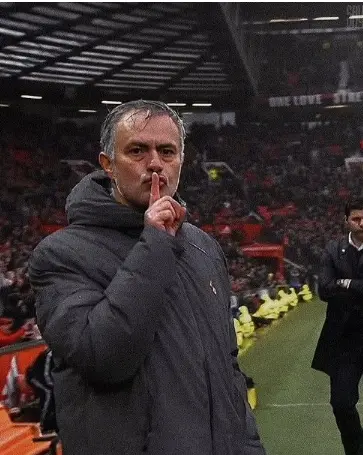
What truly sets Mourinho apart is his ability to leave a lasting imprint on club culture, shaping identities and expectations that outlive his tenure. He develops leaders within squads, instills belief in underdogs, and crafts systems that balance pragmatism with flair.Opponents often underestimate the psychological edge he brings, only to find themselves outmaneuvered tactically and mentally. Whether in the Champions League, domestic leagues, or emerging competitions, Mourinho’s influence is measured not just in silverware but in the resilience, cohesion, and professionalism he embeds in every team. Even at the twilight of his career, he continues to redefine what it means to be a modern football manager, proving that preparation, strategy, and leadership are timeless tools for success.
Conclusion
José Mourinho’s career is a testament to the enduring power of vision, discipline, and leadership in football. From Porto to Chelsea, Madrid, Inter, and beyond, he has consistently transformed squads into champions, blending tactical mastery with psychological insight. His ability to develop players, inspire belief, and adapt strategies to any challenge has set him apart as one of the game’s greatest modern managers. Beyond trophies, Mourinho leaves lasting legacies at every club he touches shaping identities, culture, and standards of excellence. Even in setbacks, his methods and influence resonate, proving that success is as much about mentality and preparation as it is about silverware.
Mourinho’s personality and philosophy are encapsulated in his famous words: “Please don’t call me arrogant, but I’m European champion and I think I’m a special one,” the declaration that announced him to the world at Chelsea. His mindset of relentless ambition is clear in, “I’m a coach. I win. I lose. I survive,” reflecting his ability to endure pressure. And his focus on preparation shines through in, “I don’t like to speak before the game. I like to prepare my team to win.” In football history, Mourinho stands not only as a winner but as a pioneer whose principles, wit, and relentless pursuit of excellence continue to define what it means to manage at the highest level.