


Indian football didn’t grow in a vacuum; it grew in the shadow of a giant. The Indian Premier League changed the way India watched sport, celebrated sport, and even marketed sport. And tucked inside that cultural wave, quietly but decisively, the Indian Super League learned, borrowed, adapted, and built its own identity.
The IPL didn’t just revolutionise cricket. It inadvertently built a blueprint that football in India now sprints along.
A New Era of Sports Entertainment
Before the IPL, Indian sport mostly belonged to television studios and newspaper columns. After IPL, it belonged to storytelling.
Teams had personalities. Players became characters. The league felt like a festival, loud, emotional, impossible to ignore.
When the ISL launched in 2014, it inherited that same philosophy. Football, too, could be a spectacle. Stadiums could be packed. Kids could pick teams not because of geography alone, but because the vibe fit them.
ISL’s matchdays – lights, anthem, fireworks, fanfare – feel like they grew from seeds IPL planted.

Celebrity Ownership and Star Power
IPL showed India the power of mixing sport with stardom.
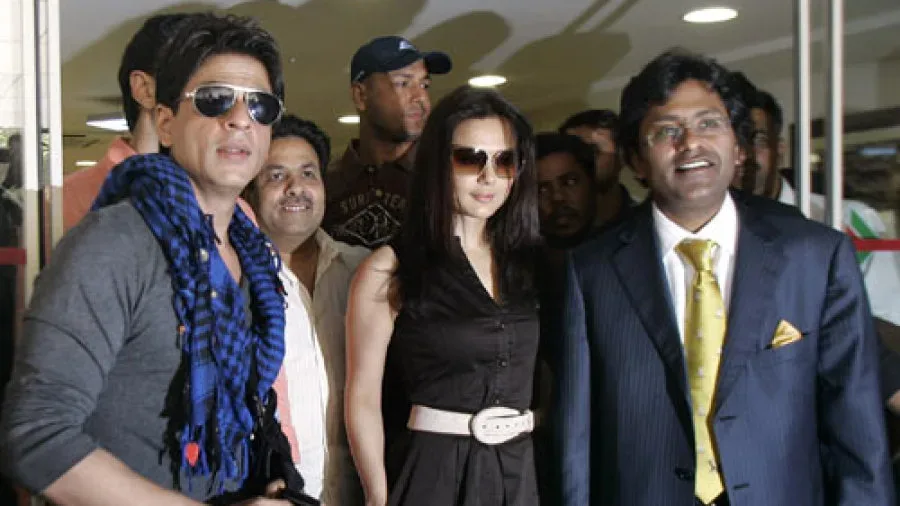
Shah Rukh waving a flag. Preity Zinta hyping the cameraman. Vijay Mallya building an identity around indulgence.
Suddenly the team owners weren’t in the boardroom – they were in the middle of the theatre.
When ISL arrived, it carried the same DNA.
You had Ranbir Kapoor, Abhishek Bachchan, Sachin Tendulkar, John Abraham, Sourav Ganguly – all stepping into team ownership roles.
It wasn’t a coincidence. It was a reflection of the IPL effect: making sport aspirational by attaching it to people Indians already idolise.
This didn’t instantly turn India into a football nation, but it helped turn ISL into a conversation.

Branding: From Teams to Identities
One of IPL’s biggest achievements was turning every franchise into a standalone brand – Knight Riders had an aesthetic; RCB felt like a rebellion; CSK became a religion. Merch culture exploded.
ISL borrowed this playbook, but adapted it.
The focus became identity:
- ATK were the giant-slayers
- Kerala Blasters rode the emotion of Manjappada
- Bengaluru FC became the “professionals” with a European-style vibe
- Mumbai City embraced the City Football Group’s global sheen
Indian football finally felt brandable, merch-worthy, wearable.
Without the IPL’s success in creating team cultures, ISL’s approach might have been far more cautious.

Big Broadcast, Bigger Production
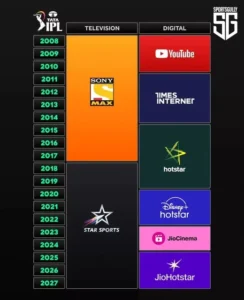
IPL forced Indian broadcasters to evolve.
Dynamic graphics. Pre-show segments. Player stories. Mic’d-up moments. Mid-innings packages.
It changed the production grammar of Indian sport.
ISL plugged right into that.
Every broadcast – from the angle of replays to the drama of countdown clocks – carries the influence of IPL-era presentation.
Football became something you didn’t just watch; you experienced.
Add to that the schedule discipline, matchday packaging, and studio analysis – all crafted to mimic the premier-league energy IPL had normalised.
Grassroots and Money: The Oxygen of Sport
The IPL proved that corporate money and sport can coexist – and flourish.
Brands flooded cricket, and eventually, some of that confidence trickled into football.
ISL’s youth leagues, club academies, data departments, and community programmes were only possible because investors finally believed football could be a sustainable market.
Cricket’s success didn’t directly fund football, but it opened boardrooms.
It taught Indian businesses that sport could be a long-term asset, not charity.
The more IPL grew, the more ISL convinced investors it deserved a seat at the table.

International Influence, Local Ambition
IPL blurred lines between global and local.
Foreign stars became household names. India suddenly felt part of a bigger sporting world.
ISL took that baton and sprinted with it.
Alessandro Del Piero, Luis García, Diego Forlán, Roberto Carlos – India had never seen football legends this close.
That wave of marquee players didn’t magically transform the national team, but it did change culture.
Kids watched world-class players on Indian soil and decided football might be worth chasing.

The Final Whistle
ISL is not a copy of IPL.
Football carries a different rhythm, different emotion, different hunger..
ISL’s journey has been uniquely intertwined with the legacy of the IPL; yet, as of now, the league faces an uncertain future – broadcasters and investors have pulled out, leaving ISL in a state of limbo. It’s a stark contrast to the IPL; which, even in its toughest moments, managed to bounce back by taking the tournament overseas and adapting to new circumstances.
As we watch the ISL navigate this turbulent phase, we can only hope it finds its footing and reemerges stronger; the IPL’s resilience serves as a beacon of hope, and perhaps ISL will find its own path to revival. For now, we wait and watch; hopeful that Indian football’s journey is far from over.