


Since the 2002 Edition The FIFA World Cup has evolved significantly since the 2002 tournament in Japan and South Korea, with modern editions featuring tighter defenses, more tactical discipline, and fewer lopsided mismatches compared to the high-scoring eras of the 1950s or 1980s. As a result, no match in the finals tournaments from 2006 onward has reached double-digit total goals, and the peak remains at 8 goals in a single game. This article focuses on the standout high-scoring encounters from the 2006, 2010, 2014, 2018, and 2022 World Cups. These games often combined dominant performances, dramatic comebacks, or sheer attacking flair, making them memorable despite the overall dip in goal averages across tournaments (typically around 2.5–2.7 goals per match in recent years).
Beyond raw numbers, these goal-heavy matches stand out because they defied the prevailing trends of compact mid-blocks, cautious game management, and data-driven risk minimization. They often emerged from unique circumstances early red cards, knockout-stage desperation, or teams refusing to abandon attacking principles even when leading. In many cases, they became defining moments of their respective tournaments, shaping narratives, legacies, and tactical debates long after the final whistle.
Top High-Scoring Matches (Post-2002 Finals Tournaments)
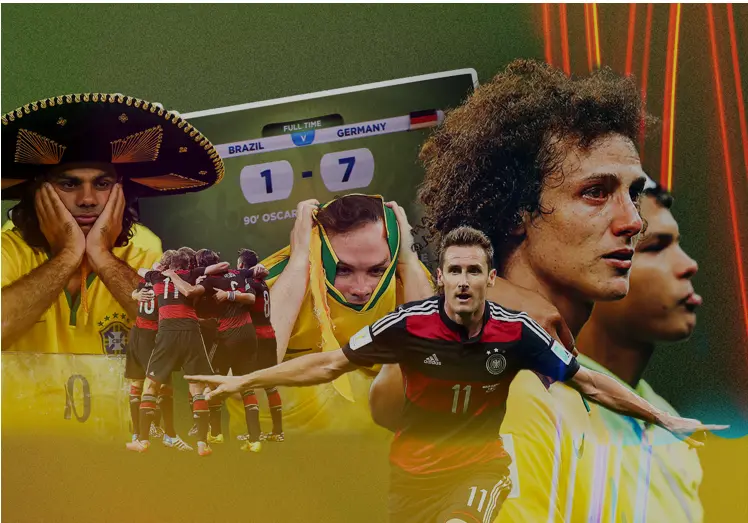
1. Germany 7-1 Brazil (8 goals total) – July 8, 2014
Semi-final, Estádio Mineirão, Belo Horizonte (Brazil World Cup)
Often called the “Mineirazo,” this remains one of the most shocking and highest-scoring knockout matches in modern World Cup history. Germany dismantled the hosts with ruthless efficiency: goals from Thomas Müller, Miroslav Klose, Toni Kroos (2), Sami Khedira, and André Schürrle (2). Brazil’s Oscar scored a late consolation. The result stunned the football world and stands as Germany’s record World Cup win margin.
2. England 6-2 Iran (8 goals total) – November 21, 2022
Group stage, Khalifa International Stadium (Qatar World Cup)
England opened their campaign with a dominant display, led by Bukayo Saka (brace), Jude Bellingham, Raheem Sterling, Marcus Rashford (brace), and Jack Grealish. Iran replied with two late goals from Mehdi Taremi. This was England’s joint-highest scoring group-stage win in World Cup finals and one of the tournament’s early goal-fests.

3. Spain 7-0 Costa Rica (7 goals) – November 23, 2022
(Group stage, Qatar). A clinical Spanish performance with goals from Ferran Torres (2), Álvaro Morata, Marco Asensio, Gavi, Carlos Soler, and Dani Olmo. Spain’s relentless positional play completely overwhelmed a Costa Rica side unable to cope with the tempo or width of the attack. The match marked one of the most dominant group-stage displays in recent World Cup history, with Spain registering over 80% possession and a barrage of shots on target. It also served as a symbolic statement of Spain’s post-2018 evolution blending youthful dynamism with established control even if that promise later proved fleeting in the tournament.

4. Portugal 7-0 North Korea – June 21, 2010
Group stage, South Africa A one-sided thrashing featuring a brace from Tiago and goals from others in a rare mismatch.Portugal’s fluid attacking movement and quick transitions exposed North Korea’s defensive structure from the opening exchanges. Once the first goal arrived, the match rapidly unraveled into a showcase of confidence and freedom, with runners flooding the box at will. The result not only boosted Portugal’s goal difference but also stood as one of the most emphatic victories of the 2010 tournament, highlighting how rare but still possible true mismatches remained in the modern World Cup era.

5. England 6–1 Panama June 24, 2018
Group stage, Russia England dismantled Panama with ruthless efficiency, exploiting defensive disorganization through set-pieces and rapid ball circulation. Harry Kane’s hat-trick including two penalties and a deflected finish underlined England’s growing comfort in high-pressure tournament games. The performance marked a shift in perception, showcasing a side capable of controlling matches rather than merely surviving them. It also laid the psychological foundation for England’s deepest World Cup run since 1990.

6. Belgium 5–2 Tunisia
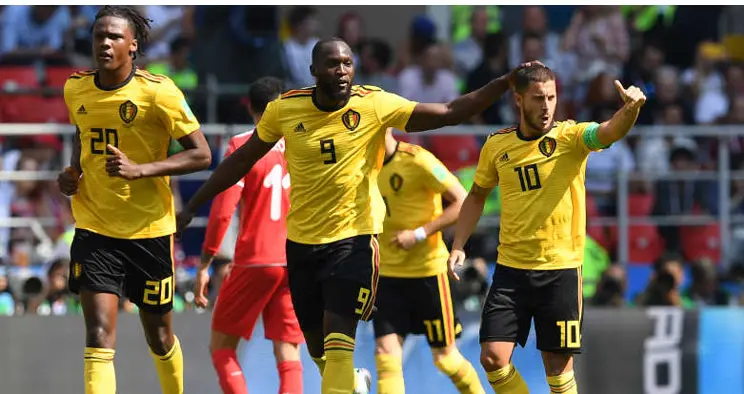
June 23, 2018 Belgium’s attacking depth was on full display as Romelu Lukaku’s brace and Eden Hazard’s influence overwhelmed a spirited but exposed Tunisia. Despite conceding twice, Belgium maintained attacking intensity, refusing to settle into game management mode. The match highlighted Roberto Martínez’s commitment to offensive balance, even at the cost of defensive risk. It reinforced Belgium’s status as genuine contenders during their golden generation peak.
7. France 4–3 Argentina (7 goals)
This classic knockout encounter marked the coming-of-age moment for Kylian Mbappé, whose blistering pace and brace tore through Argentina’s fragile defense. France struck a balance between explosive transitions and composure, punishing Argentina whenever space opened up. Lionel Messi was largely subdued, while Argentina’s defensive instability repeatedly undermined their attacking efforts. The match symbolized a passing of the torch, the end of one era for Argentina and the emergence of a young French side that would go on to lift the trophy.Benjamin Pavard’s iconic outside-of-the-boot volley was the match’s defining moment, swinging momentum firmly in France’s favor. The goal settled nerves and opened the door to the thrilling, end-to-end contest that followed.

The 2022 World Cup in Qatar set a new overall scoring record with 172 goals across 64 matches, driven by late drama, extended stoppage time, and high-intensity extra-time contests. However, even with this surge, individual matches largely remained contained a contrast to earlier editions like 2014, where Germany’s 7–1 demolition of Brazil stood as a stark anomaly rather than the norm.
As of January 16, 2026, the next World Cup hosted by Canada, Mexico, and the United States is still months away, with no finals matches yet played. While qualifiers have produced eye-catching tallies, including Erling Haaland’s prolific scoring for Norway, such feats do not factor into finals records. The expanded 48-team format may introduce new mismatches or encourage more open football, but until proven otherwise, the post-2002 crown for goal-heavy classics remains firmly intact.
Ultimately, these matches serve as reminders that even in an era dominated by tactical caution and defensive discipline, football’s capacity for chaos, brilliance, and spectacle has not disappeared it merely waits for the right moment to explode.