

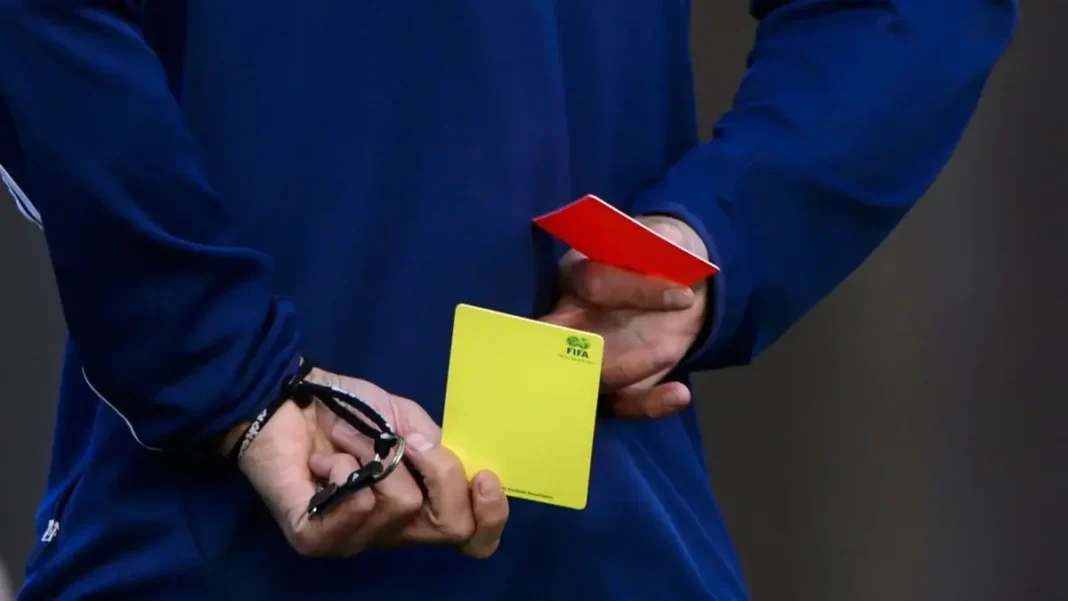

Football may be globally acclaimed as “The Beautiful Game ” yet it also remains a physical, high, contact sport where the line between a heroic tackle and a dangerous foul can be so thin that it is almost unnoticeable. To stop the game from turning into a brawl, the referee has in possession two different colored pieces of plastic which have absolute power.
These cards are, in fact, the judge, jury, as well as the executioner on the pitch, making sure that skill and not aggression, is what determines the final score. Basically, for any fan who aims at getting the gist of the game, the knowledge of the subtlety of when and why these cards are shown is a must.
1. The Yellow Card: The Strategic Caution What is it?
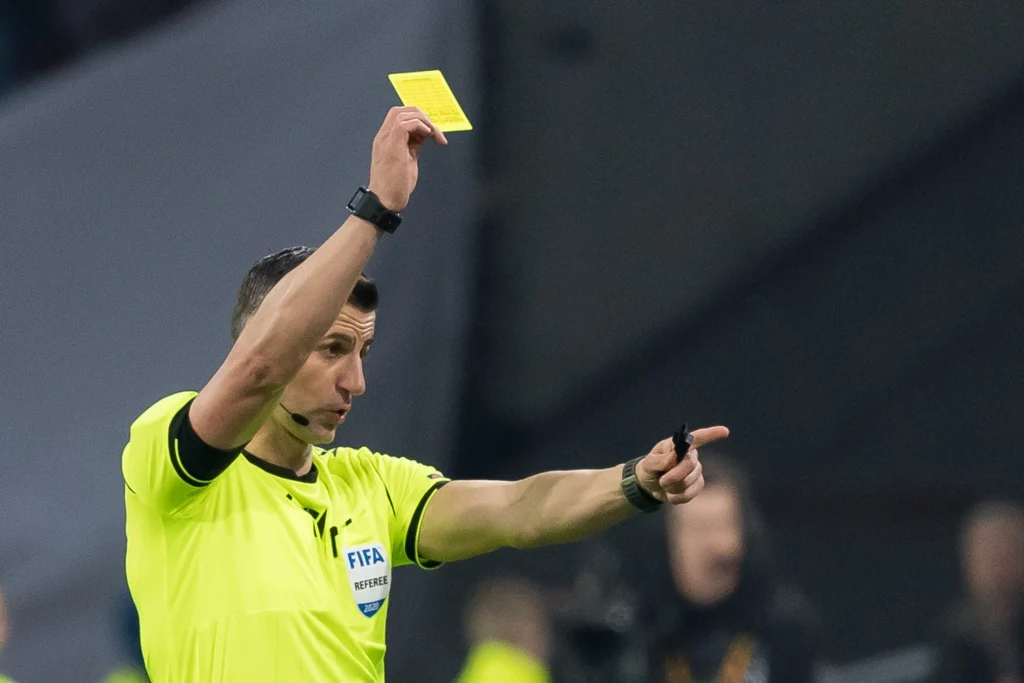
A yellow card is a formal caution.
It is a medium, level penalty, which means a player carries it as a “final warning.”
If a player is shown a yellow card, his name is written in the referee’s notebook, and he is said to be “on a booking.”
When is it given?
- Unsporting Behavior: Hard tackles that are reckless but not life-threatening.
- Diissent: Arguing with the referee or officials.
- Tactical Fouling: Deliberately tripping an opponent to stop a fast-moving counter-attack.
- Time Wasting: Delaying the restart of play to protect a lead.
2. The Red Card: The Ultimate Dismissal What is it?
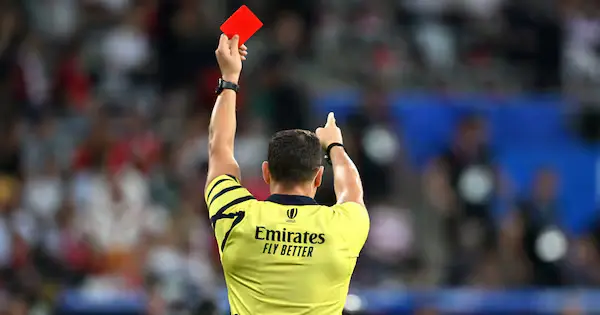
A red card means immediate dismissal.
The player must go off the field and leave the “technical area” (bench) entirely.
Most importantly, the team cant bring them back, so they have to play the rest of the match with 10 players only.
When is it given?
- Violent conduct: Examples include punching, kicking, or headbutting an opponent.
- Serious foul play: Any challenge which risks the safety of an opponent (e.g., studs into the shin).
- Offensive language: Insulting the officials or opponents directly.
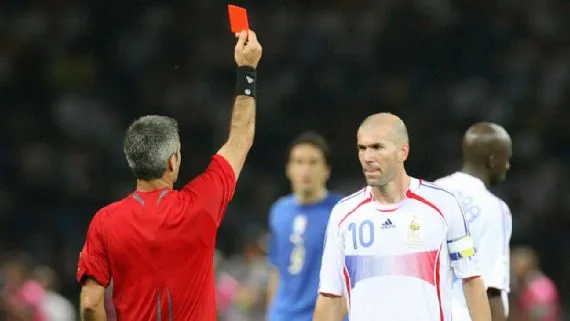
For example: Zinedine Zidane (World Cup 2006)
In the final of the world cup, in the 110th minute, the famous French player Zinedine Zidane headbutted Italy’s Marco Materazzi in the chest
The Importance: Zidane was not only the best footballer in the world but also the captain of the French national football team. Moreover, it was the last game of his professional career.
The Result: The referee turned his red card the moment Zidane was sent off. After being deprived of their leader, the French team was not so potent in attack and finally lost the Final on penalties. A single moment of madness changed the destination of the world’s biggest trophy.
3. The “Two Yellows Make a Red” Rule
If a player who already has a yellow card gets another yellow card offense in the same game, the referee will give them a second yellow card and a red card right after that.
This is very commonly known as “Double Yellow“. It is equivalent to a red card in absence of the player and the team is one man down but the fans’ perception is that the foul play was due to constant fouling “persistent fouling” rather than a single act of violence.
4. DOGSO: The Tactical Red Card What is it?
DOGSO is an acronym for Denial of an Obvious Goal, Scoring Opportunity. This is a particular provision for “professional fouls” where a player fouls an opponent not out of violence, but because they want to stop a certain goal.
The Criteria (The 4 Ds)
When issuing a red card for DOGSO, the referee would have to be completely certain that:
- Distance: The foul occurred very near the goal.
- Direction: The attacker was on his way to the goal mouth.
- Distance to Ball: The attacker could realistically have kept possession.
- Defenders: There was no one else apart from the fouling player who could have stopped the play.
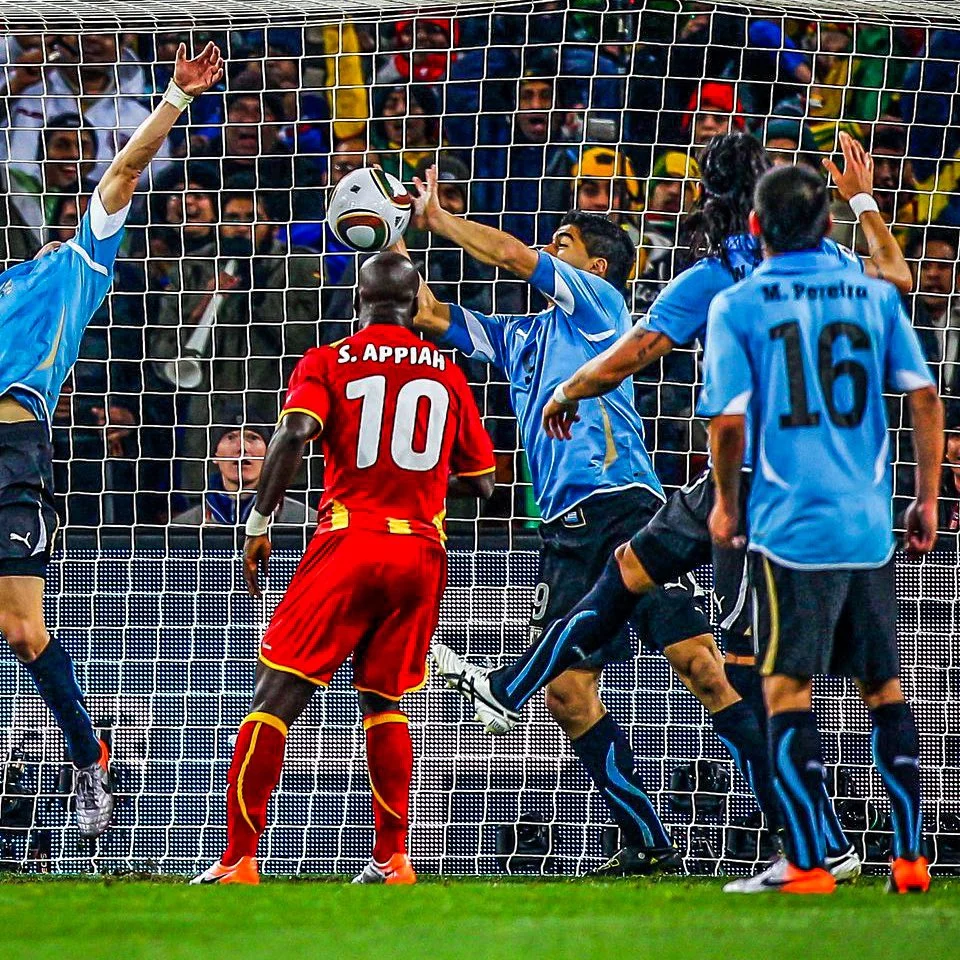
For Example: Luis Suárez (World Cup 2010)
In the final minute of the Quarter-Final against Ghana, the ball was heading into the Uruguay net. Striker Luis Suárez used his hands to punch the ball off the line.
The Importance: It was a textbook DOGSO. He was shown a straight red card and a penalty was awarded.
The Result: Ghana missed the penalty. Because Suárez “sacrificed” himself with a red card, Uruguay survived to the penalty shootout and won. It is the most controversial example of a player using the rules to “save” their team.
Conclusion
The disciplinary system in football is a balance of psychology and law. A Yellow Card is a warning that forces a player to change their style; a Red Card is a cataclysmic event that forces a team to change their entire strategy. Whether it is a tactical sacrifice like DOGSO or a moment of temper, the flash of these cards remains the most dramatic “non-scoring” moment in the beautiful game.