

Understanding the law behind red cards for denying clear chances
Not every foul stops an attack. Some simply break the rhythm of play. Others carry far greater consequences. DOGSO stands for Denial of an Obvious Goal-Scoring Opportunity which exists to deal with the most serious of these situations, where a player illegally prevents an opponent from having a clear chance to score.
It is one of the most impactful interpretations in football’s laws, often determining whether a match is played eleven-against-ten.
What Does DOGSO Mean?
DOGSO stands for Denial of an Obvious Goal-Scoring Opportunity. It applies when a player commits an offence that prevents an opponent from having a clear and obvious chance to score a goal.
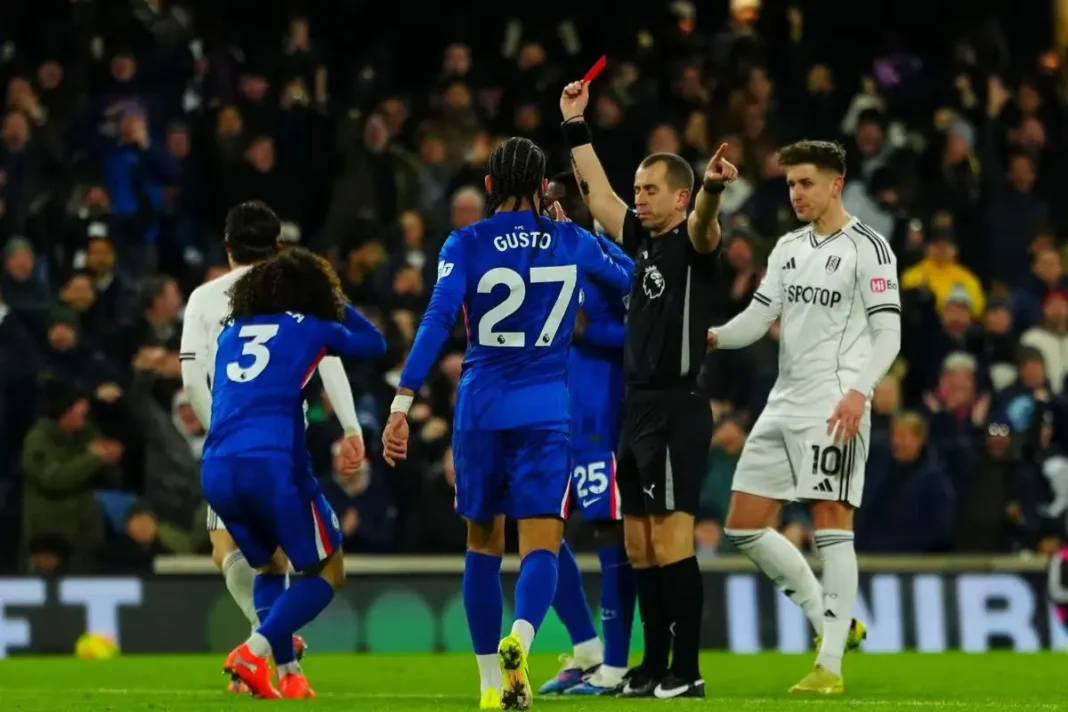
When DOGSO is judged to have occurred, the punishment is typically a red card, resulting in the offending player being sent off.

When Is DOGSO Applied?
For an incident to be considered DOGSO, referees assess four key criteria, often referred to as the “four Ds”:
- Distance to goal
The closer the attacker is to goal, the more likely the opportunity is considered obvious.
- Direction of play
The attacker must be moving towards goal, not away from it or towards the corner.
- Distance to the ball
The attacker must be able to control or reach the ball. If the ball is running too far away, DOGSO may not apply.
- Defenders
The number and position of defenders matter. If another defender could realistically challenge or cover, DOGSO may not be given.
All four elements are considered together. No single factor automatically determines the decision.
DOGSO and Red Cards
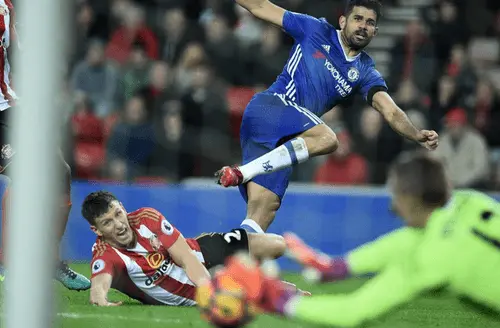
If a player commits a DOGSO offence outside the penalty area, the punishment is almost always a direct red card, along with a free kick.
Inside the penalty area, the law makes an important distinction. If the defender makes a genuine attempt to play the ball and commits a DOGSO offence, the punishment is usually a yellow card and a penalty, not a red card. This change was introduced to avoid what became known as “double punishment” conceding both a penalty and a dismissal.
However, if the defender:
- Pulls or holds the attacker
- Pushes them deliberately
- Makes no attempt to play the ball
- Or commits violent conduct
Then a red card can still be shown, even inside the penalty area.
DOGSO vs Tactical Fouls
DOGSO is often confused with tactical fouling, but they are not the same. A tactical foul stops a promising attack and usually results in a yellow card.
A DOGSO offence stops a clear goal-scoring opportunity and results in a red card, unless the double-punishment exception applies. The difference lies in how likely the attacker was to score.
VAR and DOGSO
VAR is permitted to review DOGSO decisions because they involve potential red cards. Video review can assess factors such as defender positioning, ball control, and direction of play.
However, VAR does not re-referee subjective judgement. It intervenes only if a clear and obvious error has been made in awarding or not awarding a red card.
Conclusion
DOGSO exists to protect fairness at football’s most decisive moments. It ensures that teams cannot illegally prevent clear scoring chances without facing serious consequences.
While the interpretation involves judgement, the underlying principle is consistent: stopping a goal unfairly should carry a heavier punishment than an ordinary foul.
In a game often decided by fine margins, DOGSO remains one of the laws that most directly safeguards competitive balance.