
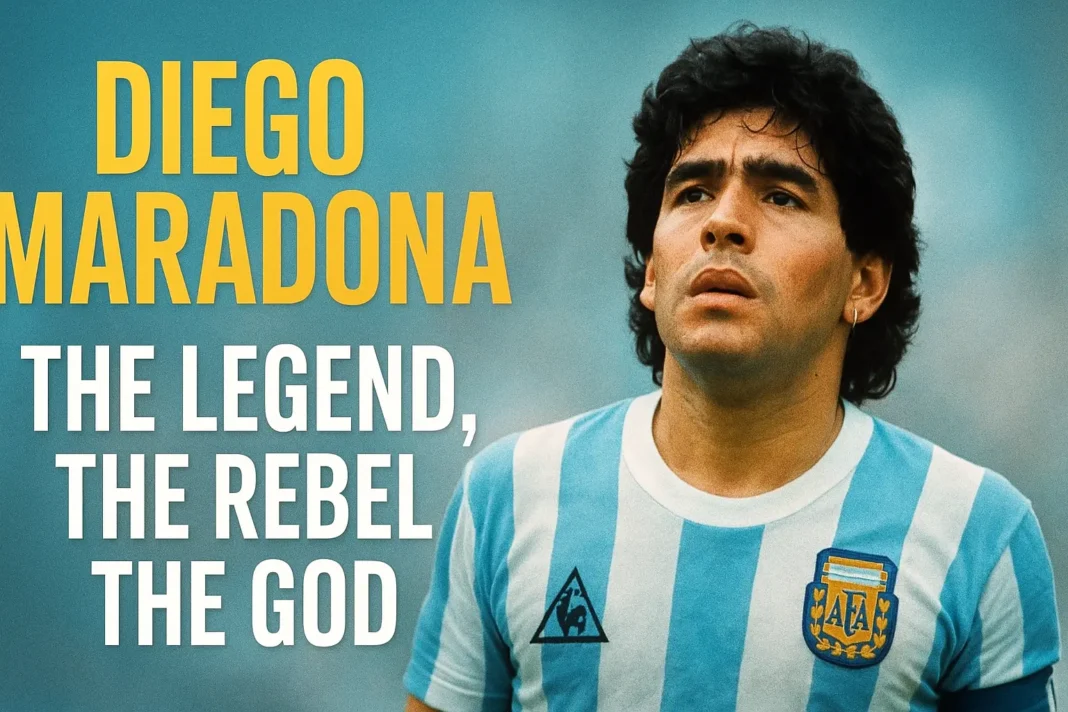

Who was Diego Maradona?
“In the streets of Villa Fiorito, a boy once kicked a tattered ball that would one day enchant the world. His name was Diego Armando Maradona. A name that became more than football, a feeling, a revolution.”
Maradona is considered one of the greatest footballers in history, adored for his unique style but also criticized for aspects of his personal life.
How did he rise to stardom? Was he addicted? Why was he called “The Hand of God”? What was his personal life like? Let’s answer these questions and explore the life of one of football’s G.O.A.T
Maradona’s Early Life
Diego Armando Maradona was born on October 30, 1960, in Villa Fiorito, a poor shanty town near Buenos Aires. His father, Diego “Chitoro” Maradona, worked in factories and construction, while his mother, Dalma Salvadora Franco “Doña Tota,” cared for eight children. They lived in a modest home without running water, where football became both a pastime and an escape.
In 2016, during an interview with the Argentine news program, Liena De Tiempo, Maradona proudly said, “I am from Villa Fiorito, and I don’t want to forget it. That’s where I learned everything, to fight for what I wanted.”
Early Footballing Career
Maradona’s parents recognized his extraordinary talent early.
At 3, he received his first football.
By 8, a youth coach spotted him playing locally and invited him to join Los Cebollitas, Argentinos Juniors’ junior team. With Maradona as their star, they went undefeated for 136 games and won a national championship.

At just 14, he signed his 1st professional contract with Argentino Juniors. On this day, he wore the Number 10 Jersey. “Wherever he went, the number 10 followed, not as a shirt, but as a destiny.” Today, Number 10 is not just a number, but a synonym with Maradona.

He always played as an attacking Midfielder / Second Striker (No. 10 role). He usually played just behind the main striker, controlling the attack, dictating tempo, and creating scoring chances.
At 15, just 10 days before his 16th birthday, he became the youngest Argentine to make a professional debut with Argentino Juniors. Within months, newspapers were calling him “El Pibe de Oro” — The Golden Boy.
Debut with the national team
4 months after he debuted with Argentino Juniors, he became the youngest Argentine to debut with the national team. But he didn’t participate in the 1978 World Cup, because he was too young.
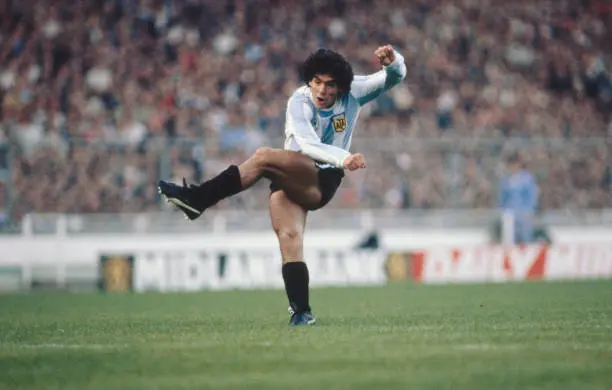
In 1979, he led the U-20 Argentine team to a Junior World Championship, where he was crowned “Man of the tournament”.
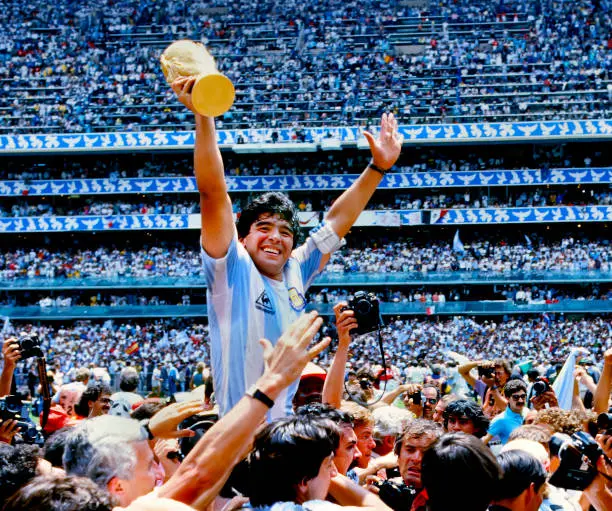
In 1986, he won the FIFA World Cup with Argentina. He scored 5 goals and provided 5 assists, which made him win the Golden Ball of the tournament.
In 1989, Argentina finished 3rd in the Copa América
In 1990, Argentina came close again but lost to West Germany in the finals by 1-0.
In 1993, He won the Artemio Franchi Cup with Argentina by defeating Denmark.

He carried the nation on his shoulders in 1986 and inspired generations after him, including Lionel Messi.
Professional Career and Height Problems
Maradona stood 1.65 m (5’5”), which worried critics at Boca Juniors in 1981. Yet his low center of gravity gave him extraordinary balance, agility, and dribbling control, making him extremely hard to dispossess.
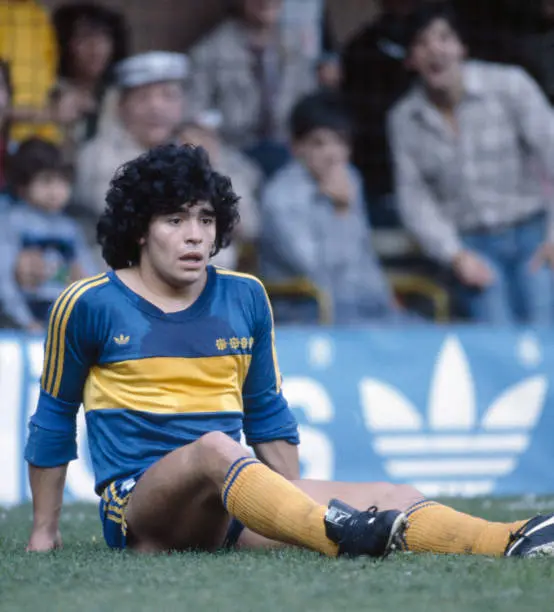
He moved to FC Barcelona (1982–84) for a world-record £5 million, winning 3 trophies: Copa del Rey, Copa de la Liga, and Supercopa de España. Although his stay at Barcelona was short, his impact on the club was unreal.

In 1984, he joined Napoli for a record $10.5 million, inspiring 80,000 fans at his arrival. He declared, “I want to become the idol of the poor kids of Naples,” and won 5 historic titles with Napoli: 2 Serie A titles, 1 Coppa Italia, 1 UEFA Cup, and 1 Italian Super Cup.\

He then joined Sevilla FC (1992 to 1993), Newell’s Old Boys (Argentina) from 1993 to 1994.
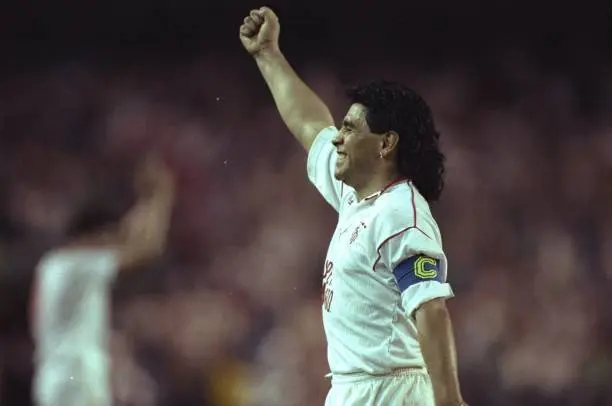
He then made an emotional return to Boca Juniors (Argentina) from 1995 to 1997. He played until October 25, 1997, when he retired. Fittingly, after playing a Superclásico against River Plate.
“The Hand of God” and “The goal of the century”
In the 1986 FIFA World Cup Quarterfinals against England, Maradona jumped for a high ball near England goalkeeper Peter Shilton. Maradona palm-struck the ball into the net, using his left hand. The referees did not see the handball, and the goal stood. Later, after the match, Maradona said, “It was a little with the head of Maradona, and a little with the hand of God.”
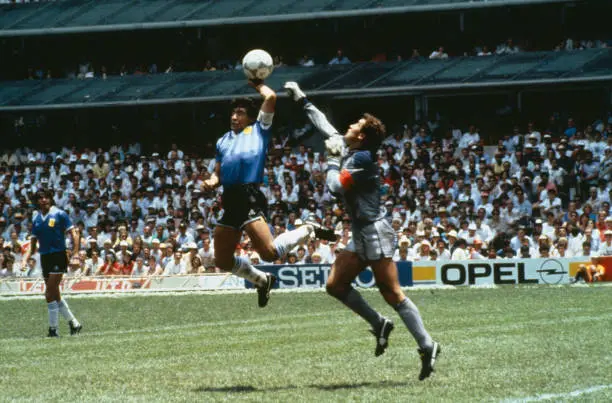
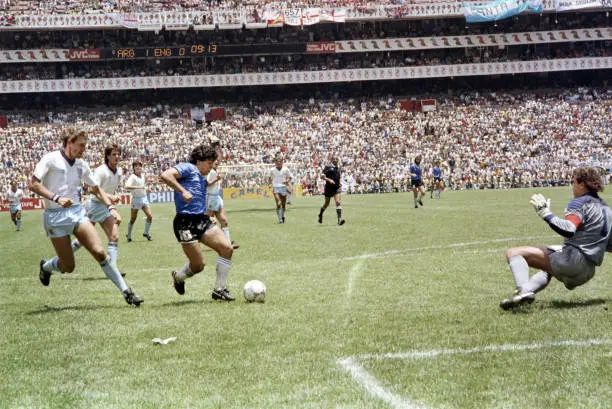
Just four minutes after his infamous “Hand of God” goal, Maradona produced a moment of pure football magic.
He received the ball in his own half, turned, and began a solo run that lasted about 10 seconds while covering 60 meters and beating five English players (Beardsley, Reid, Butcher, Fenwick, and goalkeeper Shilton) before scoring. In 2002, Maradona’s goal against England was voted the greatest goal in World Cup history. Hence, the title “El Gol del Siglo” (The Goal of the Century) became famous.
Diego Maradona’s Statistics
| Competition | Appearances | Goal | ||
| Serie A | 188 | 81 | ||
| La Liga | 62 | 27 | ||
| Italy Cup | 44 | 29 | ||
| UEFA Cup | 19 | 3 | ||
| Copa del Rey | 11 | 5 | ||
| Cup Winners’ Cup | 7 | 8 | ||
| European Champions Clubs’ Cup | 6 | 2 | ||
| Copa de la Liga | 6 | 4 | ||
| Torneo Apertura | 3 | — | ||
| Supercoppa Italiana
Argentina |
1
84 |
—
32 |
||
| Totals | 347 | 159 |
He has been an all-rounder for his clubs and Argentina. He was a clutch player, a master passer, a visionary game changer. His dribbling was world-class.
Accolades and Balon D’or
| 🏆 Award / Honor | 🗓️ Year(s) | 📝 Details / Context |
| FIFA World Cup Golden Ball | 1986 | Best Player of the 1986 World Cup with 5 goals, 5 assists, and led Argentina to the title. |
| FIFA World Cup All-Star Team | 1986, 1990 | Named among the tournament’s best players. |
| FIFA Goal of the Century Award | 2002 | For his 1986 solo goal vs England, voted best goal in World Cup history by global fans. |
| FIFA Player of the Century (shared with Pelé) | 2000 | FIFA internet poll winner; Pelé chosen by committee, both crowned jointly. |
| Golden Foot Award (Football Legend) | 2003 | A lifetime achievement honor recognizing football legends. |
| South American Footballer of the Year (El Mundo Award) | 1979, 1980 | Named the best South American player while at Argentinos Juniors and Boca Juniors. |
| Argentine Footballer of the Year (Olimpia de Oro) | 1979, 1980, 1981, 1986 | Given to Argentina’s best footballer of the year. |
| Onze d’Or (France Football / Onze Mondial) | 1986, 1987 | Awarded to the best European-based player. |
| World Soccer Player of the Year | 1986 | Global recognition as the best footballer of the year. |
| Silver Ball (2nd Best Player) – World Soccer Awards | 1989 | Behind Marco van Basten. |
| FIFA World Cup Dream Team (Historic) | 2002 | Selected in the all-time greatest World Cup XI. |
| FIFA 100 (Greatest Living Players List by Pelé) | 2004 | Named among the top 125 greatest living players. |
| Napoli All-Time Greatest Player | Voted multiple times (1980s–2020) | Considered Napoli’s greatest ever, led the club to 2 Serie A titles and the UEFA Cup. |
| Golden Ball – FIFA U-20 World Cup | 1979 | Best player at the U-20 World Cup, Japan. |
| Argentine Primera División Top Scorer | 1978 (Pro), 1979, 1980 | Dominated the domestic league scoring while at Argentinos Juniors. |
| Serie A Best Foreign Player | 1985–1989 (multiple years) | Widely regarded as the league’s top performer during Napoli’s golden era. |
| Napoli Hall of Fame Inductee | 2017 | Official club recognition of his eternal legacy. |
Despite winning almost everything football has to offer, Diego Maradona never won a Ballon d’Or. During most of Maradona’s peak years (1980s), the Ballon d’Or was only awarded to European players playing in Europe. Since he was Argentine and played in Italy (Napoli), not considered “Europe” for eligibility at the time.
Personal life and relationships.
Diego Maradona’s personal life was famously turbulent, filled with passionate relationships, family drama, and a lot of media attention.
He got married to Claudia Villafañe(Italy) when he was just 16. He had 2 daughters, Dalma Nerea Maradona and Giannina Dinorah Maradona.

Maradona had several publicized relationships outside of his marriage. He had a son named Diego Sinagra / Diego Maradona Jr with Cristina Sinagra (Italy). He had a son, Diego Fernando Maradona Ojeda, with Verónica Ojeda(Argentina). He also had a 5-year affair with Rocío Oliva (Argentina). He had a daughter, Jana Maradon, with Valeria Sabalain.
Networth
At the time of his death, Diego Maradona’s net worth was estimated at approximately $500,000. However, his financial legacy is complex due to numerous assets, potential debts, and ongoing legal disputes over his estate, which have made the inheritance process messy and drawn-out. He had several houses at locations like Buenos Aires, Naples, Dubai, Tigre, etc. He owned a private yacht, a Ferrari 308, a Mercedes-Benz, a Lamborghini, a Fiat 500, etc.
Napoli paid him a world-record salary in the mid-1980s. He endorsed popular brands including Adidas, Coca-Cola, and local Argentine companies.
Songs
Diego Maradona’s legacy has inspired numerous songs across genres and languages, reflecting his profound impact on football and culture. The most famous ones include
- “La Mano de Dios”by Rodrigo Bueno
- “Maradó” by Los Piojos,
- “La Vida Tombola” by Manu Chao
- “O Mama Mama” by Napoli Fans
- “Maradona e Meglio ‘e Pele” – Enzo Romani
- “O Surdato ‘nnammurato”– Napoli Fans
- “A D10s le Pido”– Los Chikos del Maíz
- “¿Qué es Dios?”– Las Pastillas del Abuelo
- “Mi Enfermedad”– Fabiana Cantilo
- “Diego Maradona” – Antonio Pinto
Diego Maradona in Kerala
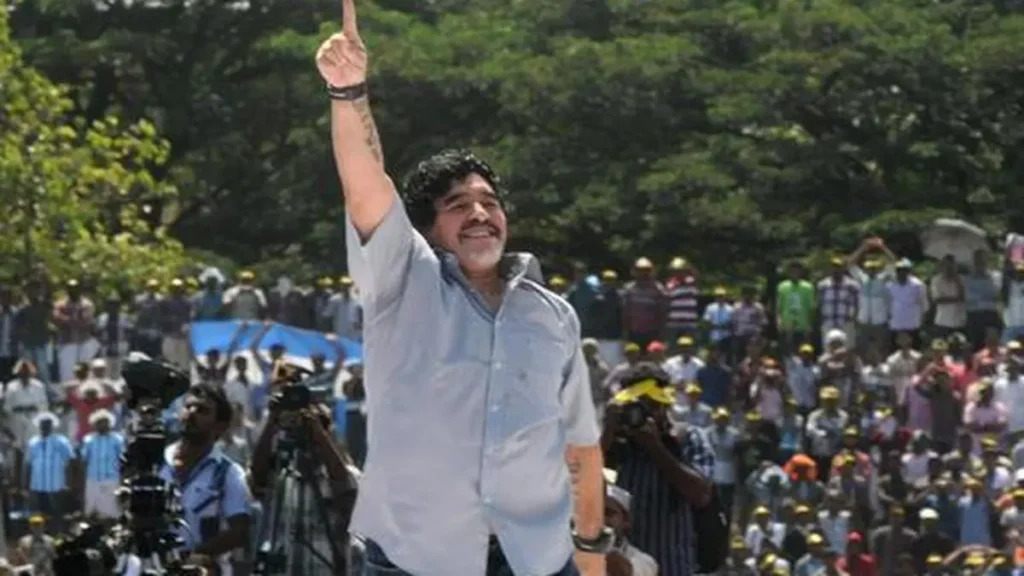
Diego Maradona visited Kerala in October 2012 as part of a two-day private trip. He arrived in Kannur, a city in northern Kerala, to inaugurate a new showroom for Boby Chemmanur International Jewelers and Airlines, a company with which he had a brand ambassadorial association. He spent nearly 30 minutes interacting with the crowd at the Jawahar Municipal Stadium, where he engaged in activities such as dancing, singing, and showcasing some of his football skills.
Drug addiction
During his time at Napoli (1984–1991), Maradona became addicted to cocaine. It led to weight gain and health deterioration. On March 7, 1991, he tested positive for Cocaine by Serie A officials, which led to a 15-month ban.
In 1994, during the FIFA World Cup, he tested positive for ephedrine, which led to his immediate expulsion from the tournament. Maradona never played for Argentina again after this incident.
How did Maradona die?
Diego Maradona died on November 25, 2020, at the age of 60, at Tigre, Buenos Aires, Argentina (his home). Maradona suffered a heart attack at his home. He had been recovering from brain surgery earlier in November 2020 for a subdural hematoma. His health had been fragile for years due to obesity, previous drug and alcohol problems, and heart issues.
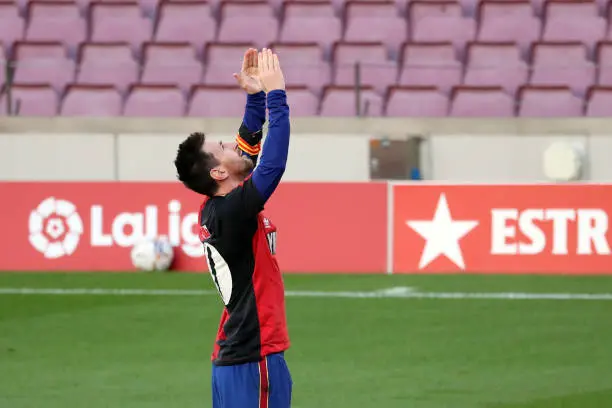
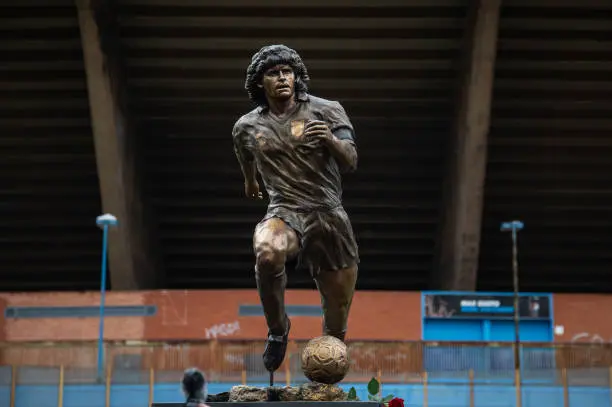
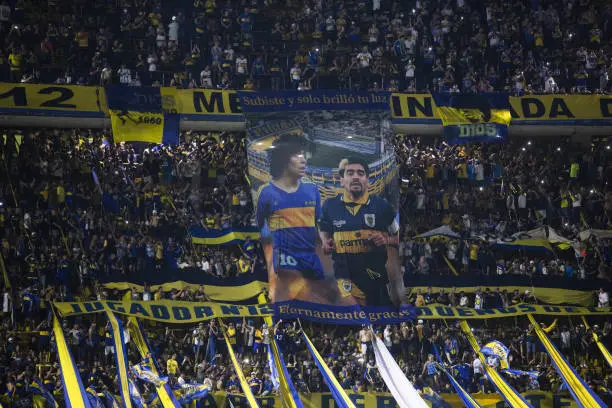
His death sparked worldwide mourning. Argentina declared three days of national mourning. His death occurred during COVID-19, which made fans helpless who couldn’t give him a proper tribute in the stadiums. In all the UEFA and FIFA matches, a 2 minute silence was observed. The Kerala state government also declared a two-day mourning period upon his passing in November 2020.
Conclusion
Diego Maradona was more than a footballer; he was a phenomenon, a genius, and a flawed human being whose life mirrored the highs and lows of the beautiful game. His personal struggles, controversies, and triumphs made him human, while his talent made him immortal. Maradona’s legacy lives on in every flick of the ball, every breathtaking dribble, and in the hearts of fans worldwide.