


Portugal topped their UEFA qualifying group and secured direct passage to the 2026 World Cup, but the journey was more nuanced than the final standings suggest. Roberto Martínez’s side often overwhelmed opponents with attacking depth and individual quality, scoring freely through a fluid frontline supported by an experienced midfield core. However, the campaign also exposed recurring defensive vulnerabilities, moments of poor spacing, lapses in concentration, and struggles against quick transitions which prevented the qualification run from feeling completely convincing.
One costly off-night in particular served as a reminder that dominance on paper does not always translate into control on the pitch. While Portugal ultimately did enough to finish top, the mix of brilliance and fragility underlined the key questions heading into 2026: how to balance attacking freedom with defensive stability, and whether this talented squad can maintain consistency against elite opposition on the world stage.
Group context and outcome:
Portugal entered UEFA Group F as clear favourites, drawn alongside Hungary, the Republic of Ireland, and Armenia opponents they expected to outscore and outmanoeuvre over the course of the campaign. From the outset, Roberto Martínez’s side approached qualification with authority, using their superior squad depth and attacking quality to control most fixtures.
Portugal finished top of the group with 13 points from six matches, recording four wins, one draw, and one defeat. They scored 20 goals comfortably, the highest total in the group while conceding seven, a return that secured direct qualification for the 2026 World Cup. The numbers reflected Portugal’s attacking dominance, but they also hinted at imperfections, particularly at the back. While the final table confirmed success, the group stage offered a clearer picture of a team still refining its balance between offensive freedom and defensive discipline ahead of the global tournament.
Results and key matches:
Armenia 0–5 Portugal
Portugal opened their campaign with a commanding away performance, seizing control from the first whistle and sustaining pressure until the result was beyond doubt. They dominated possession, dictated tempo through midfield, and patiently dismantled Armenia’s low defensive block with constant movement and width. João Félix and Cristiano Ronaldo each scored twice, combining sharp off-ball runs with ruthless finishing, while João Cancelo capped the display with a thunderous long-range strike.
Equally impressive was Portugal’s control without the ball. The team pressed high, won second balls quickly, and cut off Armenia’s counterattacking outlets, allowing almost no meaningful transitions the other way.
Portugal 9–1 Armenia
Portugal unleashed a sensational attacking display, systematically tearing Armenia apart through constant rotation between forwards and midfielders. The team moved the ball with precision, exploiting every gap and switching play to stretch the opposition’s defence. The 9–1 scoreline reflected not only Portugal’s technical superiority but also a relentless, ruthless mindset; they continued pressing and creating chances even after establishing a comfortable lead.
Hungary 2–3 Portugal
This was the chaotic early high point of the campaign: Portugal went behind to a Barnabás Varga header but responded through Bernardo Silva and a Ronaldo penalty to flip the game. Hungary’s late equaliser set up a nervy finish, only for João Cancelo to win it almost immediately with a powerful shot from distance, rewarding Portugal’s territorial dominance but exposing some fragility against crosses and direct play.
Portugal 2–2 Hungary
This was the first real setback: despite another Ronaldo brace that had Portugal leading late, lapses at both ends cost them two points. Hungary struck early and then again in stoppage time, punishing slack defending and showing how Portugal’s aggressive shape can be exposed when counter‑pressing or concentration drops, turning what should have been a routine home win into a frustrating draw.
Portugal 1–0 Republic of Ireland
Portugal edged past the Republic of Ireland in a tense, low-margin encounter at home, dominating possession but struggling to turn control into clear chances. Ireland defended deep and compact, forcing Portugal to rely on crosses and set-pieces rather than open-play combinations.
Portugal continued to push late into the match, and their persistence finally paid off in stoppage time when Rúben Neves rose to power home a decisive header. The narrow win secured crucial points but also highlighted Portugal’s difficulties against organised defensive sides and their reliance on late moments.
Republic of Ireland 2–0 Portugal
Ireland produced one of the shocks of Portugal’s qualifying campaign with a high-intensity home performance. They pressed aggressively from the start and punished Portugal’s defensive disorganisation in transition, with Troy Parrott striking twice in the first half to seize control of the match.
Matters worsened around the hour mark when Cristiano Ronaldo received a red card, effectively ending any realistic chance of a comeback. Reduced to ten men, Portugal lacked cohesion and urgency, allowing Ireland to manage the game comfortably until full time.
Formation and Tactical Approach:
Throughout the 2026 World Cup qualifying campaign, Portugal largely operated in a flexible 4-3-3 formation, allowing them to balance attacking dynamism with midfield control. The back four provided a stable defensive base, with full-backs like João Cancelo and Nuno Mendes pushing high to support attacks and create width. The midfield trio usually combined a deep-lying playmaker, a box-to-box engine, and a creative pivot, giving Portugal control in possession while enabling quick transitions into attack.
In front, the front three rotated fluidly, with Cristiano Ronaldo often operating as a central focal point but also drifting wide or dropping deeper to link play, creating space for João Félix and the wingers to exploit. This rotation and movement disrupted opposition defensive lines, keeping opponents constantly guessing. Portugal occasionally switched to a 4-2-3-1 when seeking more midfield stability, particularly against teams that pressed aggressively or defended in compact blocks.
The formation reflected Martínez’s philosophy: dominate possession, control the center of the pitch, and create multiple attacking outlets while retaining defensive solidity. However, as the campaign showed, defensive lapses sometimes arose when the full-backs were caught high or midfield gaps appeared, underscoring the fine balance between offensive freedom and defensive responsibility that Portugal will need to perfect ahead of the World Cup.

Playing Style and Statistics:
Under Roberto Martínez, Portugal maintained a proactive, front-foot approach, emphasizing possession, control, and attacking fluidity. The team often dictated the tempo of matches, circulating the ball patiently through midfield while probing for openings with quick rotations between forwards, wingers, and attacking full-backs. This style allowed Portugal to create a consistently high volume of chances, exploiting both individual brilliance and coordinated movement across the attacking line.
Statistically, Portugal’s dominance was clear. Across six group matches, they averaged over three goals per game and finished with a +13 goal difference, highlighting not only the enduring firepower of Cristiano Ronaldo but also the significant contributions of creative midfielders and offensively-minded full-backs. Yet the campaign also exposed areas for improvement: the team conceded seven goals in just six games, including late strikes against Hungary, illustrating lapses in concentration and occasional weaknesses in defensive structure, particularly when facing fast transitions or physically direct opponents.
Overall, Portugal’s qualifying run showcased a side capable of overwhelming most opponents with attacking dynamism, but it also underlined the need for defensive discipline and consistency issues that Martínez will need to address before the 2026 World Cup.
Portugal’s Top Performers in 2026 World Cup Qualifying:
Portugal’s 2026 World Cup qualifying campaign was defined by the influence of a core group of exceptional performers who consistently shaped the team’s results. At the heart of this group were Bruno Fernandes, João Neves, Cristiano Ronaldo, Rúben Dias, and Gonçalo Ramos, each contributing in distinct but complementary ways. Their combined impact allowed Portugal to dominate their UEFA group, navigating a mix of comfortable victories and challenging fixtures with skill, experience, and determination.
Fernandes provided creativity and vision from midfield, orchestrating attacks and contributing key goals. João Neves added dynamism and energy, breaking up opposition play while progressing the ball effectively. Ronaldo offered an ever-present goal threat, drawing defensive attention and opening space for teammates. Dias anchored the defence with leadership and composure, ensuring stability even when the team pressed high. Ramos balanced the attack with intelligent movement, finishing, and link-up play, helping Portugal maintain offensive fluidity.
Together, these five players formed the backbone of the squad, combining leadership, technical quality, and tactical intelligence. Their performances not only secured first place in the group but also showcased the depth and balance of Portugal’s squad, laying a strong foundation for the challenges of the 2026 World Cup.
Bruno Fernandes:
Fernandes served as Portugal’s creative engine, driving attacks with precise passing, clever movement, and decisive goals. He combined goals and assists consistently throughout the qualifiers, culminating in a hat-trick against Armenia two penalties and a curled finish demonstrating his ability to dictate play and act as the team’s primary reference in possession.

João Neves:
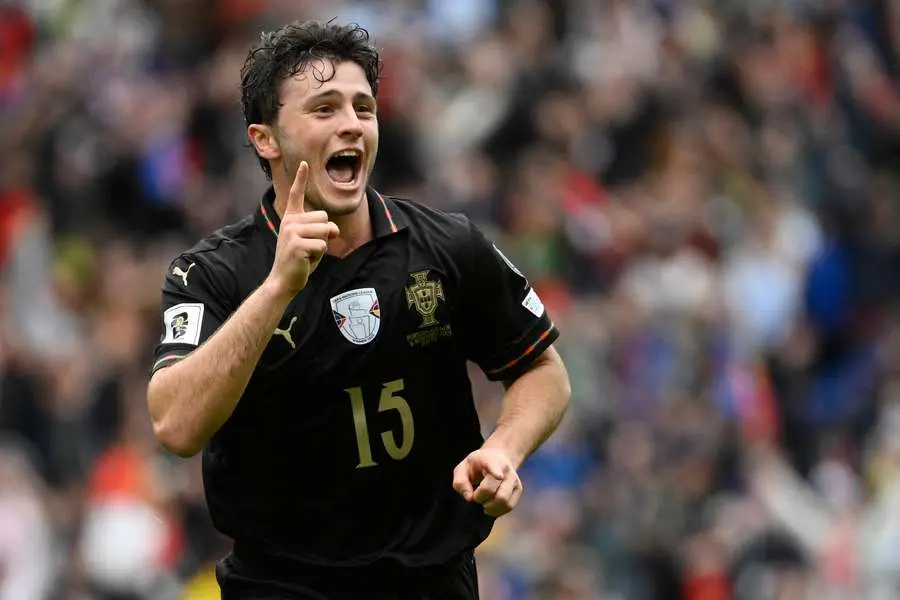
Neves emerged as a breakout star in the midfield, combining energy, ball-winning skills, and progressive passing from his role in the double pivot. He surprised many by scoring a hat-trick against Armenia his first goals for the national team showing he can arrive late in the box and finish decisively while also controlling the tempo and linking defence to attack.
Cristiano Ronaldo:
Even in the latter stage of his international career, Ronaldo remained a constant threat in the penalty area, finishing the group as Portugal’s top scorer with five goals in five matches. His presence alone forced opponents to adjust defensively, creating space for teammates. Although he missed the decisive 9–1 victory over Armenia due to suspension, his earlier contributions shaped Portugal’s campaign.

Rúben Dias:
Dias anchored Portugal’s defence with authority, leading in duels, interceptions, and clearances. His aerial dominance and organizational skills allowed Portugal to maintain a high defensive line, supporting the team’s possession-heavy style. Across six games, his leadership helped limit opponents to just seven goals, providing stability even when the team pressed aggressively.

Vitinha:
Vitinha emerged as a key orchestrator from midfield, combining vision, ball progression, and defensive work rate. He consistently linked defence to attack, picking out passes that broke opposition lines and creating space for forwards like Ronaldo and Ramos. His composure under pressure and intelligent positioning allowed Portugal to control tempo in crucial moments, while his occasional runs into the box added an extra goal threat. Vitinha’s balance of creativity and tactical discipline made him an essential connector in a side built around Fernandes and Neves, ensuring fluid transitions and maintaining Portugal’s dominance in possession.

Together, these five players combined experience, creativity, and tactical intelligence, forming the backbone of Portugal’s qualifying success and establishing a strong foundation heading into the 2026 World Cup.
Final Thoughts:
Portugal’s chances at the 2026 World Cup look strong, but they come with caveats. On the plus side, they have a squad that blends experience and youthful energy, anchored by leaders like Rúben Dias and Cristiano Ronaldo, with creative and versatile midfielders such as Bruno Fernandes, João Neves, and Vitinha. Their attacking depth is impressive multiple players can score and create goals, and their front-foot, possession-oriented style allows them to control games and exploit weaker sides.
However, Portugal’s defensive inconsistencies, occasional lapses in concentration, and reliance on moments of individual brilliance could be exposed by elite World Cup opponents. They will need to maintain tactical discipline, particularly in transition, and ensure full-backs don’t leave gaps when pushing forward.
If Martínez can balance attacking freedom with defensive solidity, and if the key players hit peak form at the right moments, Portugal are very much in contention for the latter stages, potentially the semifinals or even the final. But against top-tier sides like Brazil, France, or Argentina, their vulnerabilities could be tested, making consistency and game management critical.
In short: they have the talent and structure to compete at the highest level, but winning the World Cup will require precision, focus, and perhaps a bit of luck in the knockout rounds.