

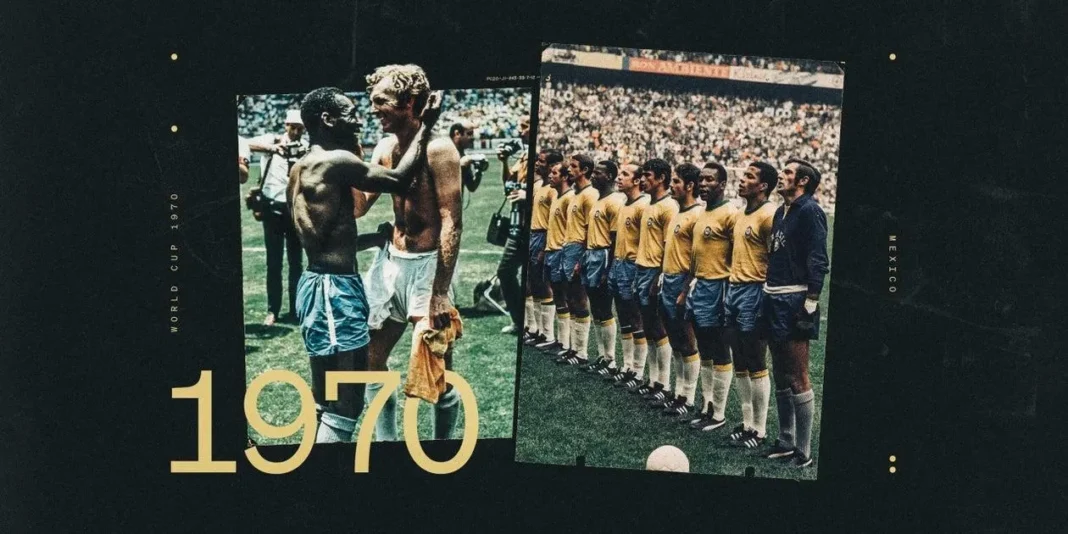

The emergence of the Brazil national football team as a dominant force in world football between 1950 and the late 1970s marks one of the most iconic eras in sporting history. This period, often referred to as Brazil’s first golden era, was not just about winning trophies but about redefining how football was played. From the heartbreak of the 1950 FIFA World Cup to the brilliance of their triumph in the 1970 FIFA World Cup, Brazil developed a unique identity built on skill, creativity, and attacking excellence. This era laid the foundation for Brazil’s global reputation as the true home of “beautiful football.”
Heartbreak, but the Start of Something Special (1950)
The turning point in Brazil’s footballing history came at the 1950 FIFA World Cup, a moment that began in hope but ended in devastation. Playing at home, the Brazil national football team entered the final stage as overwhelming favorites. The newly built Maracanã Stadium was filled with nearly 200,000 fans, all expecting a coronation rather than a contest. Brazil needed only a draw against the Uruguay national football team to win the tournament. When they took the lead early in the second half, victory seemed inevitable.
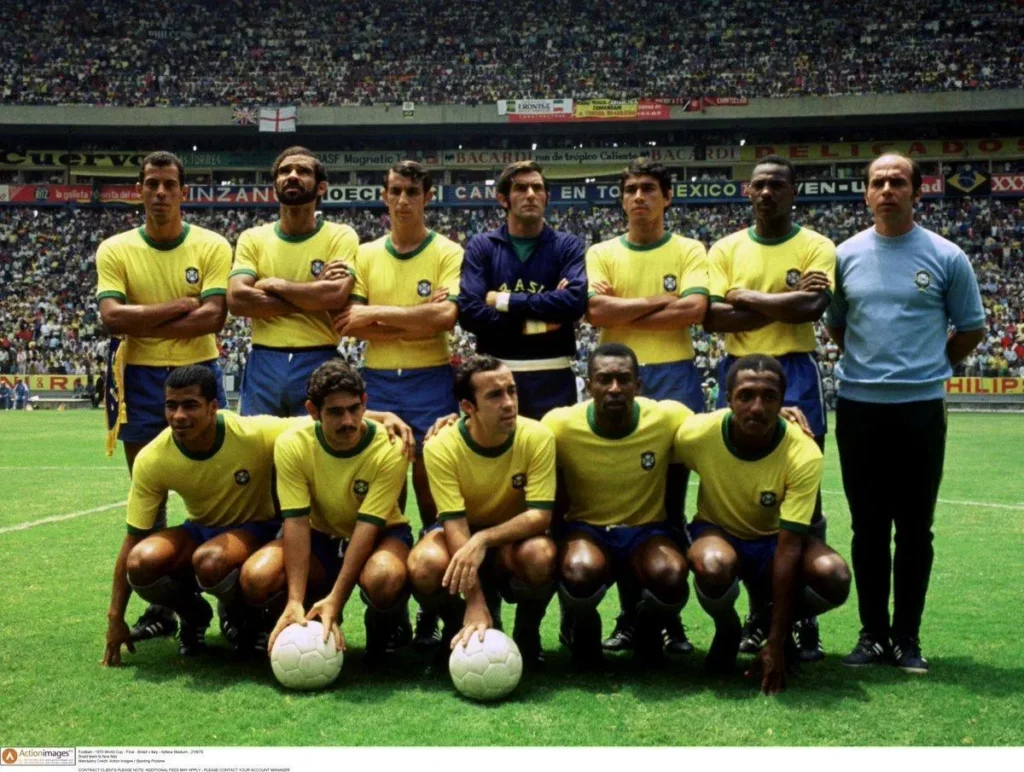
But what followed shocked the nation. Uruguay responded with resilience, scoring twice to secure a 2–1 win in what would later be known as one of the greatest upsets in football history.
The defeat was more than just a lost trophy, it became a national trauma. Silence replaced celebration in the Maracanã, and the loss deeply affected players and fans alike. For years, it haunted Brazilian football, creating a sense of psychological fragility on the biggest stage.
Yet, hidden within this heartbreak was the beginning of transformation. The loss forced Brazil to rethink its approach, not just tactically, but mentally.
The Transformation and Rise of Joga Bonito (1958–1962)
In the years following the trauma of 1950, the Brazil national football team underwent a quiet but powerful transformation. The focus shifted from relying purely on individual brilliance to building a more balanced and mentally resilient team. What emerged from this evolution was not just a stronger side, but a new footballing philosophy that would define Brazil for generations: joga bonito, or “the beautiful game.”
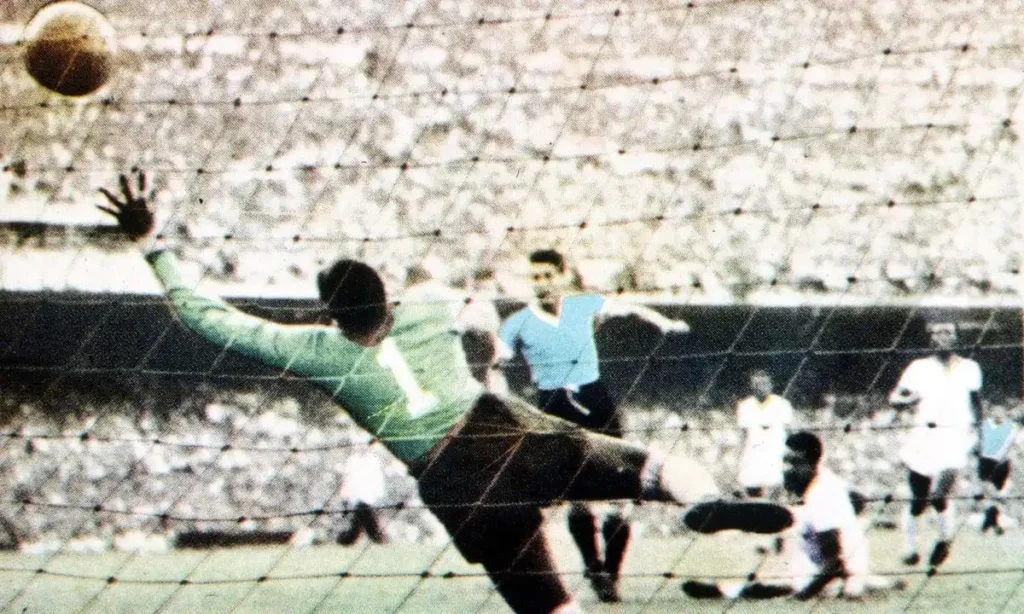
By the time of 1958 at the heart of this revolution was a young Pelé, whose skill, vision, and composure stunned the world. Alongside him, Garrincha brought unpredictability and joy to the wings, while Didi controlled the tempo with intelligence and calmness. Brazil’s victory in 1958 was more than a triumph; it was a statement. The world saw a team that played with freedom, confidence, and artistry, yet remained effective and composed under pressure. This was the true birth of joga bonito football as both sport and spectacle.
The success continued in the 1962 FIFA World Cup, where Brazil proved that their style was not dependent on a single player. Even after Pelé’s injury early in the tournament, Garrincha carried the team forward with extraordinary performances. This resilience showed that joga bonito was not just flair, it was a system supported by depth, adaptability, and belief.
Ultimately, this period marked Brazil’s transformation from a talented team into a footballing identity. Joga bonito became more than a style, it became a symbol of confidence, creativity, and national pride, setting the stage for the legendary dominance that would follow.
The Pinnacle of Joga Bonito
The golden era of the Brazil national football team reached its absolute peak at the 1970 FIFA World Cup. By this point, Brazil had perfected the balance between flair and structure, producing a team that is still widely regarded as the greatest in football history. It was the ultimate expression of joga bonito, not just beautiful, but intelligent, cohesive, and ruthlessly effective.
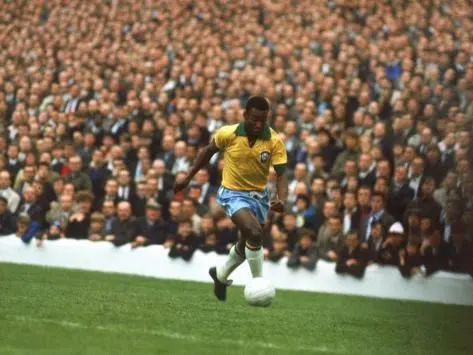
Led by Pelé, the squad featured extraordinary talent in every position. Jairzinho scored in every match, Rivelino added creativity and long-range brilliance, while captain Carlos Alberto Torres symbolized leadership and composure. Their famous team goal in the final remains one of the most iconic moments in World Cup history, an example of perfect teamwork and vision. What made this team special was not just individual brilliance, but understanding. Players moved fluidly, interchanged positions, and played with an almost instinctive connection.
However, after 1970, the golden glow slowly began to fade. As global football became more physical and tactically disciplined, Brazil found it harder to dominate in the same way. In the 1974 FIFA World Cup, they struggled to replicate their previous success, finishing without the same authority. By the 1978 FIFA World Cup, Brazil remained competitive but no longer appeared unstoppable.
The decline was gradual rather than sudden. The magic of joga bonito still existed, but the rest of the world had adapted, closing spaces, pressing harder, and prioritizing structure over style. Brazil, once ahead of its time, now faced teams that had learned how to counter their strengths.
Even so, the legacy of this period remained untouched.
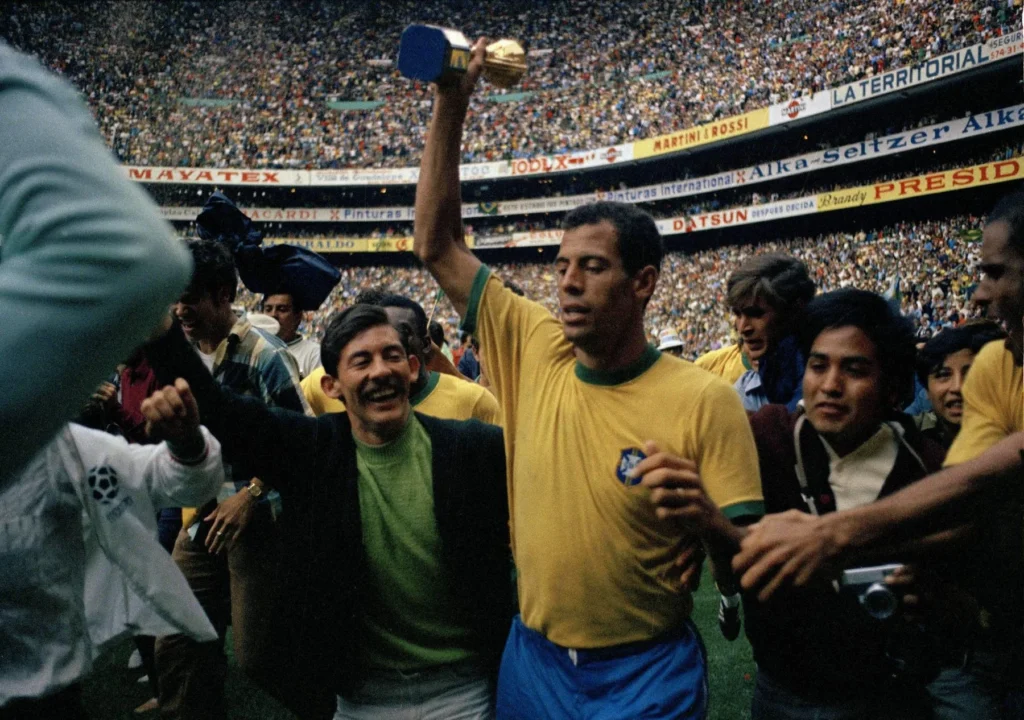
The 1970 team did more than win a trophy, it defined an era. It set the benchmark for excellence and ensured that Brazil would forever be associated with the most beautiful version of the game.