


The Indian Super League is ready for a dramatic reboot as the 2025/2026 season officially begins on 14th February, bringing with it a brand-new competition structure that promises unpredictability, intensity and high stakes football from day one.
What’s New in ISL 12? The Swiss-System Tournament Explained
For the first time in its history, the Indian Super League will adopt the Swiss-System Tournament format in what will be the league’s 12th season. Unlike the traditional double round-robin format, this system is chosen to manage a truncated season while still ensuring competitive balance across all teams.
All the 14 participating clubs will play 13 matches in total, with fixtures decided on a single-legged home or away basis. The allocation of home and away matches will be decided by lots, meaning clubs will play 6 or 7 matches at home, with remaining fixtures away from home.
There is also a stronger possibility that the clubs with better stadium infrastructure, pitch quality and higher footfall could be awarded 7 home games, giving them a slight commercial and sporting advantage.
View this post on Instagram
Total Matches And Title Decider Explained
With 14 clubs playing 13 matches each per season, the ISL 2025/26 season will consist of 91 matches in total.
The club finishing top of the league table after the completion of all matches will be directly crowned as ISL Champions, making consistency across the season more important than ever. This is a major change from the traditional ISL identity, where knockout games at the end of the league decided the ISL Champion.
No Playoffs: The End of ISL’s Signature Drama (For Now)
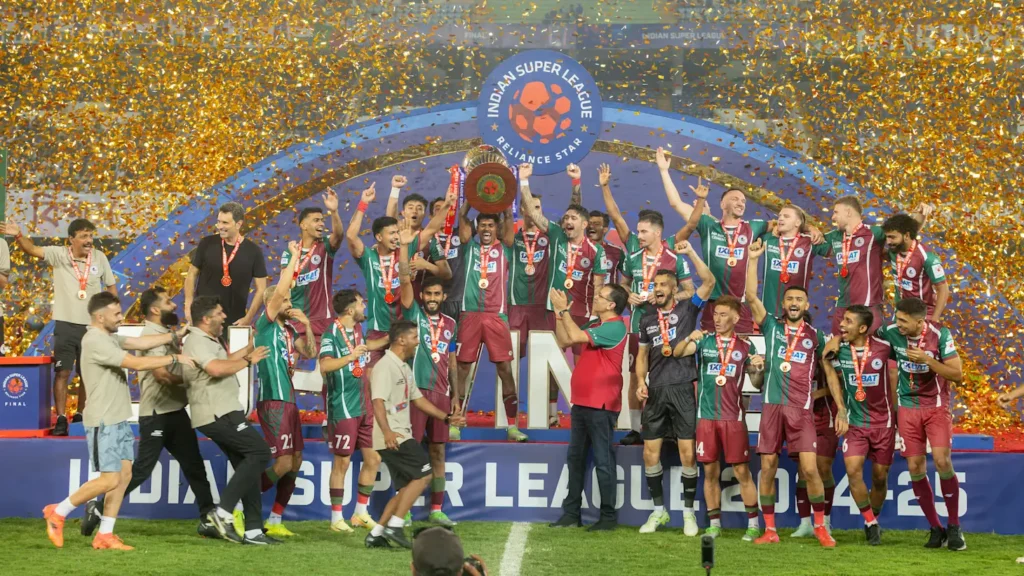
Perhaps the most significant change this season is the complete removal of playoffs. Since its inception, the ISL has always featured knockout playoffs, delivering iconic moments through double-legged aggregate thrillers, late goals, and high-pressure penalty shootouts.
However, due to the truncated nature of the 2025/26 season, fans will miss out on the drama and intensity of these knockout fixtures.
For the first time, there will be no semifinals, no finals, and no last-man-standing Cup clash, fundamentally altering the league’s viewing experience.

Prize Money Slashed: Financial Reality Bites
A direct consequence of the shortened format is a significant reduction in prize money.
As per the initial plan:
- ISL League Winners (Champions): ₹2.5 Crore
- League Runners-up: ₹1.5 Crore
This is a noticeable drop compared to previous seasons, where:
- ISL Shield Winners: ₹3.5 Crore
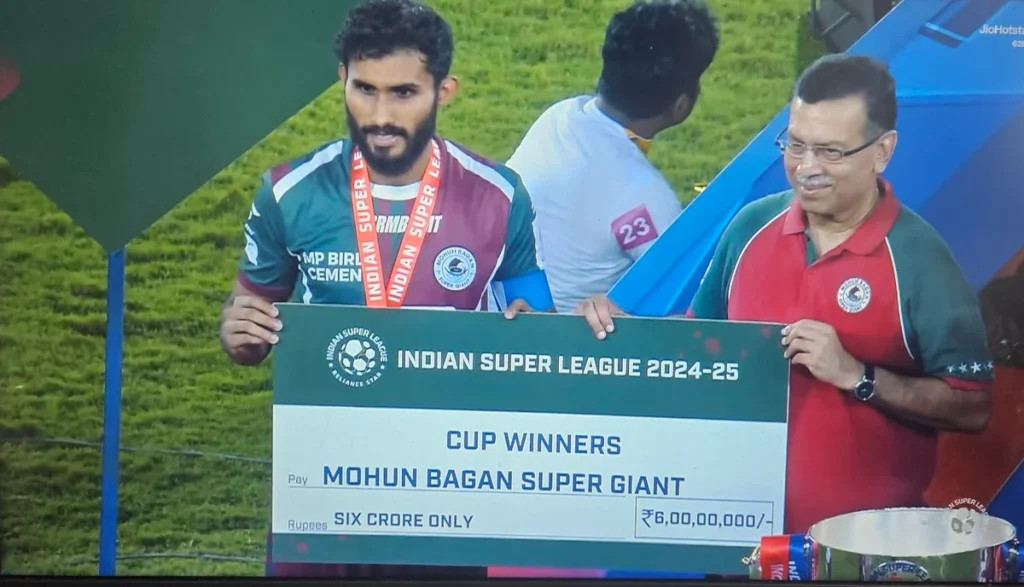
- ISL Cup Winners: ₹6 Crore
- ISL Cup Runners-up: ₹3 Crore
- Playoff Semi-finalists: ₹1.5 Crore each
The reduced prize pool reflects the shortened season, lower match count, and financial strain on clubs, many of whom are already operating on tightened budgets.
Relegation On Hold? AIFF Seeks One-Year Relaxation
Given the shortened calendar, the AIFF has approached the Supreme Court of India seeking a one-year relaxation on relegation.
If approved, this would mean that no team would be relegated at the end of the 2025/26 season. This move is aimed at protecting clubs from sporting and financial instability during a season already affected by structural changes and reduced match revenue.
AFC Exemption: A Crucial Battle Behind the Scenes
One of the most critical discussions revolves around AFC competition eligibility. According to AFC regulations, participating clubs must play a minimum of 24 domestic matches (league + domestic cups) in a season to qualify for AFC club competitions.
Under the ISL 2025/26 format, this requirement cannot be met. As a result, the AIFF is actively seeking a one-year exemption from the AFC, a decision that could determine whether Indian clubs are eligible for AFC competitions in the 2026/27 season.
This exemption could have long-term implications for India’s continental presence, club coefficients, and player exposure at the Asian level.

Why Was a Centralised Venue League Rejected?
There was also a proposal on the table to conduct the ISL 2025/26 season as a single-legged league at a centralised venue, similar to bio-bubble formats used in the past.
However, this idea was eventually dropped as overall operational and logistical costs turned out to be higher than hosting matches across different cities. Travel, accommodation, long-term venue bookings, and broadcast expenses made the centralised model economically unviable.
Financial Pressure, Pay Cuts, and Salary Cap Talks
With fewer matches this season, clubs are on reduced operational budgets this season. Many ISL clubs have already begun negotiations with players over pay cuts, making salary cap revision one of the most discussed topics in Indian football right now.
Clubs believe that for the ISL product to remain financially viable and sustainable, a revised salary structure may be unavoidable. Key discussions around player wages, squad costs, and long-term financial planning are expected to take place over the next few weeks.
New Broadcaster and Streaming Platform
Another major shift for ISL 2025/26 could be its broadcast and streaming partners. The league is rumoured to be telecast on Doordarshan Sports (DD Sports), while the SSEN app is emerging as the leading contender for online streaming rights.
This marks a stark contrast to recent seasons, where Star Sports Network handled television broadcasts and JioStar app served as the primary digital streaming platform.
If confirmed, this move could significantly impact the league’s reach, visibility and digital engagement.

Conclusion
Even though the ISL 2025/26 season is different, shortened, and stripped of playoffs, the league happening at all is a positive outcome compared to a scenario with no football.
However, the real priority must lie beyond this season. Indian football cannot afford to waste time. Long-term planning for league structure, commercial partnerships, revenue models, and governance reforms must begin immediately and be completed well before the next season kicks off.
Only with proactive planning and structural stability can the ISL ensure sustained growth, improved competitiveness, and a stronger future for Indian football.