

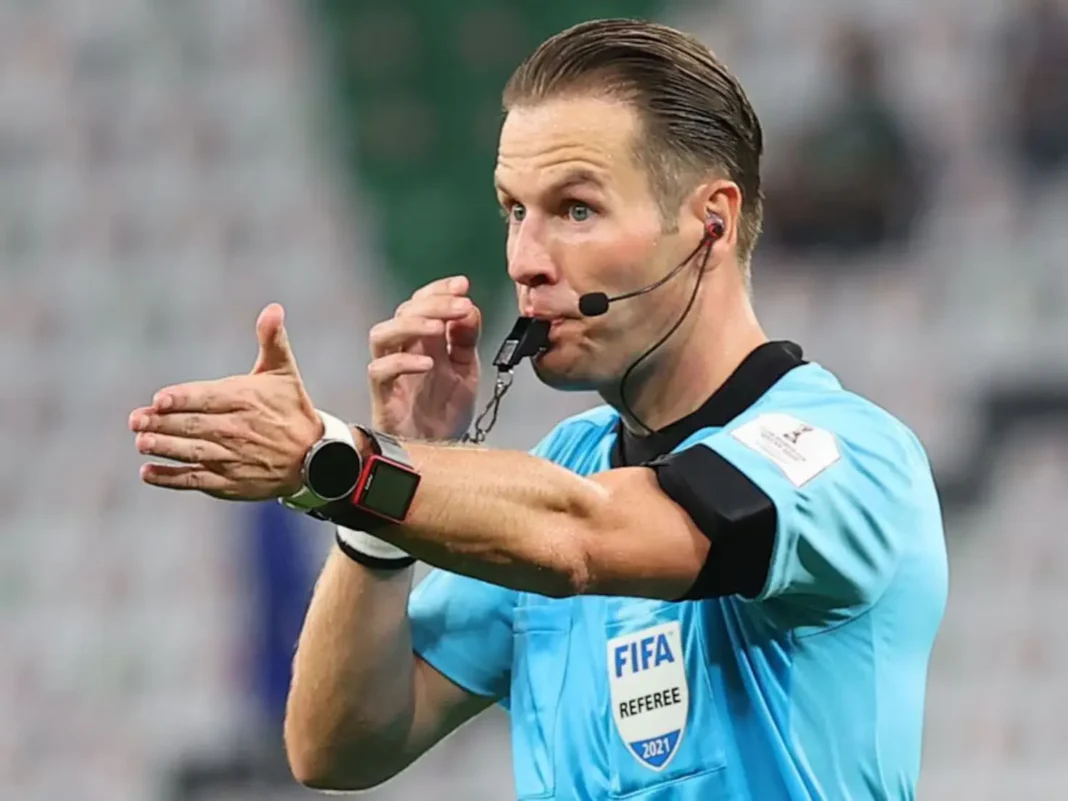

Few decisions in football split opinion as instantly as advantage. The referee waves play on. The crowd roars. Two seconds later, the attack breaks down. The roar turns into fury. “Why didn’t he bring it back?” The advantage rule is meant to help attacking football. Too often, it feels like it does the opposite.
What Is the Advantage Rule?
According to the IFAB Laws of the Game, a referee may allow play to continue when an offence occurs if the team that has been fouled will benefit from doing so. If the anticipated advantage does not materialise within a short period of time, the referee can bring play back and award the free kick. The law is built on discretion. And discretion is where controversy lives.
Advantage Is Judged in Seconds, Not Outcomes
This is the first major misunderstanding. Advantage is not judged by whether a goal is scored. It is judged by whether the attacking team retains a promising situation. In theory, this protects referees from hindsight. In practice, it frustrates everyone.
A midfielder is fouled, the ball rolls to a teammate, the referee plays advantage, the next pass is misplaced, and suddenly the fouled team has lost both the free kick and the attack. To fans, it feels like being punished for trying to play football.
The Premier League’s Tempo Problem
Nowhere is the advantage rule harder to apply than in the Premier League. The game is faster. Pressing is more intense. Spaces close in seconds. What looks like an advantage at the moment of the foul can disappear almost instantly.
Referees must decide in real time whether a team has genuine control or simply temporary possession. That decision often determines momentum. We regularly see Premier League matches where a promising counter attack is waved on, only to collapse under pressure, leaving players throwing their arms up in disbelief.
Staying on Your Feet, A Hidden Disadvantage
One of the unintended consequences of the advantage rule is behavioural. Attackers who try to stay on their feet are often disadvantaged. Players who go to ground guarantee a stoppage. In a league that claims to reward physicality and honesty, the message is mixed. If you fight through contact, you risk losing both the foul and the advantage. If you fall, you secure the free kick. This is not what the law was designed to encourage.
The Yellow Card Dilemma
Another layer of confusion comes with disciplinary action. When advantage is played, referees are still expected to return and issue yellow cards at the next stoppage. Sometimes they do. Sometimes they don’t.
In Premier League matches, this inconsistency is glaring. Identical tactical fouls are punished differently depending on whether advantage was played, forgotten, or abandoned. Players and fans are left guessing what the threshold actually is.
When Advantage Becomes a Guess
The core issue is that advantage is not a science. It is a prediction. Referees are asked to anticipate what might happen next in a sport defined by chaos. Even the best officials will get this wrong, not through incompetence, but through limitation. Football moves too quickly for certainty. The problem arises when the prediction is treated as fact rather than judgement.
What Needs to Change
The advantage rule does not need rewriting. It needs recalibration. Some practical improvements include, Allowing a slightly longer window to assess advantage, Being quicker to bring play back when momentum clearly dies, Consistently issuing yellow cards regardless of advantage, Better referee communication so players know the decision. Advantage should feel like an opportunity, not a gamble.
Why This Rule Shapes Modern Football
The advantage rule influences how players behave more than most people realise. It affects whether players go down or stay up. It shapes how teams counter attack. It changes how referees control matches. Get it right and football flows. Get it wrong and frustration dominates.
Why This Debate Will Never Go Away
Football will always be emotional. Advantage decisions will always be second guessed. But when fans, players, and even managers cannot predict how the rule will be applied, confidence in officiating erodes. The next time a referee waves play on in a Premier League match, watch carefully. If the move breaks down, the reaction will tell you everything you need to know about the advantage rule. Because in modern football, sometimes the biggest disadvantage is being given advantage at all.