


In the high-stakes environment of a football match, the free kick is a pivotal moment that resets the rhythm of the game. It is more than just a restart; it is a mechanism of justice. By penalizing infractions and rewarding the fouled team with a strategic advantage, free kicks uphold the “Laws of the Game” and maintain the spirit of fair play. Particularly in the attacking third, a single free kick can be the difference between a stalemate and a historic victory.
When Is a Free Kick Awarded?
A free kick is awarded when a player commits an offense against an opponent while the ball is in play. Upon witnessing a foul, the referee whistles to stop action and signals for the restart from the exact site of the infraction. Whether the resulting kick is Direct or Indirect depends entirely on the nature and severity of the foul committed.
The Two Pillars of Free Kicks
The game distinguishes between two types of free kicks based on how a goal can be scored:
- Direct Free Kick: An attacking player can score a goal directly from the initial strike without the ball touching any other player.
- Indirect Free Kick: A goal can only be awarded if the ball touches at least one other player (from either team) before crossing the goal line.
Direct Free Kicks :
When are they awarded?
A direct free kick is generally reserved for physical fouls or major infractions that provide an unfair advantage. According to the Laws of the Game, these include:
- Kicking, tripping, or pushing an opponent.
- Charging into a player or jumping at them.
- Striking or spitting at an opponent.
- Handball: Deliberately touching the ball with the hand or arm (excluding goalkeepers within their own penalty area).
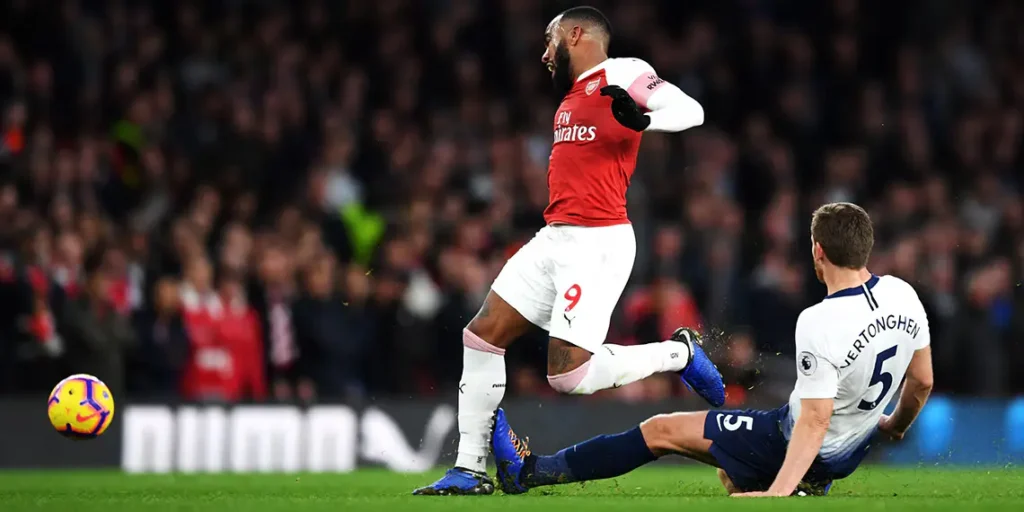
If any of these “direct” offenses are committed by a defender inside their own penalty area, the restart is upgraded to a Penalty Kick, taken from the spot 11 meters (12 yards) from the goal.
Rules and Positioning
To ensure a fair restart, specific rules must be followed:
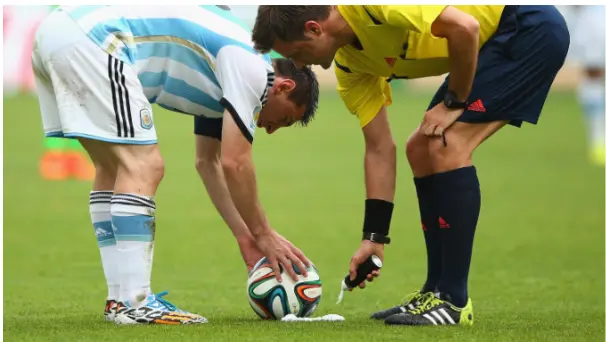
- The Ball: Must be stationary at the point where the foul occurred.
- The Distance: Opposing players must remain at least 9.15 meters (10 yards) away from the ball, this is why defenders form a “wall” to block the path to the goal.
- The Execution: The attacking team can take a “quick” free kick to catch the defense off-guard, or wait for the referee’s whistle if they wish to set up a specific play.
Tactical Importance
Direct free kicks are a masterclass in skill and psychology. Elite players use various techniques to beat the goalkeeper:
- The Curler: Bending the ball over or around the wall using the inside of the boot.
- The Knuckleball: A powerful strike with almost no spin, causing the ball to move unpredictably in the air.
- The Decoy: Using “dummy” runners to trick the wall into jumping early, opening a gap for the shooter.
When is an Indirect Free Kick Awarded instead?
Not every foul leads to a direct shot at goal. Indirect Free Kicks are awarded for technical or “non-contact” offenses, such as:
- Dangerous Play: An action that threatens injury (like a high boot) without making actual contact.
- Impeding an Opponent: Blocking a player’s path without attempting to play the ball (obstruction).
- Goalkeeper Violations: Taking longer than six seconds to release the ball or picking up a deliberate back-pass from a teammate’s foot.
Conclusion
Free kicks are essential to the integrity and excitement of football. They transform a moment of illegality into a display of pure skill. Direct free kicks, in particular, provide some of the most spectacular highlights in the sport, allowing players to showcase creativity, precision, and nerves of steel. By strictly defining these rules, the Laws of the Game ensure that talent and strategy, not fouls, which decide the outcome of the match.