

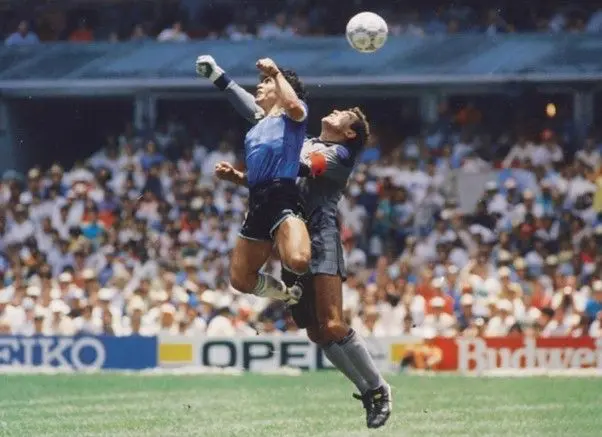

If there’s one law in football that can unite rival fans in frustration, it’s the handball rule. Penalties awarded, goals chalked off, VAR checks that last longer than celebrations, handball decisions have become football’s most confusing flashpoint.
What makes it worse?
The law is technically clear, but practically chaotic.
What the Law Actually Says
According to Clause 12 of the IFAB Laws of the Game, which governs handball across FIFA competitions and the Premier League, a handball offence occurs when,
- A player deliberately touches the ball with their hand or arm,
- The hand or arm makes the player’s body unnaturally bigger,
- The position of the hand or arm gives the player a clear advantage.
Additionally,
- A goal cannot be scored directly from a handball, even if accidental,
- Any goal scored immediately after the ball touches an attacker’s hand is disallowed.
- On paper, these clarifications were meant to bring fairness and consistency across competitions.
In practice, they’ve done the opposite.
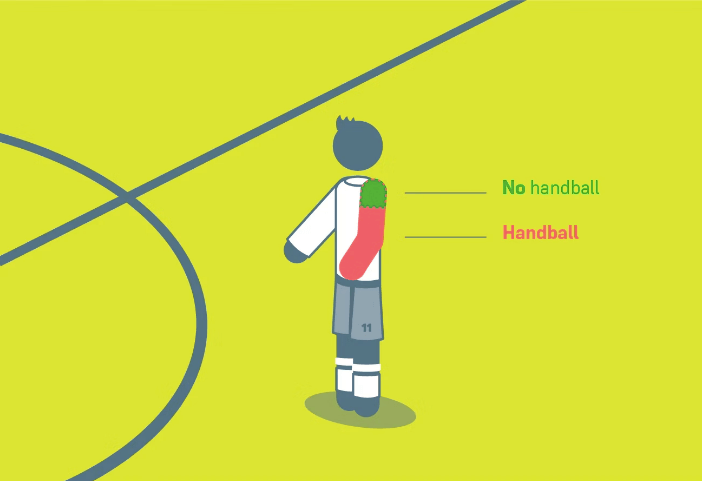
“Unnaturally Bigger”, Football’s Most Ambiguous Phrase
The biggest problem lies with interpretation.
What exactly is an unnatural position?
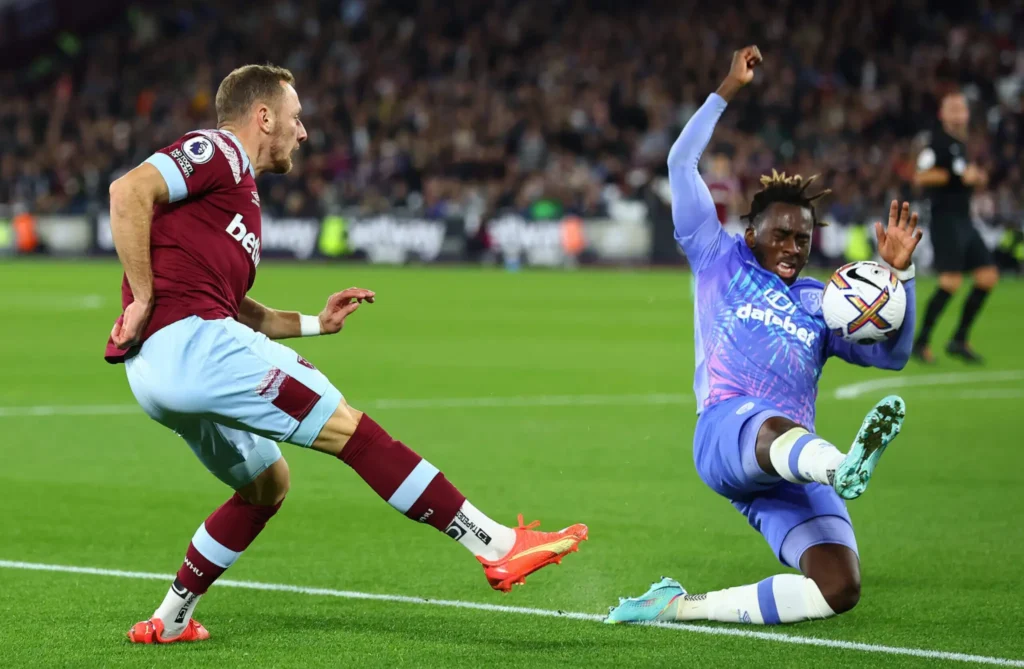
When a defender slides to block a shot, jumps for a header, or turns their body at full sprint, arms move naturally. Balance requires them. Yet referees are often forced to judge frozen moments in time, arms mid motion, detached from the physical reality of the sport.
A ball smashed from two yards away that brushes a forearm can now result in a penalty, even when reaction time is impossible.
The law says intent matters. The execution often ignores it.
VAR: Precision Without Perspective
VAR was introduced to correct “clear and obvious errors”. Instead, it has turned handball decisions into forensic investigations.
- Slow motion removes context,
- Freeze frames remove intent.
What looks accidental at full speed suddenly appears deliberate when viewed frame by frame. Referees are left officiating still images rather than football actions.
The result?
Two identical handball incidents can be judged differently, in the same league, the same weekend, both defended as “correct by the law”.
Consistency remains a promise, not a reality.
Attacking vs Defending: A Clear Imbalance
One area where the law is strict is attacking handball.
Under current IFAB guidelines,
Any handball by an attacker in the build up to a goal, even accidental, results in the goal being disallowed.
No debate. No interpretation.
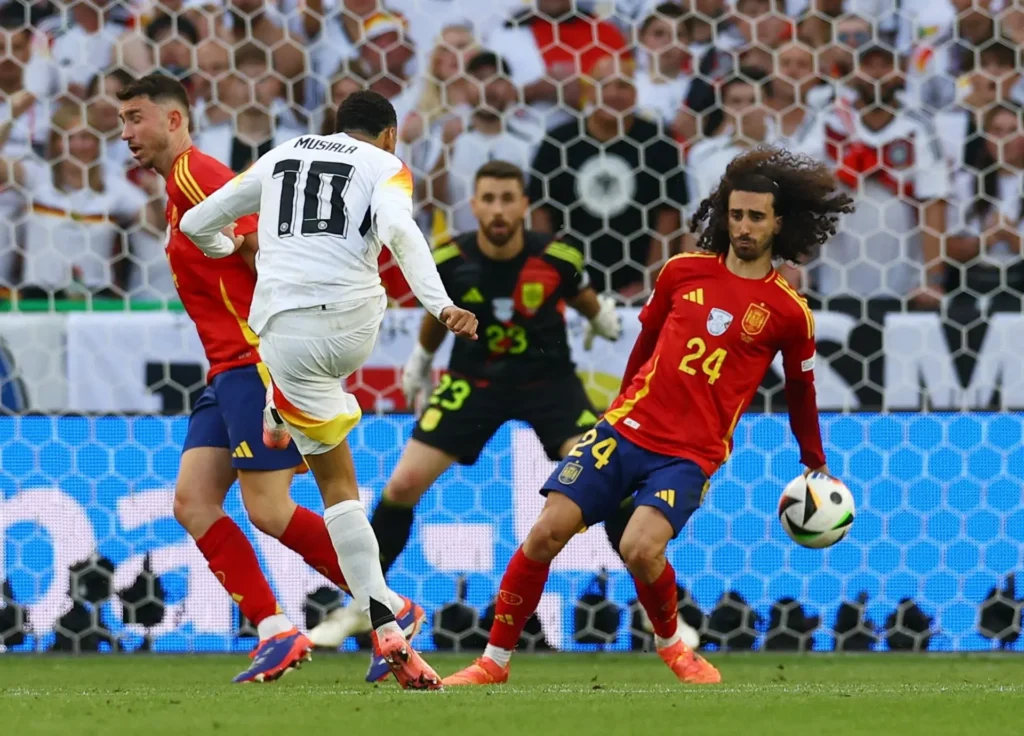
Defenders, meanwhile, can concede penalties for accidental contact that doesn’t stop a shot, doesn’t change direction, and doesn’t offer a meaningful advantage.
- This imbalance has reshaped football behaviour.
- Defenders run with hands behind their backs.
- Wingers aim crosses at arms rather than teammates.
- Forwards appeal instinctively, knowing contact alone might be enough.
- The rule hasn’t just changed outcomes, it’s changed how the game is played.
The Psychological Cost
When players don’t know what the law will decide, hesitation creeps in.
- Defenders defend cautiously.
- Referees officiate defensively.
- Fans celebrate goals with one eye on the VAR screen.
The handball rule was meant to remove controversy. Instead, it has become football’s most reliable source of it.
What Needs to Change
Football doesn’t need endless clarifications. It needs clarity with humanity.
Possible steps forward include,
- Restoring intent as a central factor in penalty decisions,
- Judging incidents primarily at real speed, not slow motion,
- Penalising handball only when it clearly prevents a goal or chance,
- Applying a consistent VAR threshold across competitions.
- Most importantly, referees must be trusted to apply common sense, not just clauses.
Why This Debate Matters
Goals decide matches. Matches define seasons. Seasons shape careers.
When those moments hinge on interpretations no one fully agrees with, trust in the game erodes, slowly but surely.
The handball rule, as written by IFAB and applied by FIFA and the Premier League, aims for fairness. But until interpretation catches up with intention, confusion will continue to dominate the conversation.
And every time the ball hits an arm in the box, one question will echo louder than ever,
“Is that a penalty, or not?”
Right now, football’s most honest answer is also its most troubling one,
 Editor’s Recommendations: