

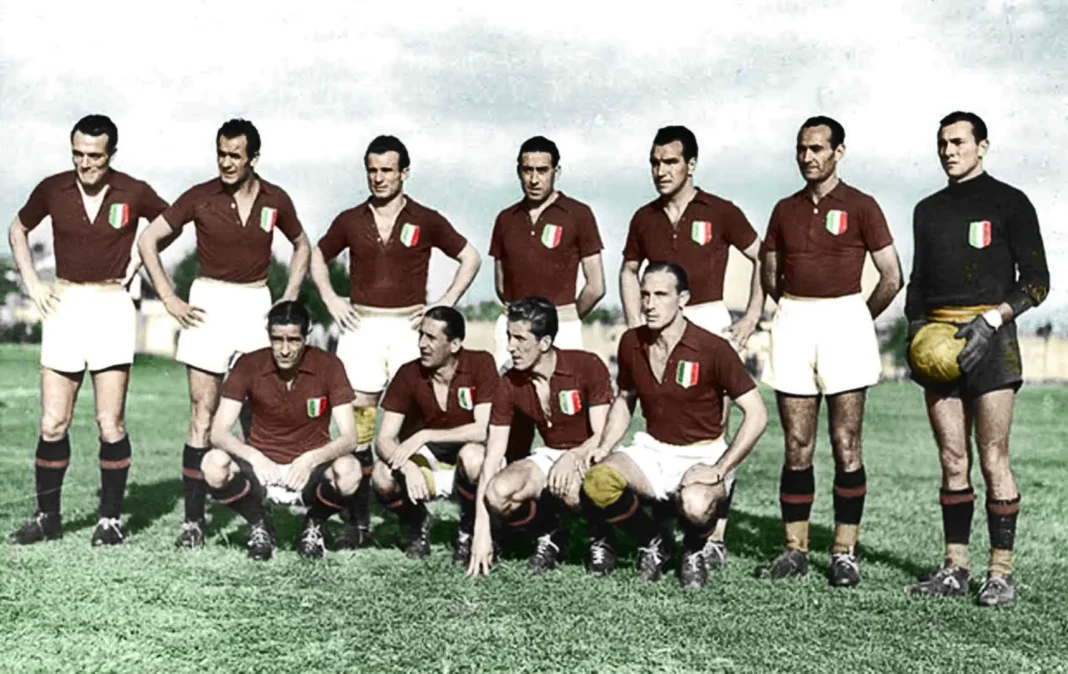

Ciao Ciao, Friends! Torino FC, known as Toro, is one of Italy’s most historic and passionate football clubs. Founded in 1906, Torino was famously known for the legendary “Grande Torino” team of the 1940s era, which dominated Italian football with 6 major titles, with 5 Serie A and 1 Coppa Italia. But their era of dominance was cut short by an unfortunate incident that changed their history forever: the Superga air disaster. Torino, with its deep working-class roots, iconic garnet colors, and loyal supporters. Today, Torino stands as a symbol of resilience and courage in Italian football, embodying the pride, memory, and identity beyond trophies or any kind of glory, but with unwavering support, loyalty, and grit from both fans and players.
Torino FC, for any ardent follower of Italian football, is a name that evokes a powerful mix of emotions, reverence for a team that once used to dominate Italian football and had taken it by storm by winning the Scudetto in 1942-43 and then winning 4 consecutive Scudettos from 1945-46 to 1948-49. But their success was tragically cut short due to the Superga air disaster. The club’s history is marked by an era of glorious triumphs and unparalleled disaster throughout, and how they made a turnaround from those situations, yet their stories remain one of the most compelling and heartbreaking stories in all of sports.
Foundation and Early Success
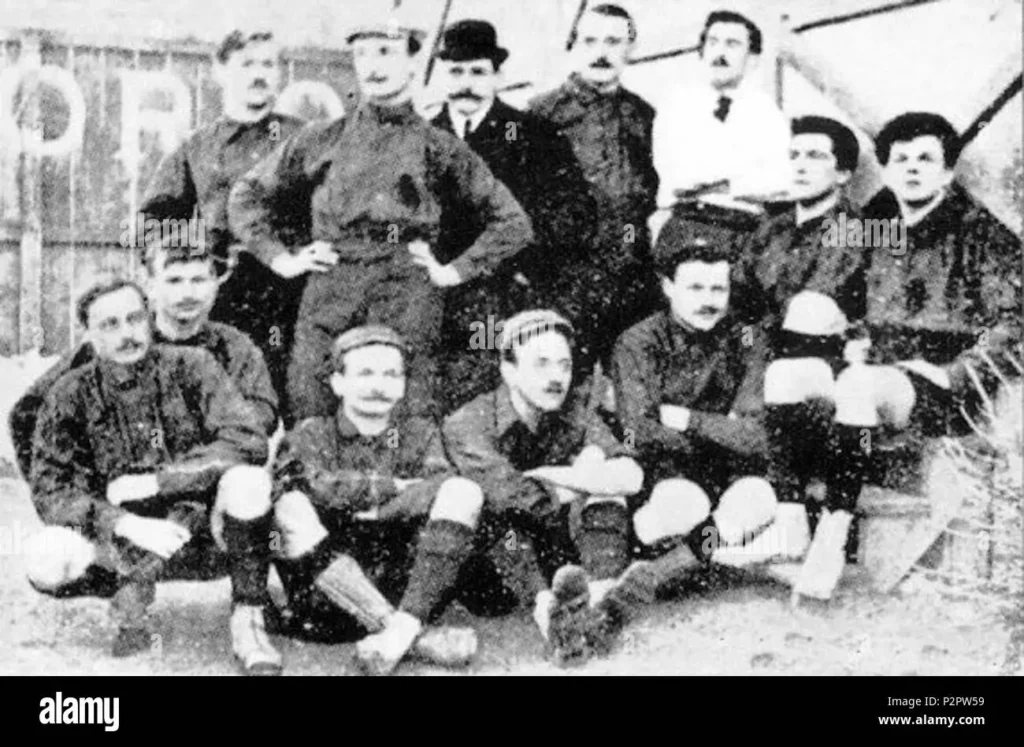
Football arrived in Turin during the late 1880s through English and Swiss expatriates; among them, one of the most notable names is Edoardo Bosio, who founded the Torino Football and Cricket Club in 1887—one of the first organized teams in Italy—and ignited the city’s football culture with its foundation. This early foundation eventually led to the birth of Torino Football Club on December 3, 1906, when FC Torinese merged with a group of dissidents from FC Torino’s city rivals, Juventus, under the leadership of Swiss financier Alfred Dick. Torino made their official debut on December 16, 1906, donning their now-iconic maroon (granata) shirts and then defeating Pro Vercelli 3-1. However, the club’s rise to prominence began during the 1920s under the presidency of Count Enrico Cinzano, who funded the construction of the historic Stadio Filadelfia and assembled the famous “Trio delle meraviglie” with Julio Libonatti, Adolfo Baloncieri, and Gino Rossetti. This dynamic side won the 1926-27 championship, though their title was later revoked due to the Allemandi Case. But Torino rebounded to officially claim its first Scudetto in the 1927-28 season and later earned its first Coppa Italia in 1935-36, laying the foundation for the greatness that would follow further into the 1940s era.
The Reign of “Il Grande Toino”
The greatest period in the club’s history began in the 1940s with the arrival of president Ferrucio Novo. Novo was known for his smart and savvy nature during his administration, as he avoided the pitfalls of ego and instead focused on building a rock-solid foundation for Torrino. On the advice of two-time World Cup-winning coach Vittorio Pozzo, he hired technical experts like Erbu Ebstein and Leslie Liesl. This staff oversaw a tactical revolution, implementing the “WM system” (a 3-4-3 formation) that was years ahead of its time in Italy. This system provided the balance for a team that would dominate the decade. Novo was also known for his shrewd moves in the transfer market, as he signed young talents like Franco Ossola and, most famously, poached the superstar duo of Valentino Mazzola and Ezio Loik from Venezia.
The team was built around its captain, Mazzola, who was the undisputed leader of the fierce pack and was also recognized as one of the finest players of his generation. The team assembled was built like a force of nature and a symbol of hope for a nation recovering from the devastation of World War II.
- The Double: In the 1942-43 season, “Il Grande Torino” became the first Italian club to win the double in their footballing history with the Scudetto and the Coppa Italia.
- Wartime Protection: As the war intensified, Novo cleverly protected his players from the battlefield by arranging for them to work at the Fiat factory, thus contributing to the nation’s war effort but also keeping the team together intact.
- Total Dominance:After the war, their domination in Italian football from 1942 to 1949 was a feat to be remembered. They won 5 league titles during that time, the first one being in 1942-43, and then 4 consecutive titles from 1945 to 1949. And one Coppa Italia during their famous double-winning season in 1942-43. During that period, their team operated like a ruthless goal-scoring force as they notably netted 104 goals in the 1946-47 season and bettered that feat with a staggering 125 goals in their next season (1947-48).
Their domination in Italian football could further be established with the fact that, at one point in time, 10 of the 11 national team starters from Italy were Torino players.
This Torino side used to be so dominant and legendary that their typical starting lineup is still recited by the fans with reverence: Baciagalupo, Ballarin, Maroso, Grezar, Rigamonti, Castigliano, Menti, Loik, Gabetto, Mazzola, and Ossola.
The Superga Air Disaster
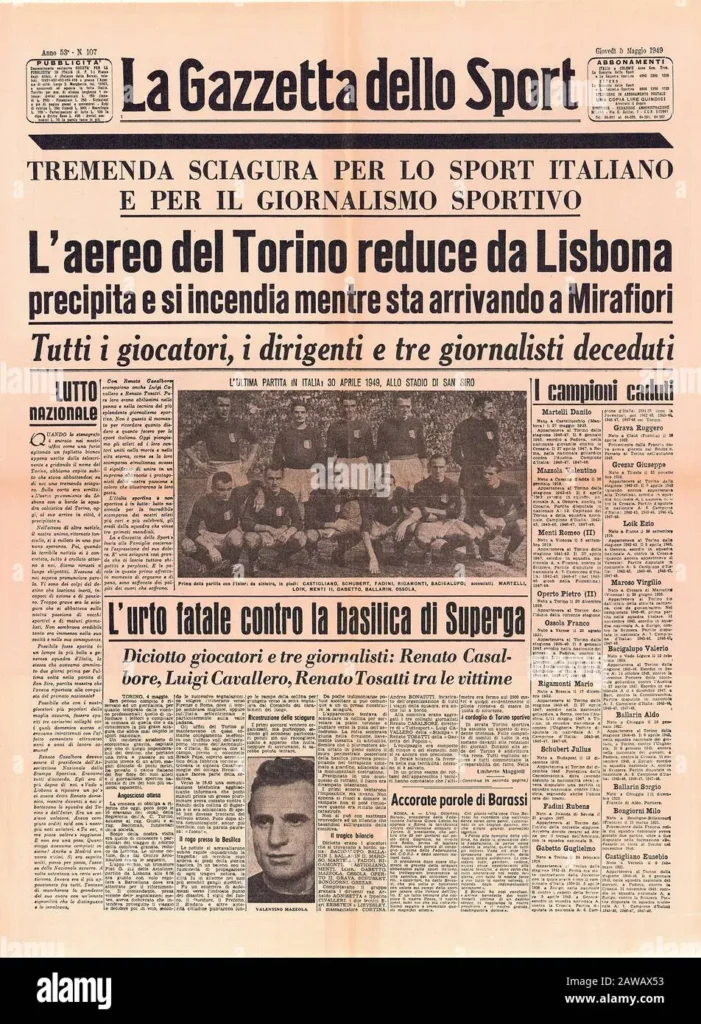
In 1949, Torino, as usual, was cruising their way to yet another Scudetto win. During May of that ongoing season, the team traveled to Lisbon, Portugal, for a friendly with Benfica as a testimonial match for their captain. On the return flight of May 4, 1949, the Fiat G.212 airliner carrying the entire squad encountered thick fog over Turin, which in turn caused low visibility and a faulty altimeter, and then the unfortunate event happened as the plane crashed into the embankment of the Basilica of Superga, which sits on a hill overlooking the city.
All 31 people on board were killed instantly. The disaster annihilated the entire Torino organization in one blow: the entire Grande Torino team, their visionary coaches Ebstein and Liesl, the club’s staff, and the journalists—everyone was gone in just a few moments, leaving the entire Il Toro fraternity with an irreparable void that would never be truly healed.
A few individuals escaped the tragedy, notably, Sauro Toma, who missed the trip due to a knee injury, and President Ferrucio Novo, as he was sick during that time.
Aftermath and Enduring Legacy
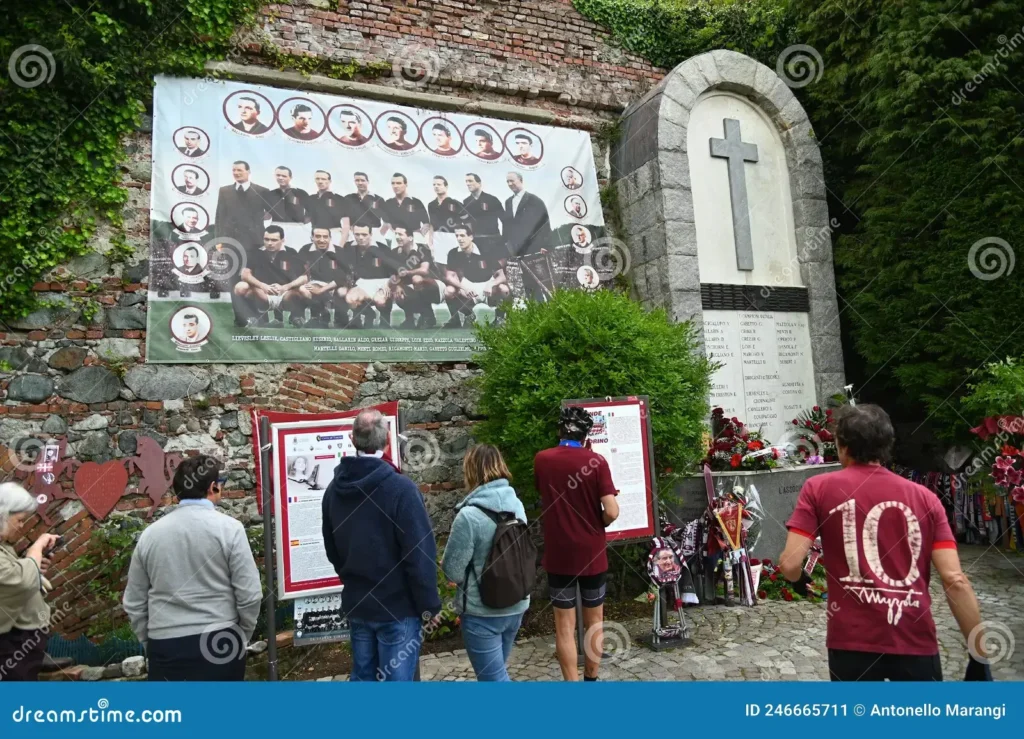 The club, Italian football, could never fully recover from the massive loss it had to endure during that time. Torino was posthumously awarded the 1948-49 Scudetto in a mark of respect for the remaining matches of the season; both Torino and their opponents fielded their respective youth teams.
The impact on the National as well was immediate. Crippled by the loss of its core, and with the surviving player terrified of flying, the Italian team during the 1950 World Cup in Brazil travelled by ship in a 20-day journey. They arrived exhausted and were eliminated in the group stages of the tournament. They were once the favorites to win the tournament, but the unfortunate incident had not only deprived the team of its best players but also destroyed the morale of the team to participate in the tournament as well.
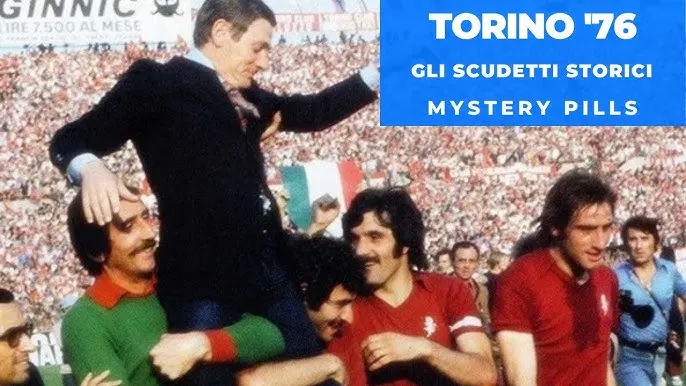
For Torino, the decline was steep. They were relegated to Serie B for the first time in their history in 1960. The club has managed to win the Scudetto only once since the disaster, in the 1975-76 season, and added Coppa Italia trophies in 1968, 1971, and 1993. The club’s lowest point since the disaster came in 2005, when they declared themselves bankrupt and were forced to refound themselves.
Despite the long shadow of its past, the club has since stabilized and re-established itself in Serie A, not quite like the Grande Torino team of the 1940s, but a decent mid-table squad of Serie A. All things said, the story of Torino remains a romantic, albeit morbid, tragedy. Every year to date, the team captain reads the names of the 31 victims at Superga, ensuring that the legacy of “Il Grande Torino” is never forgotten.